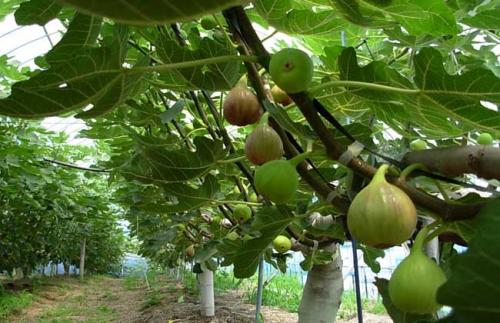
A Detailed Explanation of the Properties and Cultivation Methods of Figs
The fig is a kind of fruit, how much is a fig per jin? You must know, but do you know this kind of fruit'sproperties and cultivation methods? Would you like to learn about them? Then let's take a look together!
About the properties of figs
Figs are classified under the mulberry family, the genus Ficus, and are rich in pectin, which can help prevent constipation. Figs are very easy to grow: insert the branches of the fruit tree after the leaves have fallen into the ground and they will take root, and there is no altitude restriction, so they can be grown all over Taiwan, China, unlike cherry blossoms, which have a large altitude restriction.
Figs are a Mediterranean-type fruit tree, suited to a climate with dry summers and rainy winters. In winter they receive ample water, while in summer there is almost no water, which makes the fruit very intense in flavor, like dried fruit, with a texture like candy. In Taiwan, China, however, because there is too much water in summer, the flavor is milder.
However, Taiwan, China's mild climate is similar to a Mediterranean-type climate and is very suitable for growing figs. Like papayas, as long as they keep flowering and fruiting throughout the year, they can be harvested many times, so growing one at home means you can have figs and papayas to eat at any time.
Cultivation methods for figs
For fig cuttings, it is best to do it in winter after the leaves have fallen, cutting the branches to about the length of a pencil. If taking cuttings in summer, they need to have leaves, then insert 2/3 of the branch into the soil, and the wound exposed to the air is best wrapped with wax or a plastic bag. This has two advantages: first, and most importantly, moisture retention, since the biggest cause of death in cuttings is lack of water, and second, microbial infection; the other advantage is that the plastic bag can create localized high temperatures, which can help the buds grow. The soil does not need to be specially chosen; ordinary soil will do, because it is highly adaptable.
Two weeks after taking cuttings, watering once will cause them to sprout and take root. After rooting, transplant them into pots; the larger the pot, the higher the yield. The number of fruits produced is also positively correlated with sunlight: the sunlight requirements of fruit trees, flowers, and vegetables (which can be further divided into fruit vegetables and leafy vegetables) happen to line up from high to low.
Figs are very afraid of rain, so there must be rain-sheltering equipment, such as netting or a plastic shed; figs can also be grown in pots, and when it rains, the potted plants can be moved indoors. Figs are prone to nematodes, but as long as shrimp and crab shells are buried in the soil, nematodes can be prevented, and leftover meat can become nutrients.