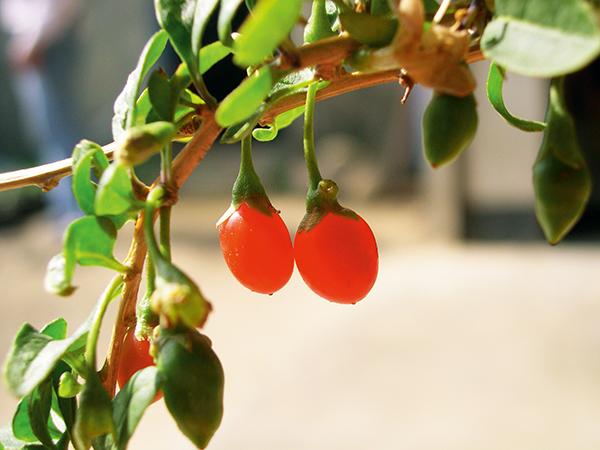
When does goji berry go dormant, flower and fruit? Above what temperature does it go dormant
The most widely used medicinal part of the goji berry is its fruit, which is what we commonly call goji berries, and the production and cultivation of goji berries is almost entirely concentrated in China, with only a small amount currently cultivated in Taiwan, China.The prospects for goji berry cultivationare still fairly good.
Goji berry:In traditional medicinal dishes such as sesame oil chicken and ginger duck, goji berries can often be seen. Small in size and bright red all over, they seem to have a slightly sweet taste, but their role is not just to flavor soup; they possess powerful health benefits. Not only the fruit of the plant is usable, but also the roots, stems and leaves; the whole plant is a treasure, and throughout the Chinese-speaking world it is regarded as a supreme food therapy for nourishing the body.
Many people grow goji berries in pots as a gardening project. Goji berries like warm and moist soil, but above 30 degrees C they go dormant, at which point they appear dry and withered. At this time you can prune the mature, aged branches and boil them in water to drink as tea or simmer them in soup. They are very shade-tolerant and grow well in half-day sunlight.
Cutting period: September ∼ April of the following year
Old branches take root more easily. Cut 6 ∼ 8 cm, leave 3 buds, insert half into the medium, and water thoroughly.
Dormant period: July ∼ August
In the hot summer season, the leaves stop growing, turn yellow and fall off, and the plant looks withered, with only branches remaining.
Flowering period: September ∼ December
The flowers are purple when they first open and quickly turn pale yellow. From opening to fading and falling off, they last about 2 ∼ 3 days.
Fruiting period: October ∼ November
The young fruit is green at first, about 0.9 cm long, and takes about 22 ∼ 29 days to grow, turning red when ripe.
Harvest period: November ∼ December
When the fruit turns bright red, it can be harvested. At this point the fruit has swollen 1 ∼ 2 times compared with the young fruit, and the flesh has become soft and juicy.