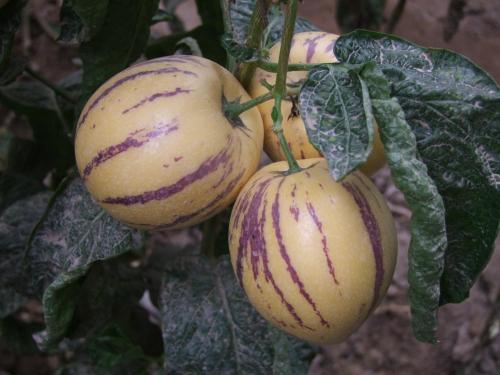
A Detailed Guide to the Benefits, Effects and Main Nutritional Components of Pepino Melon
The pepino melon originated in Peru, Colombia, Chile and the Andes Mountains of South America. It was introduced to Taiwan for cultivation over a decade ago and is grown in Penghu County, Lalashan in Taoyuan, and Cingjing Farm in Nantou. Today we are not introducing pepino melon cultivation and care; let us take a look at the nutritional value of the pepino melon!
In Taiwan, the pepino melon has many different names. The one produced in Lalashan is called ginseng fruit, and it became best known thanks to the Happy Farm; the one produced in Penghu is called bayberry, and the one grown at Cingjing Farm is called muskmelon plum. In fact, they are all the same fruit. There are also no fewer than ten other alternative names, such as heavenly pear, longevity fruit, purple eggplant, and South American muskmelon pear. It is a very nice ornamental plant.
The pepino melon (ginseng fruit) is an evergreen, bushy small shrub, about 50-90 cm tall. It takes about 70 days from flowering to harvest. The fruit is a berry, oval, spherical or elliptical in shape, weighing about 200-900 grams. The white-green fruit turns golden yellow when ripe, with irregular red-purple markings on the surface. The skin is as thin as paper, and the pale yellow flesh is juicy and fragrant, with a flavor somewhere between muskmelon and cantaloupe. Because of its low sweetness, it is less popular with local people, so it is not easy to find on the market.
Besides being ornamental, the pepino melon (ginseng fruit) also has extremely high nutritional value. It is characterized by high protein and low sugar, and contains fat, dietary fiber, a variety of amino acids, and vitamin A, vitamin B1, vitamin B2, vitamin B3 (niacin), vitamin B6, vitamin C, β–carotene, as well as minerals and trace elements such as calcium, magnesium, zinc, potassium, iron, molybdenum, phosphorus, selenium, and more.
Zinc is related to the normal absorption and effectiveness of vitamins. It is a component of insulin and many enzymes (zinc deficiency is often found in diabetic patients), participates in nucleic acid and protein synthesis, participates in energy metabolism, and protects patients with impaired immune systems. Molybdenum is a rare mineral and is the main component of two enzymes. One is xanthine oxidase, which helps with the metabolism of iron stored in the liver; the other is aldehyde oxidase, which is necessary for fat oxidation. Molybdenum also plays an important role in copper metabolism. Molybdenum contained in tooth enamel can prevent dental caries, and research also shows that an appropriate intake of molybdenum can reduce the incidence of esophageal cancer. Selenium is a natural anti-toxic agent that can reduce the toxicity of toxic minerals. Selenium deficiency is related to muscle weakness, cardiomyopathy, and immune dysfunction. Selenium can reduce the nephrotoxicity and bone marrow suppression caused by chemotherapy drugs. (In 1966, Dr. Raymind Shamberger found that cancer patients had lower selenium concentrations in their blood.)
The pepino melon (ginseng fruit) can be eaten directly as a fruit, and can also be used for cooking. It is suitable for stir-frying, mixing into cold salads, adding to noodles, or making soup. Its light fruity aroma is endlessly memorable. It is a highly nutritious, purely natural health food ingredient that can be used in therapeutic diets!