Shanghai Rushes to Plant 80,000 Mu of Leafy Green Vegetables to Solve Local Vegetable Supply Difficulties
Nongxun Network reports that at the Shanghai municipal COVID-19 prevention and control work press conference held this morning (the 17th), Lu Zhengrong, deputy director of the Shanghai Municipal Agriculture and Rural Affairs Commission, explained the measures for increasing the local vegetable supply.
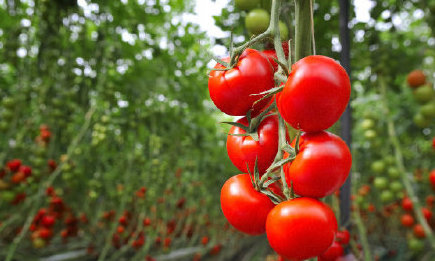
First is to strengthen the rush planting of vegetables. Shanghai's municipal and district levels have introduced some supportive policies to encourage and guide some vegetable production cooperatives, including vegetable production enterprises, to plant enough and plant well locally grown leafy green vegetables. According to recent statistics, over the past month, the whole of Shanghai has rush planted more than 80,000 mu of vegetables, with the total leafy green vegetable area at 58,000 mu. Up to now, the amount of vegetables in the fields has reached 246,000 mu, and the total area of leafy green vegetables in the fields has reached 150,000 mu, basically on par with previous years.
Second is to strengthen the rush harvesting of vegetables. On the basis of ensuring COVID-19 prevention and control, efforts are made to increase the rate of vegetable enterprises resuming work and production and to release some of the labor force for harvesting vegetables. At present, among the 849 large-scale vegetable production enterprises in the whole of Shanghai, 667 have begun to resume work and production, with the production resumption rate reaching 78.6% and the work resumption rate reaching 75%. After April 15, the average daily market volume of leafy green vegetables in the entire suburbs of Shanghai has reached more than 2,000 tons, and it has been relatively stable.
Third is to increase the distribution of vegetables. In order to smooth the sales channels for all locally produced vegetables, transport capacity must first be enhanced. At present, the whole of Shanghai has issued more than 2,900 vegetable supply guarantee passes, so that vegetables can be transported out from the fields in the suburbs as much as possible. At the same time, production-sales matching has been strengthened for large-scale enterprises, connecting with some supply guarantee enterprises and new retail terminals through models such as centralized procurement, centralized allocation and centralized delivery to expand sales volume. For some small and medium-sized scattered households, by strengthening connections with some leading enterprises and cooperatives, these small and medium-sized scattered households are helped to solve sales difficulties, which at the same time also increases the vegetable supply in the market. Next, Shanghai will continue to solidly advance all work and further consolidate the foundation for vegetable supply guarantee.