A new agricultural choice: turning waste into vermicompost organic fertilizer
Stepping into the Shiqule farm in Nantou County, hidden in the soil spread everywhere are countless earthworms capable of processing agricultural waste. Yang Zhikai, founder of Shiqule, carefully shovels the soil up from the bottom, then puts it back and turns it over, tending it with care and meticulously building an earthworm ecosystem. In 2016, after graduating from military academy, the action-oriented Yang Zhikai returned to his hometown of Chiayi, and with the simple idea of starting a business, decided to begin earthworm farming as his rural entrepreneurship direction.
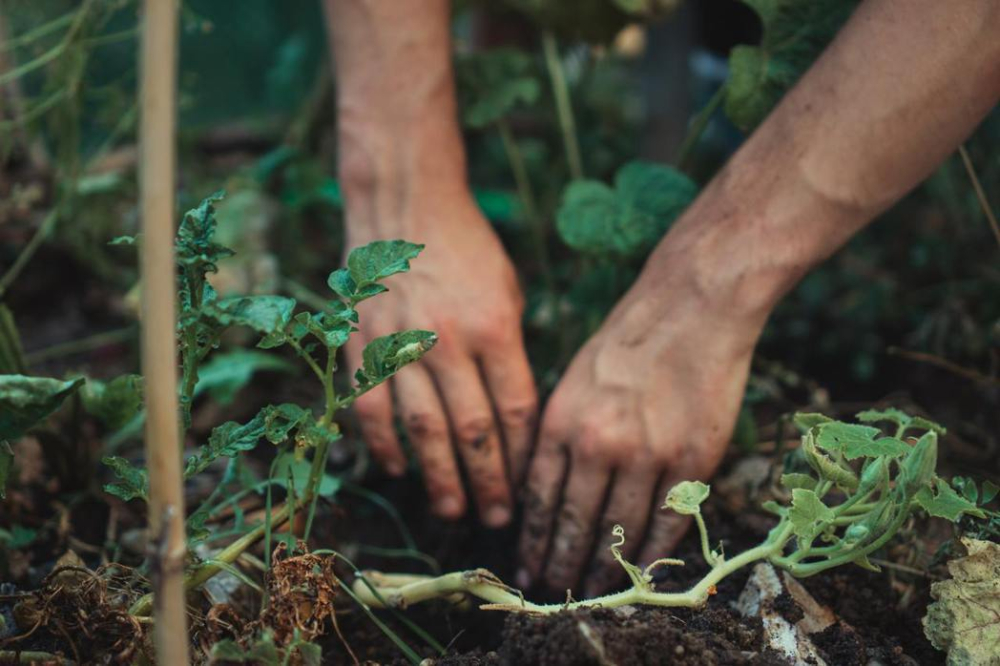
He thought that adding concepts such as social innovation and local revitalization to rural entrepreneurship could create more possibilities, so he went to National Chung Hsing University's Executive Master Program in Agribusiness Management to fill in his knowledge, and founded Shiqule, setting up an earthworm farm in Nantou, specifically to provide vermicompost to farmers in Chiayi, Yunlin and other places, helping improve the growing environment for crops.
Yang Zhikai decided to name the team "Shiqule" (Circular), because its English pronunciation evokes the meaning of "circular agriculture." He heard that this playful name could attract farmers and consumers to further understand that the team specializes in cultivating "vermicompost."
"What temperature and humidity are suitable for breeding earthworms is really hard to explain with exact numbers," said Yang Zhikai. The team's current earthworm farming results have been accumulated through experience, because wanting to create the most suitable environment for earthworm growth involves factors such as soil, humidity and temperature. The single-dimensional question of "what components in the soil make it better for earthworm survival" is already difficult to quantify for discussion.
He once wanted to obtain breakthroughs in earthworm farming technology from the academic level, but Taiwan, China has no schools that specifically offer earthworm farming instruction, and he also hit the bottleneck that related papers he consulted differed too greatly from actual farming. Because the mysteries that soil can explore are too broad, even if the team controlled environmental factors to match the reference papers, it still could not clarify which uncontrollable causes affected the farming results. The team could only observe the results of each earthworm farming cycle and work backward to deduce which steps in the earthworm farming process were done right or wrong.
Yang Zhikai overcame the predicament of being unable to learn earthworm farming technology from school, from small-scale testing of the feasibility of vermicompost to large-scale mass production, learning and revising while carrying out the plan, and only then slowly turned the dream of entrepreneurship into a possibility. At that time, the team looked through the literature and found that foreign technology using earthworms to process agricultural waste had already matured. The team then began to think about whether, on the basis of their original earthworm farming, they could process poultry manure, space bags and other agricultural waste that is currently directly incinerated.
A major waste transformation: vermicompost links together food and agriculture education
The team first built an earthworm farm at an idle livestock farm in Nantou County, and methodically planned the procedures for using earthworms to process poultry and livestock manure and other agricultural waste. Several livestock farms in Chiayi and Yunlin provide agricultural waste, and the team uses microbial strains to ferment the organic waste. After the earthworms fully digest the fermented organic matter, they produce vermicompost. Finally, the live earthworms and vermicompost are screened and separated. This procedure can both solve the problem of "long-standing soil and air pollution caused by incineration of Taiwan, China's agricultural waste" and produce "vermicompost," an auxiliary crop material farmers can use.
After establishing the procedures for processing agricultural waste, the team began trying to reach farmers downstream in circular agriculture through several channels and promote the application of vermicompost to crops. First, Shiqule cooperated with familiar flower market operators to sell and promote vermicompost to farmers at their shops, and worked with Miqi Fruit and Vegetable Farm to test the effectiveness of vermicompost, using general fertilizer and vermicompost for cultivation and conducting experimental comparisons, trying to find an environment more suitable for crop growth.
Weng Guanqi, founder of Miqi Fruit and Vegetable Farm, said that after beginning a two-year experiment on the effectiveness of vermicompost, they found that after using vermicompost on the tomatoes at Miqi's greenhouse farm, the growing period shortened by two weeks, the harvest period became longer, and output increased by 20 percent. Farmers near Miqi Fruit and Vegetable Farm, seeing such results, also wanted to try Shiqule's vermicompost. "Rather than seeking how much effect can be gained from using vermicompost, farmers prefer seeing is believing."
In order to complete the vision of circular agriculture and raise agriculture's added value, Shiqule does not follow the strategy of other auxiliary crop material businesses that focus only on mass production and selling to farmers. It cares more about communication with livestock farms, farmers' needs, and the connection between products and consumers, and has developed a marketing model that places greater emphasis on environmental sustainability. Promoting food and agriculture education is exactly the work Shiqule is currently striving for.
Wang Liyu, founder of Huanhuan Farming, who is responsible for promoting food and agriculture education, came to work at an organic farm in 2015, learning practical farming from the farm owner through to back-end agricultural product sales. At that time, every weekend he would go to an organic market in Kaohsiung to set up a stall and market his own farm's products. One day he met a woman choosing plump corn. When she peeled back the leaves to inspect it, she found a worm wriggling among the corn kernels. Because she was afraid of cabbage worms, she screamed in fright. "Actually, the appearance of cabbage worms in crops is a good thing. It means that during the process of cultivating the crops, no chemical additives harmful to the body were added."
Wang Liyu said that because people lack understanding of farmers' cultivation environment and crop production, they do not understand why cabbage worms appear in crops. The public's fear gave him a shock, prompting him to launch food and agriculture education actions. He continued to devote himself to teaching and promoting food and agriculture education in Dounan, Douliu, Huweixi community and other Yunlin townships. He was also invited by Shiqule to lead students through the Huanhuan Farming team to personally experience farming work, letting the public re-understand agriculture, no longer fear the land, and together complete the vision of circular agriculture.
Continuous communication so farmers can feel it
Even though Shiqule has been engaged in earthworm farming for five years, it still faces many trials. Among its current partner farms, only Miqi Fruit and Vegetable Farm's results from applying vermicompost are representative. Promoting vermicompost to more farmers and communicating how to use vermicompost are directions the team is working hard on.
Yang Zhikai said calmly that because farmers' first consideration when choosing suitable auxiliary materials for cultivating crops is price, farmers will give priority to auxiliary materials with government subsidies, such as Changhong brand organic fertilizer, for which 2 yuan per kilogram applied can be subsidized.
Vermicompost has not yet been included in the subsidy principles for domestically produced organic fertilizer, so comparatively it loses the advantage in market competition. Therefore, cooperation with farmers must rely on uninterrupted communication: first understand the characteristics of the crops, help find the appropriate amount of vermicompost to use, follow experimental group and control group trials and observe the results, and only then can farmers actually feel that crops grow better because of vermicompost.
"When using vermicompost soil, farming work still has to be done well," said Yang Zhikai. A tea farmer once bought vermicompost soil from him and applied it, but because the tea garden did not receive good irrigation, it could not demonstrate the auxiliary effect of the vermicompost soil, and instead the farmer was unwilling to use it afterward. No matter what kind of material is used to help cultivate crops, guiding proper field management has always been a part of what Shiqule and farmers need to coordinate and adapt to.
"The tomatoes' drainage has improved, and agricultural output is expected to increase." Even though serving farmers involves many challenges, after Shiqule received feedback that "crop growth conditions are gradually improving," it became confident that the team is working hard in the right direction.
Circular disposal, practiced in life
With so many auxiliary crop materials for farmers to choose from, what exactly is unique about Shiqule's vermicompost soil? Yang Zhikai, who is responsible for guiding demonstration farms in using vermicompost, said that the fertilizers generally encountered by farmers on the market, because they are not yet fully decomposed, can cause situations unfavorable to crop growth if applied excessively during cultivation, such as excessive reliance on chemicals and root burn. Vermicompost, however, is a sustainable crop material. Although it can assist plant growth, overemphasizing how much application can directly reflect how much actual output is not Shiqule's main appeal in promoting vermicompost.
Vermicompost soil and fertilizer are different types of crop application materials, but farmers often confuse them and use vermicompost soil for the purpose of fertilizer. Providing sustainable materials to farmers for application is not enough; making the public clearly understand the origin and uses of sustainable materials is also a goal that requires effort.
For example, in the PTS program "Youth! Our Dream," Li Renhao, the person in charge of the flower market that cooperates with Shiqule, said that the promotion of vermicompost soil has caught the wave of the government's response to waste treatment in recent years, and sales have been better. The Shiqule team feels that the public's acceptance of "using vermicompost soil as a material for cultivating crops and potted plants" has gradually increased. Helping the public clarify how sustainable materials can help improve the rural environment will be a goal the team works toward.
In 2021, the team organized a waste treatment workshop, led by a basic understanding of earthworms, introducing knowledge such as earthworms' agricultural applications and how earthworms process agricultural waste. The workshop spread basic understanding of vermicompost soil and taught how to process raw kitchen waste at home, such as vegetable leaves and fruit peels, letting people understand that they have the ability to take action on waste treatment, initially establishing the concept of circular agriculture, and giving guidance on building local kitchen waste systems, so that every household has the ability to take appropriate measures for waste. It hopes that community residents can properly recycle and process leafy vegetables and fruit peels in daily life, raising public attention to the development of circular agriculture.
The Shiqule team has been engaged in using earthworms to process agricultural waste for five years now, continuously promoting the concept of circular agriculture. Yang Zhikai said he hopes the public will have more understanding that "vermicompost can be used as a sustainable auxiliary crop material for agriculture and horticulture," and that when purchasing agricultural products, they will be willing to support crops cultivated with land-friendly farming methods, and can also contribute to the development of circular agriculture in Taiwan, China.