Common pests and diseases of Sijilan orchids during the flowering season and their control methods
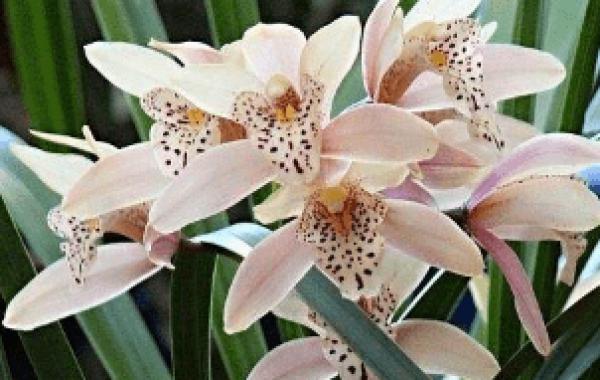
Only by doing a good job of pest and disease control on Sijilan orchids can the quality of the plants for market be guaranteed. The main diseases during the flowering season of Sijilan are mainly blight and anthracnose, while the main pest is thrips. So how should pests and diseases be controlled during the flowering season of Sijilan?
I. Soft rot of Sijilan orchids during the flowering season
Soft rot occurs relatively commonly in summer, and Sijilan varieties such as Xiaotaohong, Xiaoshentong and Caihong are prone to this disease. In the early stage of this disease, there are fine black spots at the base of the bud core; the young bud stops growing and begins to shrivel and droop; when it is pulled out, the base of the bud core is already black and rotten, with a watery, snot-like thick substance and a foul odor. This disease spreads very quickly, so it must be controlled early; as soon as the leaves of the diseased plant look somewhat shrunken and the pseudobulbs are somewhat yellowish, control should be carried out immediately. The main control measures are:
1. Cut out and separate the infected plants, and at the same time reduce the medium on the pot surface so that the bulbs are slightly exposed and kept dry.
2. Apply medication immediately for control. Commonly used pesticides include thiophanate-methyl, carbendazim, chlorothalonil, zineb, etc. During the high-temperature period in summer, the concentration of the medication should be appropriately reduced to avoid phytotoxicity caused by high temperatures.
II. Anthracnose of Sijilan orchids during the flowering season
Anthracnose is a common disease of Sijilan orchids, mainly harming the leaves. The lesions on the leaves initially appear round or oval, with the center light brown or grayish white and the edges dark brown or blackish brown; later, black dots form on the lesions, scattered or arranged in a slightly concentric pattern. As the disease develops, the lesions on the leaves can expand into irregular large spots several centimeters long, or the lesions can join together into patches, later causing the leaves to wither and yellow.
In addition to keeping the orchid shed well ventilated, the control steps for anthracnose are also very important. Before spraying, first clean away all diseased leaves; the diseased leaves on the plants should be removed, and the diseased leaves and dead leaves that have fallen on the ground should also be removed, and then the pesticide should be sprayed. Commonly used pesticides include carbendazim-thiram, carbendazim, thiophanate-methyl, etc. Water again the next day after spraying.
III. Thrips on Sijilan orchids during the flowering season
When Sijilan orchids bloom, the flowers are delicately fragrant and far-reaching, easily attracting thrips to gnaw on the petals, reducing the ornamental value of the flowers. When the damage is severe, it may also cause the petals to curl and fail to open properly; thrips also suck the sap of the leaves, causing yellow-white spots on the leaves and affecting their ornamental value.
The pesticides usually used include decis, dimethoate, phoxim, etc. When spraying during the ornamental period of the flowers, the concentration should be appropriately reduced to prevent phytotoxicity.