How to care for orchids in summer? Master these care essentials
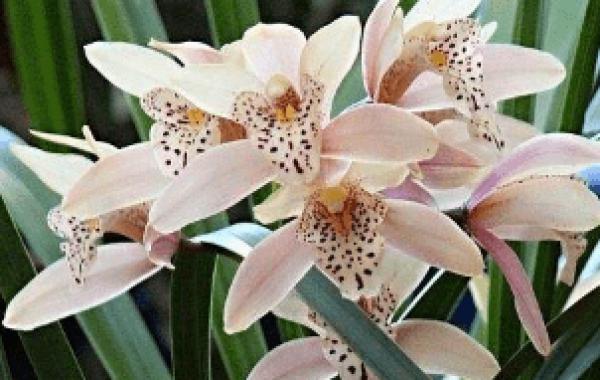
Summer weather is hot, and plant growth is affected to some degree. Today I will share with everyone how to care for orchids in summer.
How to care for orchids in summer:
First, strengthen ventilation to prevent heatstroke and cool down. High temperature and muggy heat are the great enemies of orchid growing. Enclosed orchid rooms generally have push-pull aluminum alloy glass windows that can be opened and closed freely. As long as there is a temperature difference between inside and outside the orchid room, the degree to which the push-pull windows are opened can be used to control convection for natural ventilation. If the temperature difference is too small and there is no wind, exhaust fans, miniature electric fans, and the like can be used to blow a gentle breeze and promote air circulation. If the temperature exceeds 35°C, a water curtain or air conditioning can be used for cooling if conditions permit; if conditions are limited, water can often be sprinkled on the ground to lower the temperature.
Second, create humidity according to local conditions, and avoid being too dry or too wet. Summer temperatures are high, water evaporates quickly, and air humidity is on the low side, so efforts must be made to create a small environment suitable for orchid growth. Generally, water troughs can be used to increase humidity and raise air humidity. Water troughs are set up together with the orchid shelves, and each layer of orchid shelf should be fitted with a water trough. A drain switch should be installed at the low end of the water trough so that dirty water can be drained at irregular intervals. The depth of the water trough is generally best at 20 cm to 30 cm. Fill it with water and cover it with wire mesh, with the orchid pots sitting on top. This both increases air humidity and has a certain cooling effect. Combined with spraying water on the ground, humidity during the day on sunny days can reach about 40%, which can basically meet the humidity requirements of orchids. If there is continuous cloudy weather and the air humidity in the orchid room is too high, exhaust fans, miniature electric fans, and the like should be turned on in time to blow a gentle breeze and promote air circulation so as to reduce air humidity. In summer, watering should be flexibly controlled in timing and frequency according to the pots and growing medium used. Generally, watering in the evening and morning is best. Generally, do not use the soaking-pot method or the drenching method for watering, and spray water and mist as little as possible, so as to avoid water being poured into the leaf center and causing rot.
Third, be cautious about rain exposure, reinforce the orchid room, and actively prevent attacks from typhoons and violent wind and rainstorms. Summer is a rainy season. In areas with good air quality, orchids can appropriately be allowed to receive rain during the rainy season; but in places with serious air pollution, where acid rain is more common, letting orchids receive rain very easily causes various diseases, and this should be firmly avoided. In places with good air quality, what is suitable for orchids is long-lasting gentle wind and fine rain. After the rain clears, the orchid seedlings are especially spirited and grow rapidly. During the growing season, orchids fear "sun showers" and sudden violent wind and rainstorms in the high-temperature season. When encountering a "sun shower," orchid growers should promptly irrigate the orchids so that the summer heat in the pots dissipates at once, and strengthen ventilation to dry the water in the leaf centers of new seedlings as quickly as possible. In addition, the orchid room should be reinforced, and the weather forecast should be checked at any time. Once there is extreme weather such as a typhoon, rapid measures should be taken in advance to shelter the orchids from wind and rain and avoid harm to the orchids.
Fourth, apply orchid fertilizer skillfully to promote growth. Summer is the peak growing season for orchids, and topdressing is very necessary, but it needs to be flexibly controlled according to temperature changes. Fertilization is mainly based on topdressing orchids in early summer, and root application of organic fertilizer is appropriate, but it should be applied thinly and frequently, and fertilization should be done in the evening, with "revival water" poured the next morning. Foliar topdressing can also be used, and inorganic fertilizer can be applied, spraying with one-thousandth urea plus one-thousandth monopotassium phosphate. To prevent fertilizer damage, water should be sprayed the next morning to wash the leaves. Biological bacterial fertilizer can also be sprayed, such as Cugen Sheng, Zhiquan, Lanjun Wang, Xishuo, Gaocui, and others. Organic fertilizer, inorganic fertilizer, and biological bacterial fertilizer are used alternately, once a week. After the summer solstice, the high-temperature season begins. Root application of organic fertilizer or inorganic fertilizer is prohibited. Fertilization is best done by spraying foliar fertilizer, and one-thousandth urea plus one-thousandth monopotassium phosphate or biological bacterial fertilizer can be used alternately to supplement nutrients and promote vigorous growth of orchid plants.
Fifth, focus on prevention and keep things clean frequently, and take precautions before it rains to prevent orchid diseases. The high-temperature season is also a season when orchid pests and diseases occur frequently. In daily management, the principle of giving priority to prevention and combining prevention with control should be followed, and efforts should be made to avoid pests and diseases. Ordinarily, pay attention to the cleanliness and hygiene of the orchid room, promptly remove all kinds of dirt in the orchid-growing area, clean the ground and orchid shelves, and frequently use limewater. In a high-temperature and high-humidity environment, orchids are prone to scale insects and thrips. These pests will damage orchid leaves and should be killed in time. Soft rot and stem rot are the great enemies of orchids in summer. Once this disease is found, a decision should be made immediately, the pots should be repotted at once, and the diseased seedlings and nearby seedlings should be cut away without hesitation. Do not harbor any wishful thinking and delay the timing of prevention and control.