A Detailed Guide to the Four-Season Care and Management of Clivia
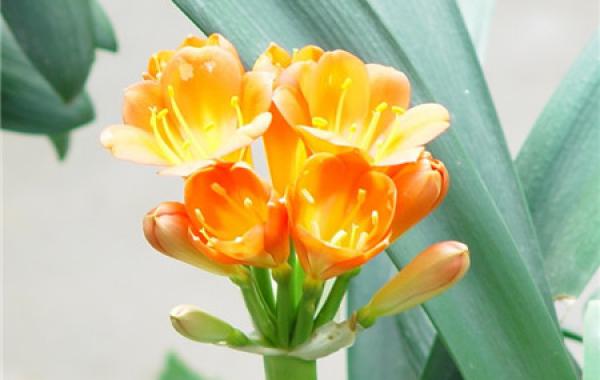
Points to Note When Growing Clivia in Winter
1. Fertilizing. Clivia has the fastest vegetative growth rate in winter and needs the most nutrients, so applying winter fertilizer well is very important. Before bringing the pots indoors, use bone meal, roasted sesame seeds, cooked soybeans, etc., or a compound fertilizer, and water it in once every 15 to 20 days; you can also water the roots with a soak made from animal and plant residues. Make sure the fertilizer is well rotted and applied dilute to prevent damage from concentrated fertilizer.
2. Watering. Clivia has fleshy roots and likes air but fears waterlogging. In addition, its leaves have a waxy layer, and winter temperatures are low, so transpiration and evaporation of water are minimal. Therefore, do not water too much; simply water along with fertilizing to keep the potting soil moist. Never flood it heavily, as this causes root rot and plant death.
3. Keeping warm. The most suitable growing temperature for Clivia is 15°C to 25°C; growth stops at 10°C, and frost damage occurs at 0°C. Therefore, in winter you must keep it warm and protect it from freezing. After the flower stalk emerges, maintaining around 18°C is ideal. If the temperature is too high, the leaves and flower scape grow leggy and thin, the flowers are small and poor in quality, and the flowering period is short; if the temperature is too low, the flower stalk is short and the plant easily suffers from "arrow clamping" and premature flowering, which affects quality and reduces ornamental value.
4. Adjusting light. Clivia likes scattered light and avoids direct strong light. When grown indoors in winter, the pot should be placed in a spot with ample light. Especially before flowering, there should be good light, which helps the flower buds develop plump and strong. After flowering, lower the temperature appropriately and avoid strong light, keeping good ventilation, which helps extend the flowering period.
5. Protecting the leaves. Plump leaves make strong flowers, and green leaves make brilliant blooms; short, broad, thick, green, glossy and upright leaves are the characteristics of a healthy Clivia and the foundation for promoting flowering and enhancing ornamental value. To maintain robust leaf quality, besides providing reasonable fertilizer and water, you must keep the leaf surface clean to improve photosynthetic efficiency.
Methods for protecting the leaves: first, wash the leaves regularly, spraying and rinsing with clean water or wiping dust off soiled leaves to keep the leaf surface clean; second, promptly spray fungicide to prevent leaf spot, leaf blight and stem rot, ensuring the leaves stay green and the flowers stay vibrant.
Clivia fears high temperatures. In midsummer, the temperature is often above 30°C, which is extremely unfavorable for Clivia growth. For this reason, people commonly build a shade frame to cool it down. You can also bury the Clivia, pot and all, in sand (burying the pot completely), then sprinkle water on the sand once each morning and evening. This not only keeps the potting soil moist, but more importantly uses the heat absorption from water evaporating in the sand to achieve cooling. This helps Clivia pass safely through the hot summer.