What should you pay attention to when fertilizing orchids? Keep these points in mind
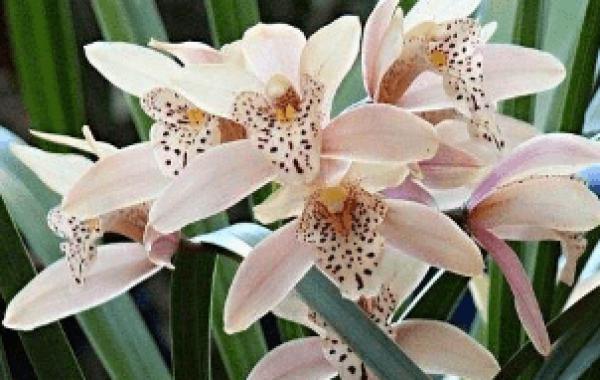
Orchid fertilization is a hot topic that many orchid growers pay close attention to, as it directly affects the growth of orchids. So what points need attention during the fertilization of orchids? Let me introduce them below.
Orchid roots have no fibrous roots, and within the roots there are symbiotic bacteria. The root bacteria absorb mineral nutrients from outside and supply them to the orchid, while the orchid root cells provide water and organic nutrients to the root bacteria, forming a mutually beneficial and coexisting symbiotic relationship. However, a stable balance must be maintained between them for lush growth. Preparing suitable nutrient soil and fertilizing appropriately to maintain the balance between the two can promote vigorous orchid growth.
Some people used to think that orchids grow in the mountains and are naturally elegant, so plain water and fresh air would be enough to sustain them. Others, loving orchids too deeply and being too impatient, often applied heavy fertilizer with high efficiency and high concentration, causing results contrary to their wishes. Therefore, we must seriously explore scientific and rational fertilization.
Types of fertilizer (can be classified by their active ingredients, fertilizer properties, and fertilizer usage)
1. Classified by the active ingredients of the fertilizer, there are mainly nitrogen fertilizer, phosphorus fertilizer, and potassium fertilizer.
1) Nitrogen is a main component of the cell nucleus and proteins, and is also an indispensable element in forming chlorophyll. Nitrogen fertilizer can promote lush and robust orchid leaves; otherwise, the leaves droop and soften, sprouting is difficult, and the reproduction rate is low.
2) Phosphorus is also a main component of the cell nucleus. In plant cells, it directly affects cell division, chlorophyll formation, and protein synthesis and transformation, and can promote flower bud differentiation and growth, resulting in larger flowers, brighter color, and stronger fragrance.
3) Potassium directly participates in photosynthesis, can make cell physiology normal, and is also related to the synthesis of carbohydrates, proteins, and fats. Potassium fertilizer can make orchid stems, leaves, and roots grow robustly. It makes leaves tough and not easy to break, and enhances cold resistance and disease resistance. It can also increase the fragrance of the flowers.
4) In addition to the three main elements nitrogen, phosphorus, and potassium, orchids also need various trace elements such as calcium, magnesium, iron, boron, and zinc. The demand for nitrogen, phosphorus, and potassium is relatively large, and this must be addressed through fertilization, repotting, and soil replacement.
2. Classified by the properties of the fertilizer, it can generally be divided into two types: organic and inorganic fertilizers.
1) Before use, organic fertilizer must be fully fermented, and the fermentation time must be at least more than one month. Organic fertilizer can improve soil structure, increase soil humus, make the soil well aerated and water-retentive, and its fertilizer effect is also long-lasting, continuously decomposing long-acting nutrients for orchids to absorb.
2) Inorganic fertilizer, also called chemical fertilizer, has a high nutrient content, is clean and odorless, does not need fermentation, and can be diluted and used immediately. It is convenient and fast-acting, but its effect lasts only a short time, and long-term use can deteriorate soil structure.
Generally, orchid growers oppose the use of chemical fertilizers. In fact, if orchids are mainly given organic fertilizer and chemical fertilizer is used in combination, the effect is still very good.
3. Classified by fertilizer usage, it can be divided into base fertilizer and top dressing.
1) Top dressing is fertilizer applied during the growing season after orchids are planted. Generally, orchids are only repotted and given new soil after 2-3 years, and nutrients must be supplemented in the meantime, so top dressing should be applied.
Fertilization timing: During the spring and summer growing season of orchids, to make orchids grow robustly and vigorously, more nitrogen fertilizer can be applied. If it is a variegated-leaf variety, then apply less nitrogen fertilizer or none at all, because dark green leaf color will affect the ornamental effect of the leaf variegation. Do not fertilize when the summer temperature is above 30°C, because the potting soil temperature is relatively high, water evaporates too quickly, and the concentration of residual fertilizer increases, which is harmful to growth. If fertilized too frequently in summer, it easily stimulates autumn shoots, and the plants that grow later will be short and weak, and the next year's spring shoots will be inhibited as a result. Do not fertilize when the temperature is below 10°C, because at this time orchids are in a semi-dormant state and do not absorb nutrients. Fertilizer should only be applied when sunlight and temperature are suitable and photosynthesis is vigorous. In winter, orchids are in a dormant state, so there is even less need to fertilize.
Before orchid new shoots grow to half-maturity from the pseudobulb, the period before and after the leaf buds emerge from the soil and during their extension is the vegetative growth stage of orchids, and slightly more nitrogen fertilizer should be applied, while phosphorus and potassium fertilizer should be applied less. After vegetative growth comes reproductive growth. The nutrients produced by photosynthesis are stored in the pseudobulbs and leaves for flowering or new shoot growth. At this time, more phosphorus and potassium fertilizer is needed. Applying an appropriate amount of phosphorus and potassium fertilizer can promote the pseudobulbs to become plump and mature, and promote budding and flowering.
If orchid leaves are pale and yellowing and the plants are weak, it is mostly caused by fertilizer deficiency, and top dressing should be applied in time. However, sometimes leaves also turn yellow due to overly strong sunlight. Diseased plants should not be fertilized; wait until the disease is cured and the plant has recovered before fertilizing. Robust orchid seedlings can be helped by applying more fertilizer. Ancient orchid growers had the experience: "Never suddenly fertilize a thin orchid. Never leave a fat orchid thin for long." This means that a thin orchid that has never been fertilized cannot suddenly be given strong fertilizer, for it cannot absorb it and it will be harmful. For orchids that are regularly fertilized, they also cannot go without fertilizer for a long time. In short, uneven fatness and thinness is not beneficial to orchids.
After each fertilization, clear water must be added the next morning, which facilitates absorption by the orchid and also prevents damage to orchid roots from improper concentration. Generally, fertilization is not suitable before and after flowering.
Fertilization must mainly use organic fertilizer, which can make the soil loose and well structured, benefiting orchid growth. Also, apply thin fertilizer frequently, that is, the predecessors' experience of "it is better to apply frequently and lightly, and avoid sudden heavy applications," which is what people today mean by small amounts at more frequent meals. When applying, dilute the water and fertilizer appropriately, then use a watering can to pour it into the root zone, and do not contaminate the orchid leaves.