How to grow Clivia? Detailed answers to common cultivation problems
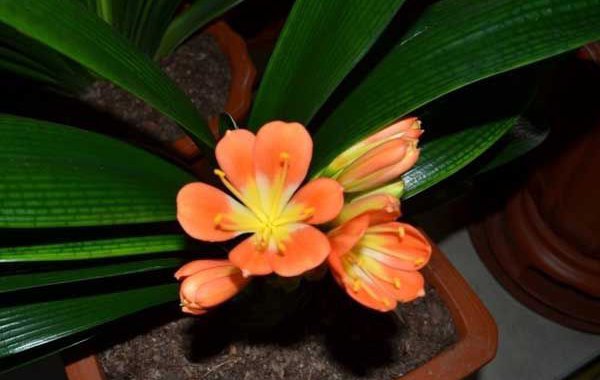
Clivia, also known as sword-leaf lycoris and large-leaf lycoris, is an ornamental flowering plant of the genus Clivia in the Amaryllidaceae family. It is native to southern South Africa. It is a perennial herbaceous plant, with a flowering period lasting 30 to 50 days, mainly in winter and spring, and it also blooms around New Year's Day to the Spring Festival. It dislikes strong light and is a semi-shade plant, prefers cool conditions and dislikes high temperatures. The optimum growing temperature is 15 to 25 degrees Celsius, and growth stops below 5 degrees Celsius. It prefers rich, well-drained soil and moist soil, and dislikes dry environments. Clivia has high ornamental value, and in China it is often grown in pots in greenhouses for viewing. It is propagated by division or seeds. Clivia nobilis has the same effects; it is cultivated in greenhouses in various places and has a variety of flower colors.
Growth habits of Clivia
Clivia is native to the tropical regions of southern Africa and grows beneath trees, so it fears heat and is not cold-tolerant; it likes a semi-shaded and humid environment, fears strong direct sunlight, and its best growing temperature is between 18 and 28 degrees Celsius. Below 10 degrees Celsius or above 30 degrees Celsius, growth is inhibited. Clivia likes a ventilated environment and prefers deep, fertile, loose soil, and is suitable for growing in loose, fertile, slightly acidic organic soil. Clivia is a famous greenhouse flower and is suitable for indoor cultivation.
The roots and leaves have a certain correlation. When new roots grow, new leaves will also emerge along with them. If the roots are lost (rotted from waterlogging or dried to death, etc.), as long as the leaves have not wilted, pay attention during care to maintaining soil moisture, and remember not to water too much, too dry, or too often; then the roots will regrow new root systems and the plant can survive (with proper care, new roots can be found growing in about 10 days). Damage to the leaves will likewise affect the roots.
Under normal circumstances, Clivia blooms once a year, generally when it has more than twelve leaves. If the indoor growing temperature is suitable, it can bloom around the Spring Festival. Known as the flower of wealth and honor, Clivia generally blooms once a year after it matures; it is rare for it to bloom twice a year, and blooming three times is extremely rare. Medium
What are the reasons for Clivia flower stalk binding?
1. Temperature too low: The temperature for Clivia to send up its scape is about 20 degrees Celsius. If the temperature remains below 15 degrees Celsius for a long time, its scape is very difficult to grow.
2. Insufficient nutrition: Clivia has a relatively large demand for phosphorus and potassium fertilizers during bud formation and flowering. If lacking, the strength for Clivia to send up its scape will be insufficient, resulting in the flower stalk binding phenomenon.
3. Lack of oxygen in the potting soil: During the bud formation period, Clivia's root system has a large oxygen demand. If the potting soil is too fine or remains in a relatively moist state for a long time, the permeability of the potting soil will be reduced, resulting in a lack of oxygen and causing the flower stalk binding phenomenon.
4. Constant-temperature cultivation: Clivia flowering requires a day-night temperature difference of 5 degrees Celsius to 8 degrees Celsius. If the plant is kept at a basically identical temperature during both day and night, it will affect Clivia's nutrient accumulation, and the flower stalk binding phenomenon is very likely to occur during the flowering period.