How to fertilize orchids? Master the correct methods and precautions
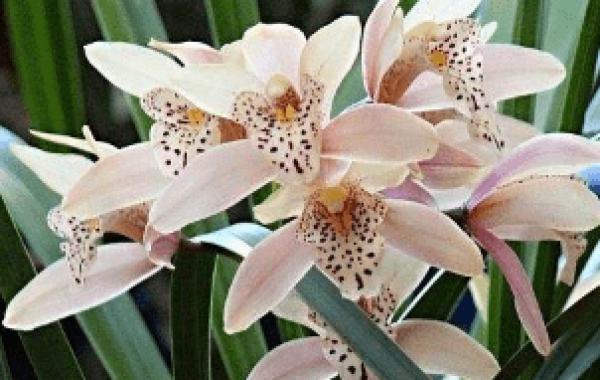
Orchids have elegant form, slender leaves, stay evergreen all year round, and bear rather delicate flowers that give off a faint, fresh fragrance. Growing them at home lets you feel a sense of vitality. But if you want orchids to grow well and bloom abundantly, you have to give them plenty of fertilizer. Today let me share with you the fertilization methods and precautions for orchids, so let's take a look together.
1. Fertilization methods
(1) According to how the orchid is growing, you should also check the leaves to see whether there are any pests or diseases before fertilizing the leaves.
(2) At the turn of spring and summer, orchids begin to sprout. At this time, fertilizing the orchid's roots can promote rapid growth of new shoots.
(3) The fertilizer used for orchids is mainly nitrogen-based; some organic liquid fertilizer can be sprayed on. In autumn, orchids enter the reproductive growth stage, and applying phosphorus and potassium fertilizer is better.
(4) In late autumn and early winter, overwintering fertilizer should be applied; solid fertilizer can be used. Applying some liquid fertilizer at a higher concentration can both enhance the plant's cold resistance and lay a good foundation for the next year's growth.
(5) The fertilizer used when planting or repotting is called base fertilizer. The fertilizer used during the growth period, including the fertilizer used during the flowering period, is called top dressing. Fertilizing orchids can be divided into two aspects: base fertilizer and top dressing. Base fertilizer is some solid fertilizer used when planting or repotting; it contains relatively more organic matter and is beneficial for later growth. Top dressing is used during the growth period, mainly liquid fertilizer. Solid fertilizer can be directly and evenly mixed with the soil, while liquid fertilizer needs to be diluted before use.
(6) Key points for fertilizing at each stage
① Sprouting stage: when the plant has just revived, it needs to start replenishing nutrients, but at this time the plant that is beginning to recover
cannot be given heavy fertilizer in the soil, so the fertilizer can be increased gradually. In the early stage, you can apply a thin fertilizer once, then water thoroughly. You can use nitrogen fertilizer or alum fertilizer for irrigation, generally at a concentration of about 1:200; if you are worried about harming the plant, you can dilute it a bit more.
② Growth stage: the fertilizer requirement is relatively large, so top dressing is needed. You can continue applying alum fertilizer water, or you can use some fertilizers specially made for orchids, because this kind of special fertilizer can provide the nutrient elements the plant needs, not just single elements such as nitrogen and phosphorus, but also some trace elements or rare nutrients.
③ During the seedling stage, the frequency of fertilization should be lower; for adult plants, the frequency can be higher.
④ Before the flowering period, during the bud stage, you can add some phosphorus and potassium fertilizer to promote flower bud differentiation and the growth of the flower stalk.
⑤ Dormancy stage: in winter the plant may enter dormancy. At this time the plant's metabolic rate slows greatly, the temperature drops, and below 10°C growth may even stop. You cannot fertilize a plant that is in dormancy, because the roots find it hard to absorb nutrients, and too strong soil fertility will burn the roots.
2. Fertilization precautions
(1) Solid fertilizer can be directly and evenly mixed with the soil when planting or repotting. The liquid fertilizer used for top dressing needs to be diluted with water; the ratio of fertilizer to water can be controlled at about 1:200.
(2) Fertilizer cannot be applied during the acclimatization period or when there is a serious pest or disease problem.
(3) In summer, when the temperature is higher than 30°C, or in winter, if the temperature is lower than 10°C, the orchid will basically be in a non-growing state. At this time fertilization should be paused, otherwise it will harm the plant.
(4) Apply frequently and thinly, eat small meals more often. Most plants cannot be fed enough all at once, and orchids are the same. For vigorously growing plants, apply a thin liquid fertilizer once every 10-15 days. For weak-growing ones, the fertilization cycle can be appropriately shortened, but thin fertilizer should still be ensured.
(5) Spraying foliar fertilizer: foliar spraying can both supplement the orchid plant's nutrition through absorption by the orchid leaves and avoid fertilizer touching the roots and causing fertilizer damage. For orchids, it is a relatively good fertilization method. As long as during the growth and development period you persist in doing a foliar spray about once every 10 days, you can grow orchids well without needing to fertilize into the pot.