What are the cultivation methods and flower language of freesia?
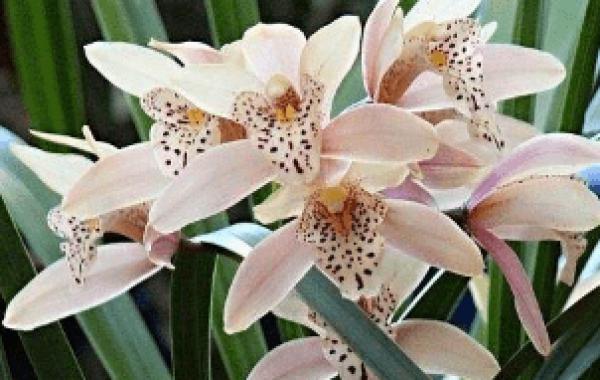
Freesia is one of the most endearing flowers, and today I will share it with you.
Cultivation methods of freesia
I. Pretreatment of the corms
Before planting freesia, the corms need pretreatment such as disinfection, breaking dormancy, and promoting root development. When disinfecting the corms, you can soak the corms in a 500-800 times dilution of fungicides such as carbendazim or thiophanate-methyl for 1-2 hours; once the time is up, scoop them out and dry them in the shade. Root-promoting treatment should be done so that planting occurs after roots have emerged; the root forcing should not go on too long, otherwise the root system is easily damaged during planting.
II. Soil
Freesia prefers sandy loam rich in organic matter, with strong water retention and good drainage, with an acidity value of 6-7.2. Before planting, the soil can be disinfected with 6-10 g of quintozene, 50-70 g of methyl bromide, and 8-12 g of carbofuran per sq m. After applying the chemicals, turn over and rake the soil level, and sowing can be done after 5-7 days.
III. Planting out
Generally, the planting-out period for freesia is from September to October, overwintering with the help of relevant protective facilities, and the flowering period is mainly from March to April. When planting, the corms are usually covered with 2-3 cm of soil, not too thick; after planting, the soil surface is often covered with a thin layer of peat soil, pine needles, rice straw, sawdust, etc., which can keep the soil moist.
IV. Fertilizer and water management
From planting until sprouting, the soil must be kept moist. After flower buds appear, the amount of watering should be gradually reduced appropriately, keeping the soil surface as dry as possible, which can effectively lower air humidity and prevent diseases.
The time from planting out to flowering is relatively short, and the organic fertilizer and compound fertilizer applied before planting can basically meet the growth needs; however, if the plants grow weakly, when they have 2-4 leaves, apply one more topdressing of ammonium nitrate, urea, and potassium sulfate. At the beginning of flowering, use 0.2% monopotassium phosphate as a foliar fertilizer, but avoid topdressing before and after bud emergence.
V. Temperature management
Temperature is very important for freesia cut flower production. Generally, about 6 weeks after planting, the inflorescence has fully differentiated, and smaller corms will be delayed by 2-3 weeks. During the flower bud differentiation stage, avoid high temperatures above 25°C and low temperatures below 10°C. From the 4-leaf stage onward, ensure that the temperature is maintained at 13-14°C for more than 4 weeks, so as to smoothly induce flower primordium differentiation during the 4-6 leaf period; this helps improve cut flower yield and quality.
After flower buds appear, appropriately raise the ambient temperature, which can promote flowering; when the flowering period needs to be extended, after the flowers open, the temperature can be lowered to about 15°C, which can prolong the cut flower harvest period. For greenhouse and glasshouse management, note that ventilation is needed when the room temperature is above 25°C, and covering for insulation or heating is needed below 10°C.
VI. Light management
During the cultivation of freesia, especially at the seedling stage and flowering stage, appropriate shading is needed. During the leaf growth period, appropriate shading can lower soil temperature and promote root development. Before flower bud differentiation, giving a short-day treatment of about 10 h is beneficial for promoting flower bud differentiation and increasing flower stem length as well as the number of flowers and lateral spikes on the inflorescence.
After flower bud differentiation is complete, appropriately extending the photoperiod is beneficial for promoting good inflorescence development and earlier flowering. Although freesia likes light, it should also avoid strong light exposure; under conditions of excessively strong light and relatively high temperature, a shade net with 70% light transmittance can be used for shading.
VII. Netting
The flower stems of freesia are relatively soft, and the inflorescence bends and grows; when there are many flowers, the flower stems easily droop and lodge. At the 3-4 leaf stage of the plants, you can begin setting up supports and netting, placing a layer of netting about 25 cm above the ground, and then setting up 2-3 more layers of netting as the plants grow. Generally, the netting mesh uses 10 cm x 10 cm or 10 cm x 15 cm squares.
Flower language of freesia
The flower language of freesia is purity.
Flower motto: You should know that behind love hide happiness and pain, sorrow and regret. Planted in autumn, it blooms in winter. Marry first, then fall in love.
That is all for the sharing on how to grow freesia and the flower language of freesia. Do you still like the content introduced by the editor? If you want to learn more about freesia, go check relevant books; the information obtained in this way is very reliable.