How to Water and Fertilize Orchids? A Detailed Guide to Water and Fertilizer Management
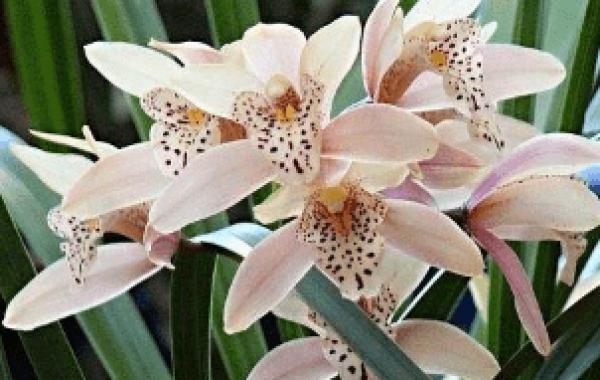
Orchids are fresh and elegant, and are loved by many enthusiasts. So how exactly should water and fertilizer management be carried out for orchids? Below is an introduction to orchid water and fertilizer management methods.
(1) Water: Orchids dislike overly moist growing medium. In traditional orchid care, the principle is "water when dry, stop when moist," and the potting medium should be kept slightly on the dry side. There has long been a saying of "dry orchids, moist bamboo." Artificial growing media are characterized by good permeability, so when artificial media are used for planting, no matter how much the particle sizes vary, the actual gaps between the pot medium will increase greatly, and even with heavy watering during the growing period, the orchid plants cannot become waterlogged. This completely overturns the traditional saying of "dry orchids, moist bamboo." When watering orchids, keep the following in mind:
1. Different media and different species require different moisture levels. For example, Dendrobium and Cattleya should be kept on the drier side, while Phalaenopsis and Ludisia should be kept on the moister side.
2. It varies with season and weather. In winter, because temperatures are lower and orchids stop growing, the medium should be on the dry side; in spring, as temperatures warm up and orchids begin to grow, it should be slightly moist; while in summer and autumn, the weather is hot, evaporation is high, and this is also the orchid growing period, so more water and fertilizer should be given.
3. It varies with each stage of orchid growth. For example, orchids need more water during the growing period, less during the dormant period, and water should also be appropriately reduced during the flowering period. On hot days, watering should be done in the morning or around evening, while in winter it should be done at noon. As for the requirements of the surrounding environment of the site, it is necessary to create and maintain ventilation around the site, and in summer and autumn, frequently spray clean water on the ground to maintain relatively high air humidity.
(2) Fertilizer: Artificial growing media have poor fertilizer effect and poor fertilizer retention capacity. Therefore, special requirements are placed on fertilizer application techniques. The methods used are:
1. Root application: For example, diluted fermented grass water, and diluted fermented chicken and bird manure and cake fertilizer.
2. Foliar spraying: For example, monopotassium phosphate at 1:1000, urea at at least 3:1000, and orchid-specific compound fertilizer at 1:400. For terrestrial orchids, after they are brought out of the house in spring, apply organic fertilizer 2-3 times; stop in summer; apply organic fertilizer 2-3 times in autumn. When orchids grow leaves in spring, a few sprays of compound fertilizer with high P content may be appropriately applied. In fertilizing, the principles to keep in mind are:
(1) Different fertilizers are applied at different growth and development stages. Stop application during the dormant period and flowering period. During the growing period, apply fertilizers with a higher N content, such as grass and leaf water, cake fertilizer, urea, etc. Before and after flower bud formation, apply fertilizers rich in P, such as chicken manure, bone meal, monopotassium phosphate, etc., with each interval of 7-10 days, spraying continuously several times.
(2) Different types require different fertilization. For example, variegated orchids should not be given N fertilizer, and many wild mountain grass species should not be heavily fertilized during the introduction and domestication stage.
(3) The concentration of fertilizer used should be on the low side, and fertilizer should be applied thinly and frequently.
Orchid water and fertilizer management places very high and strict demands on the environment and on technique. Friends in need are advised to do more research in advance before dealing with it.