How to manage the Christmas cactus during its blooming period? A detailed guide to care essentials
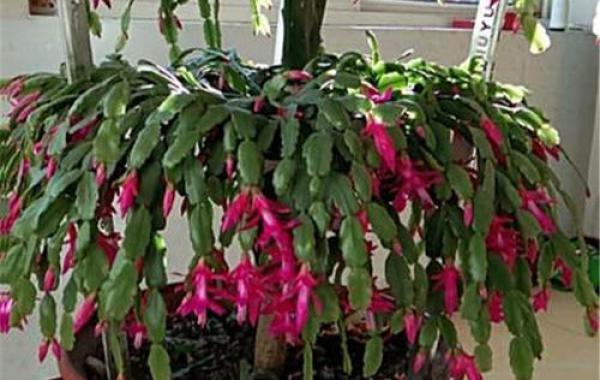
The blooming period of the Christmas cactus is generally from October to February of the following year. During the blooming period, it is very necessary to strengthen routine management. Below, let the editor introduce the management methods for the Christmas cactus during its blooming period.
1. Keep warm and increase light
The Christmas cactus likes a warm environment. In winter, the indoor temperature should be kept between 14-20°C. If the temperature is too low, the flower buds cannot develop normally. If it stays below 5°C for a long time, the plant is prone to freezing damage and death. Too high a temperature is also not good, as it easily shortens the blooming period.
Although the Christmas cactus is a short-day plant, strengthening light during the blooming period is very necessary. Indoors, it should be placed as much as possible on a south-facing windowsill with ample light. To make the plant bloom evenly, the pot should also be turned once every seven days. If indoor light is seriously insufficient or there are consecutive cloudy days, fluorescent lamps can be used for supplemental lighting. The method is to turn on the lamp for 3-4 hours every evening, which can allow the flowers to open normally.
2. Control water and stop fertilizing
The Christmas cactus is especially sensitive to water during the blooming period. Too much water easily causes bud drop, and in severe cases it can also cause root rot of the rootstock, leading to plant death; lack of water easily causes the flower segments to wilt, and the flower buds cannot develop and mature. The correct method is: keep the potting soil in a slightly moist state, preferably so that it does not crumble when pinched by hand. At noon every day, spray with clear water at the same temperature as the room, which can achieve twice the result with half the effort. If the potting soil is too dry, do not water it thoroughly all at once either; water it gradually. Watering too much at one time will cause the plant to drop buds and stem segments.
The Christmas cactus likes fertilizer. During its growing period, fertilizer can be applied according to the principle of frequent application of diluted fertilizer, but generally speaking, fertilization should stop once the flower buds have basically formed. Fertilizing during this period can very easily cause the plant to drop buds.
3. Ventilation and pest prevention
For the Christmas cactus grown indoors in winter, keeping warm is of course important, but ventilation should not be neglected either. Poor ventilation very easily causes diseases and pests, so on sunny days at noon, doors and windows should be opened appropriately for ventilation; the main pests of the Christmas cactus during the blooming period are aphids and scale insects. In addition to paying attention to ventilation, if they occur, when there are few, they can be removed by hand; when there are many, they can be sprayed and killed with a 1000-fold solution of 40% omethoate emulsifiable concentrate.
The blooming period of the Christmas cactus (crab claw lotus) is generally from November to January of the following year. Management during this period is especially important, directly affecting the quality of flowering and the dormancy after flowering. Through many years of practice, the author has summarized a set of blooming-period management techniques for the Christmas cactus, now introduced as follows for the reference of fellow flower lovers.
1. Control water and stop fertilizing
The Christmas cactus is especially sensitive to water during the blooming period. Too much water easily causes bud drop, and in severe cases it can also cause root rot of the rootstock, leading to plant death; lack of water easily causes the flower segments to wilt, and the flower buds cannot develop and mature. The correct method is: keep the potting soil in a slightly moist state, preferably so that it does not crumble when pinched by hand. At noon every day, spray with clear water at the same temperature as the room, which can achieve twice the result with half the effort. If the potting soil is too dry, do not water it thoroughly all at once either; water it gradually. Watering too much at one time will cause the plant to drop buds and stem segments.
The Christmas cactus likes fertilizer. During its growing period, fertilizer can be applied according to the principle of frequent application of diluted fertilizer, but generally speaking, fertilization should stop once the flower buds have basically formed. Fertilizing during this period can very easily cause the plant to drop buds.
2. Keep warm and increase light
The Christmas cactus likes a warm environment. In winter, the indoor temperature should be kept between 14-20°C. If the temperature is too low, the flower buds cannot develop normally. If it stays below 5°C for a long time, the plant is prone to freezing damage and death. Too high a temperature is also not good, as it easily shortens the blooming period.
Although the Christmas cactus is a short-day plant, strengthening light during the blooming period is very necessary. Indoors, it should be placed as much as possible on a south-facing windowsill with ample light. To make the plant bloom evenly, the pot should also be turned once every seven days. If indoor light is seriously insufficient or there are consecutive cloudy days, fluorescent lamps can be used for supplemental lighting. The method is to turn on the lamp for 3-4 hours every evening, which can allow the flowers to open normally.
3. Ventilation and pest prevention
For the Christmas cactus grown indoors in winter, keeping warm is of course important, but ventilation should not be neglected either. Poor ventilation very easily causes diseases and pests, so on sunny days at noon, doors and windows should be opened appropriately for ventilation; the main pests of the Christmas cactus during the blooming period are aphids and scale insects. In addition to paying attention to ventilation, if they occur, when there are few, they can be removed by hand; when there are many, they can be sprayed and killed with a 1000-fold solution of 40% omethoate emulsifiable concentrate.