Can orchids still survive after their roots dry out and become hollow?
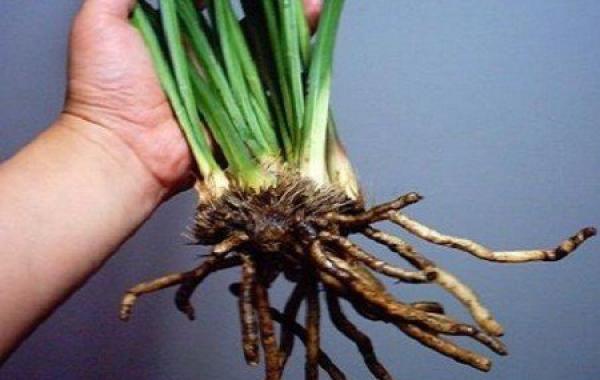
Friends who enjoy growing orchids in pots have probably all had the experience of orchid roots drying out and becoming hollow. Experienced friends may be able to handle it well; but for beginners without growing experience, it may leave them at a loss. So, ? Today, the editor will share some knowledge on this subject with everyone.
When orchid roots dry out and become hollow, it is generally caused by poor air permeability in the pot, or by the potting soil becoming compacted, or by the potting soil being too wet or even waterlogged - though of course there may be many other causes as well. Poor air permeability in the potting soil causes microorganisms to multiply and grow, seriously hindering or suppressing the normal respiration of the orchid's root system. What exactly is the real cause of hollow orchid roots? Below, please follow the editor as we explore this in depth.
First of all, if a potted orchid is kept in a water-deficient state for a long time, its root system will shrink from drying, but this often will not be severe enough to directly cause hollow roots. The most direct cause of hollow roots is that the roots cannot breathe, which accelerates the massive growth of microorganisms.
Analyzing the internal structure of orchid roots, the orchid is a typical monocotyledonous plant, and the cells beneath the cortex are very active, with the phenomenon of symbiotic root fungi present. Looking at its cross-section structure, it is easy to find that it is composed of the outer velamen tissue, the middle cortical tissue, and the inner central column.
For beginners with little growing experience, orchids are often killed through careless management, yet they still do not know the reason. Often it is only when repotting that they discover the orchid roots in the potting soil have already become hollow or even rotted. Even friends with some experience cannot completely avoid hollow roots and rotted orchid roots in practice. Although sometimes the orchids look thriving, when we turn out or repot them we may also encounter hollow roots. So growing orchids is easier said than done; in fact it is often a common problem faced by growers everywhere.
So where exactly lies the essential cause of hollow roots and rotted orchid roots? The ancients recorded: if a root does not touch the soil, its root will surely become hollow. From this sentence we can roughly understand the meaning: the key point is that the root does not come into close and sufficient contact with the potting soil, so the root system cannot normally absorb water and nutrients from the potting soil - this is the essence of hollow roots. So, is this really the case?
Modern practice has proven that hollow roots and rotted roots are not necessarily caused by insufficient contact between the root system and the potting soil, because sometimes we find that even roots exposed on the surface of the potting soil do not show hollowing! So what then is the most essential cause of rotted roots and hollow roots?
It is actually the microorganisms the editor mentioned at the beginning of the article, and these microorganisms are extremely harmful to the plant. It is precisely they that cause the orchid roots to become hollow and rotted. However, if the orchid roots do not come into sufficient contact with the soil and leave gaps, these gaps naturally become places for microorganisms to inhabit, or rather a hotbed. And it is precisely the presence of these microorganisms that causes the originally healthy orchid roots to be gnawed away, which is why hollow roots and rotted orchid roots occur.
Now that we have found the cause of hollow roots, it is easy to answer the question we raised above. ? In fact, if we ignore the situation when orchid roots become hollow, the microorganisms will keep gnawing at these roots until they are completely consumed. However, gnawing away all the orchid roots also requires a process, so the orchid plant can survive in the short term, but over time, one day it will still quietly die after the root system has been gnawed away.