What to Do When an Orchid Gets Southern Blight? Detailed Explanation of Symptoms, Causes and Control Methods
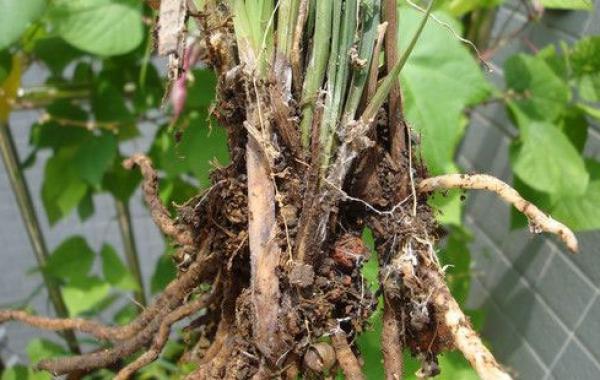
Southern blight is one of the most common plant diseases, with more than 500 host species in as many as 100 families; plants such as those in the Cucurbitaceae and Caryophyllaceae families often suffer from this disease. Although southern blight is not as common in orchids as gray mold and anthracnose, it is still one of the more frequently seen diseases in orchids and is a worldwide disease. This article provides a detailed introduction for your reference.
Symptoms
If conditions are suitable, this disease can infect any part, such as roots, pseudobulbs and leaves. The diseased parts often appear water-soaked and are sometimes accompanied by seepage of a yellow liquid. On the affected parts, white silky material grows, sometimes in a radial pattern. On the hyphae, sclerotia the size of rapeseeds are produced, initially white and later brown, with a diameter of 2mm to 4mm. When pseudobulbs are infected, the plant eventually collapses and dies.
Conditions for Onset
Sclerotia are the surviving structures of the pathogen and an important source of infection. They have no dormant period and have a strong resistance to adverse environments. The pathogen overwinters as mature sclerotia in diseased parts or, along with diseased plant residues, in the soil; in warm regions it can overwinter as mycelium on organic matter. It can spread with watering. It occurs easily under conditions of high temperature and high humidity. Generally, sclerotia begin to germinate mostly in May to June, when the temperature reaches 25°C to 35°C and the humidity reaches above 90%, and then spread in the soil. The main factors affecting germination are temperature and humidity. The lower limit for pathogen development is 8°C, the upper limit is 40°C, the optimum is 25°C to 33°C, and the optimum pH is 5.9. Sclerotia can survive for 10 years under indoor conditions, 5 to 6 years under natural conditions, and only 3 to 4 months in water. In southern China, the plum rain season has high temperatures and high humidity; combined with overly wet substrate and poor ventilation, this easily leads to the occurrence of the disease.
Control Methods
Physical control:
1. During the rainy season, prevent the substrate from becoming too wet and the air humidity from becoming too high, and pay attention to ventilation. For watering, follow the principle of "do not water until dry, and water thoroughly when you do."
2. The growing substrate and flower pots can be treated at high temperature before use. Sclerotia can be killed when the temperature reaches 100°C, and hyphae die very easily when exposed to the blazing sun.
3. If diseased plants are found, isolate them immediately; if severe, destroy them immediately. Clean up diseased plants, diseased leaves, growing substrate and so on to block the source of infection.
Chemical control:
1. For lightly affected plants, repot immediately, remove the diseased plants, and soak the orchid plants from the same pot in a 1% copper sulfate solution for disinfection. Also spray surrounding plants for prevention and control. For chemical control, use validamycin at 500 to 700 times dilution and spray the diseased plants directly 2 to 3 times, which can basically completely eliminate the disease. Validamycin is currently one of the most effective agents for controlling southern blight. You can also use 15% triadimefon wettable powder mixed with 100 to 200 parts fine dry soil and scatter it at the root and stem area of the diseased plants.
2. Before use, in addition to high-temperature disinfection, the substrate can also be treated with chemicals. For chemicals, 40% quintozene powder can be used. Mix 0.2 to 0.3% of the substrate weight of the chemical into the substrate, or dilute it with water at 500 times and pour it through the substrate.