A Detailed Guide to the Flower Language and Cultivation Methods of Cymbidium ensifolium
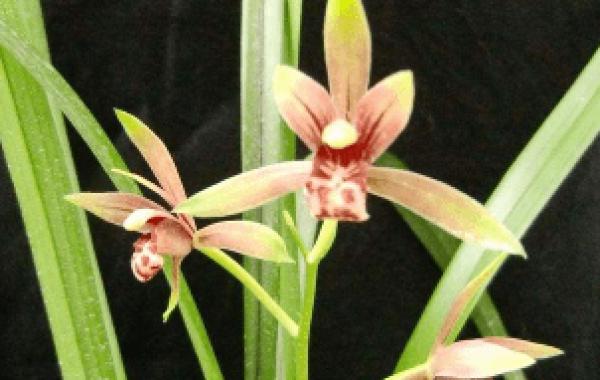
Cymbidium ensifolium is a perennial evergreen herbaceous plant with intensely fragrant flowers, so it is extremely popular. Today I would like to share with you
An introduction to the flower language of Cymbidium ensifolium:
Cymbidium ensifolium is a symbol of beauty, nobility and virtue. Everyone knows that the orchid is one of China's ancient flowers and a symbol of nobility and elegance, and Cymbidium ensifolium is also a kind of orchid, so of course it possesses these qualities as well. Cymbidium ensifolium is also called the four-season orchid, including the summer orchid and autumn orchid. Cymbidium ensifolium is relatively robust and upright, with green leaves and abundant flowers, a rich fragrance, and it fears neither heat nor cold. It has strong vitality and is relatively easy to cultivate, and its flowers can be seen from May to December.
Management and care of Cymbidium ensifolium:
1. Light conditions. Cymbidium ensifolium likes to grow in an environment with plenty of scattered sunlight and does not like shade. The suitable daily light intensity for growth is generally 8000-10000LX. In summer and autumn, about 70-80% of the sunlight needs to be shaded, while in winter and spring only 30-40% shading is needed. If Cymbidium ensifolium is cultivated in a shed or glasshouse, a shade net is needed; if it is cultivated at home, an ordinary translucent curtain is sufficient. In autumn and winter, when the temperature is below 10 degrees, full light can be given to strengthen the resistance of Cymbidium ensifolium.
2. Temperature conditions. When cultivating Cymbidium ensifolium, the winter temperature must not be lower than 3°C, otherwise frost damage will occur. Cymbidium ensifolium generally grows most vigorously and flowers and fruits between 20-28 degrees. If the humidity is suitable, most varieties can bloom twice a year, and some varieties known as four-season orchids can bloom four times. Above 30 degrees and below 0 degrees, it easily dies.
3. Humidity conditions. Cymbidium ensifolium is suitable for cultivation in a moist environment, but there should not be too much water either; it is also a plant that fears waterlogging. Therefore, the cultivation environment needs frequent misting to increase humidity. The ideal air humidity is 65%-70%. At the same time, in the dry seasons of summer and autumn, the leaves need frequent misting, and general humidity should not be less than 50%, otherwise it will cause dry tips and yellow leaves in Cymbidium ensifolium. In the high-temperature and high-humidity weather of summer and autumn, ventilation needs to be strengthened to prevent root rot and stem and leaf rot.
4. Potting medium and ratio. The root system of Cymbidium ensifolium is well developed and thick, and it has relatively high requirements for soil aeration. Therefore, the potting medium generally uses coarse, hard granular medium as the main component. Among the inorganic granular media, choose small stones with no sharp corners and a particle size of 7-10mm, perlite, ceramsite, fired soil, plant gold stone and crushed brick particles; one or two of these can also be used in combination. The ratio of inorganic to organic granular potting medium is 2:1 or 3:2.
What is the flower language of Cymbidium ensifolium and how to grow it, along with the answers and sharing of the above points. Here the editor reminds readers that Cymbidium ensifolium can not only be used as an indoor potted plant for viewing, but when placed in a courtyard it can also purify fresh air and add brilliance to home decoration. I hope this article is helpful to everyone.