How to Revive Weak, Sickly Orchids: A Detailed Guide to Recovery Methods
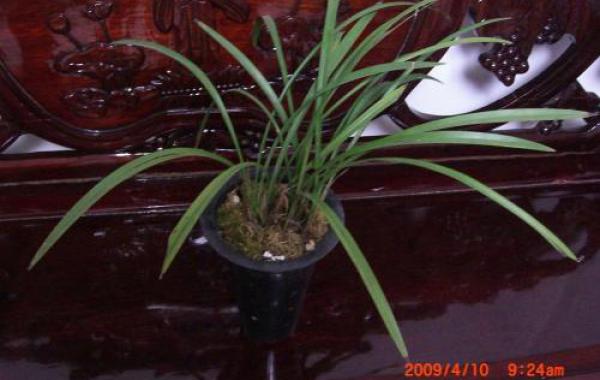
How to revive weak, sickly orchids.
Technical guidance for reviving weak, sickly orchids:
I. Strict disinfection
Take the orchid plant out of its original pot, discard the original soil, and carefully wash the root system. Use scissors sterilized by flaming to cut off residual roots, dead roots and rotted roots, then soak in a 0.5% thiophanate-methyl or potassium permanganate solution for 5-10 minutes, drain and dry in the shade, and repeat this two to three times to thoroughly kill the pathogens. Note that when disinfecting the roots by soaking, the liquid should just barely submerge the pseudobulbs; do not let water accumulate in the leaf hearts. At the same time, the above solution can be diluted 5 times and sprayed on the leaves for disinfection.
II. Change the pot
For growing and caring for weak, sickly orchids, clay pots and purple clay pots are the first choice. It is best to switch to a new, unused pot, because an old pot will inevitably retain some of the fungi and bacteria that cause orchid diseases. If an old pot must be used, it is safer to wash it clean and then sun it for several days or scald it with boiling water before use. A pot pad should be used at the bottom of the pot for drainage and airflow. You can buy a dedicated drainage cover, or use natural materials such as peach pits and walnut shells. The height of the pot padding should account for 1/3-1/2 of the pot height, and the volume of the pot should preferably be small rather than large. The root system of weak, sickly orchids is rather fragile; if the pot is too large, it easily causes waterlogging, leading to rotting of the orchid roots. Using a small pot can avoid this problem.
III. Choosing the substrate
Weak, sickly orchid plants have poor adaptability, so the growing substrate should preferably be a granular substrate with medium fertility, low fat content and good air permeability, such as ceramic granules, expanded clay pebbles, coarse sand, crushed brick granules, Emei Xiantu, crushed stone, etc. You can also wrap the roots and pseudobulbs of the orchid plant in sphagnum moss and then plant it in a pot containing the above substrates; the result is also quite good. All substrates must be disinfected before use. It is not advisable to use humus soil to grow weak, sickly orchid plants. First, humus soil is collected from woodland and contains many miscellaneous microbes, making it difficult to sterilize thoroughly. Second, after being used for a period of time, humus soil easily compacts and has poor permeability, which is unfavorable for orchid root growth.
IV. Regulating temperature and humidity
Weak, sickly orchid plants should be planted slightly deeper to protect the pseudobulbs and keep them moist. The substrate in the pot should be kept in a moist state; too much or too little water is unfavorable for the orchid plant's recovery. During the dormancy period, the substrate can be appropriately increased, usually covering the pseudobulbs, to keep the pseudobulbs moist and also to protect against freezing. When the temperature rises above 15°C the following spring, the substrate added in the previous winter should be promptly reduced to favor the sprouting of new shoots. Normally, the temperature should be kept at 18-28°C.
Orchid plants should be placed in a spot with visible scattered light for cultivation, avoiding direct strong light. Some water basins and water troughs can be placed around the orchid pot to increase the ambient humidity.
I. Strict disinfection
Take the orchid plant out of its original pot, discard the original soil, and carefully wash the root system. Use scissors sterilized by flaming to cut off residual roots, dead roots and rotted roots, then soak in a 0.5% thiophanate-methyl or potassium permanganate solution for 5-10 minutes, drain and dry in the shade, and repeat this two to three times to thoroughly kill the pathogens. Note that when disinfecting the roots by soaking, the liquid should just barely submerge the pseudobulbs; do not let water accumulate in the leaf hearts. At the same time, the above solution can be diluted 5 times and sprayed on the leaves for disinfection.
II. Change the pot
For growing and caring for weak, sickly orchids, clay pots and purple clay pots are the first choice. It is best to switch to a new, unused pot, because an old pot will inevitably retain some of the fungi and bacteria that cause orchid diseases. If an old pot must be used, it is safer to wash it clean and then sun it for several days or scald it with boiling water before use. A pot pad should be used at the bottom of the pot for drainage and airflow. You can buy a dedicated drainage cover, or use natural materials such as peach pits and walnut shells. The height of the pot padding should account for 1/3-1/2 of the pot height, and the volume of the pot should preferably be small rather than large. The root system of weak, sickly orchids is rather fragile; if the pot is too large, it easily causes waterlogging, leading to rotting of the orchid roots. Using a small pot can avoid this problem.
III. Choosing the substrate
Weak, sickly orchid plants have poor adaptability, so the growing substrate should preferably be a granular substrate with medium fertility, low fat content and good air permeability, such as ceramic granules, expanded clay pebbles, coarse sand, crushed brick granules, Emei Xiantu, crushed stone, etc. You can also wrap the roots and pseudobulbs of the orchid plant in sphagnum moss and then plant it in a pot containing the above substrates; the result is also quite good. All substrates must be disinfected before use. It is not advisable to use humus soil to grow weak, sickly orchid plants. First, humus soil is collected from woodland and contains many miscellaneous microbes, making it difficult to sterilize thoroughly. Second, after being used for a period of time, humus soil easily compacts and has poor permeability, which is unfavorable for orchid root growth.
IV. Regulating temperature and humidity
Weak, sickly orchid plants should be planted slightly deeper to protect the pseudobulbs and keep them moist. The substrate in the pot should be kept in a moist state; too much or too little water is unfavorable for the orchid plant's recovery. During the dormancy period, the substrate can be appropriately increased, usually covering the pseudobulbs, to keep the pseudobulbs moist and also to protect against freezing. When the temperature rises above 15°C the following spring, the substrate added in the previous winter should be promptly reduced to favor the sprouting of new shoots. Normally, the temperature should be kept at 18-28°C. Orchid plants should be placed in a spot with visible scattered light for cultivation, avoiding direct strong light. Some water basins and water troughs can be placed around the orchid pot to increase the ambient humidity.