What are the cultivation methods and precautions for Dendrobium orchids?
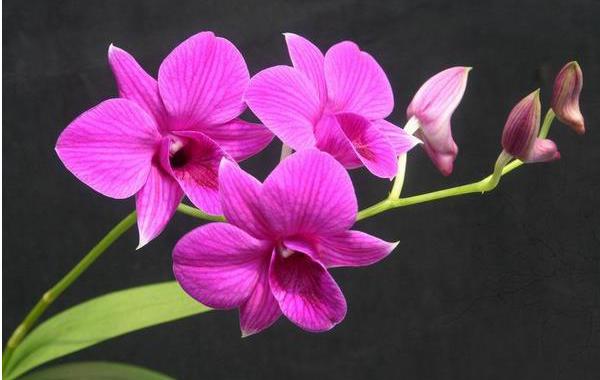
People usually have a better understanding of Dendrobium, and Dendrobium orchids are a type of Dendrobium, existing in the form of rare orchids and widely sought after by orchid lovers. Like other Dendrobium species, Dendrobium orchids grow in relatively dangerous and steep places, and harvesting them is not easy, which is why they seem so precious.
How to grow Dendrobium orchids
Dendrobium orchids are mainly distributed in tropical and subtropical regions of Asia. They prefer warm, humid and semi-shaded environments and are not cold-tolerant. The most suitable growing temperature is between 18 and 30°C. Dendrobium dislikes dryness and fears waterlogging, especially when new buds begin to sprout and new roots are forming, when sufficient water is needed. However, if it is too humid, such as when encountering low temperatures, it can easily rot. It relatively prefers light; sufficient sunlight in autumn leads to good flowering and a large number of blooms.
Cultivation methods and precautions for Dendrobium orchids
I. Cultivation methods
1. Soil
To grow Dendrobium orchids, use loose and breathable soil. Peat moss and charcoal can be mixed as its growing medium. At the same time, some tiles can be placed at the bottom of the pot, which will help its roots develop better.
2. Humidity
Dendrobium orchids relatively prefer humid environments. When it is especially hot, some water needs to be sprinkled around them. This way the air humidity will increase, but on rainy days be careful not to let water accumulate in the pot.
3. Temperature
It prefers warmth. Normally, the temperature should be kept at 15-28°C, and the temperature difference between day and night should be relatively large, because if the temperature difference is too small, its growth and flowering will be affected.
4. Light
It relatively prefers semi-shaded environments. In spring and summer, shade treatment should be provided, and quite a lot of shade is needed, about 60%-70%. But in winter, it still needs more light, so no shading may be needed; if shading is required, only 20%-30%.
5. Fertilizing
Fertilizing should begin in the second year, twice each year. The first time is in April, and pig hair, soybean dregs and the like can be used; after fermentation, apply them at the roots to help young buds grow better. The second time is in November, using the same fertilizing method.
II. Precautions
1. Watering. More water should be given in spring and summer, and watering should be reduced after September.
2. Pruning. Pay attention and observe regularly, and promptly cut off old branches, diseased and weak branches, and branches that are too dense.
3. Repotting. Repot it every two to three years to give it better growing conditions.
The effects and functions of Dendrobium orchids
I. The effects of Dendrobium orchids
1. Stomach yin deficiency and fluid damage from febrile disease. It nourishes stomach yin, promotes fluid production and quenches thirst, and can also clear stomach heat. It is mainly used for fluid damage from febrile disease, with symptoms such as excessive thirst, dry tongue and black coating; it is often used together with Trichosanthes root, fresh Rehmannia, dwarf lilyturf and other items, such as the method of clearing heat and preserving fluids in "Treatise on Seasonal Diseases." For stomach pain, swollen and painful gums, and mouth and tongue sores caused by stomach heat and yin deficiency, it can be used together with Rehmannia, dwarf lilyturf, Scutellaria and other items.
2. Kidney yin deficiency syndrome. It can nourish kidney yin and reduce deficiency fire, and is suitable for blurred vision, weak and flaccid tendons and bones, and syndromes such as yin deficiency with hyperactive fire and steaming bone fever. It is often used together with goji berry, prepared Rehmannia, dodder and other items. For those with kidney yin depletion and weak, flaccid tendons and bones, it is often used together with prepared Rehmannia, Cornus officinalis, Eucommia, Achyranthes and other items that tonify the liver and kidneys and strengthen tendons and bones. For kidney deficiency with hyperactive fire and steaming bone fever, it is suitable to use together with raw Rehmannia, goji berry, Phellodendron, Picrorhiza and other items that nourish kidney yin and reduce deficiency heat.
II. The functions of Dendrobium orchids
Dendrobium orchids are listed first among China's nine great immortal herbs, and are called the life-saving immortal herb among the people. The stems of Dendrobium orchids can clear heat and promote fluid production, reduce inflammation and relieve pain, clear the lungs and moisten the throat, and also have good anti-fatigue and hypoxia-resistant effects.
The flower language of Dendrobium orchids
Dendrobium orchids have a temperament of strong character and amiable peace. Many countries use them as the flower for Father's Day. Giving Dendrobium orchids on Father's Day represents perseverance and courage. The flower language of Dendrobium is: auspiciousness, blessing, purity, welcome, happiness. Yellow Dendrobium orchids are flowers given to fathers on Father's Day or a father's birthday, implying the father's fortitude, kindness and dignity, and expressing a kind of respect for the father.
Orchids themselves are a variety that requires a great deal of time and energy to care for, and Dendrobium orchids even more so, so we must pay attention to the ways and methods of cultivation. In addition, Dendrobium orchids have many of the effects and functions of Dendrobium. Besides being used for general ornamental purposes, we can also make use of them in other ways.