What kind of water works best for watering orchids?
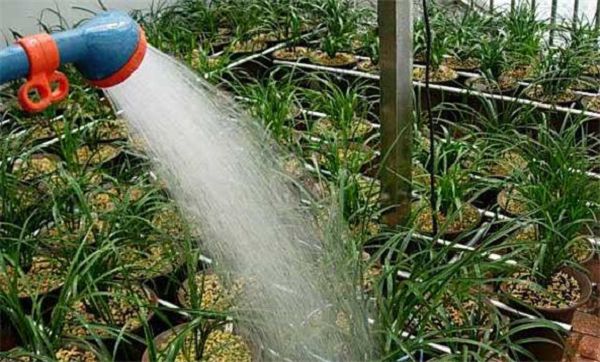
Generally speaking, the water given to orchids should be clean, warm and cool. The ancients said that running water is better than stagnant water, and clear water is better than turbid water. Through long-term practice,
the general order of water quality requirements for flowers and plants is:
(1) Rainwater (including dew),
(2) Snow water (also called melted snow water),
(3) Mountain spring water (including spring water),
(4) River water (referring to natural flowing water without industrial pollution),
(5) Water from ponds, lakes, reservoirs, etc.,
(6) Tap water,
(7) Well water.
The basis for watering orchids
Generally, home orchid growers do not have instruments to measure and analyze moisture content, so to a large extent they rely on practical experience. Common simple methods include:
(1) Cup both hands around the middle of the orchid pot, and when lifting the pot upward, if there is a feeling of weightlessness, that is, what is commonly called feeling light as a feather, this indicates the potting soil is on the dry side and needs water; otherwise, there is no need to rush to water.
(2) If the outer surface of the pot is damp with moisture seeping through (clay and sandy pots often show this phenomenon) and feels cold and cool to the touch, this indicates the potting soil has enough moisture; if the outer surface of the pot appears dry and has no cold, cool feeling, this indicates the moisture inside the pot is limited.
(3) Tap each part of the pot with a small stone; if the sound is crisp, this indicates the potting soil is on the dry side, and if the sound is dull and muddy, this indicates there is still a certain amount of moisture.
Differentiate situations and water dialectically
Roughly summarized, the following distinctions should be made:
(1) Clay and sandy pots should be watered more, purple clay pots are in the middle, and porcelain pots and glazed pots should be watered less;
(2) Large pots should be watered more. Small pots hold less soil, and moisture is stored for a shorter time, so they require more careful observation; where there are fewer seedlings, give appropriately less, and where there are many seedlings, give more;
(3) Potting soil materials that are coarse and drain well should be watered more; conversely, those that do not drain well should be watered less.
(4) According to the orchid's growing season, give more water during the sprouting period, and after the sprouts grow out it can be gradually reduced; when the dormant period arrives, that is, after the beginning of winter, water less; during flower bud growth and the flowering period it is best to keep things moist, and after the flower spike emerges and grows taller the following year, water a little more; during the flowering period it can be reduced again, and half a month after the flowers fade, resume normal water supply.