What to Do About Foliar Feeding of Orchids? Foliar Feeding Methods for Orchids
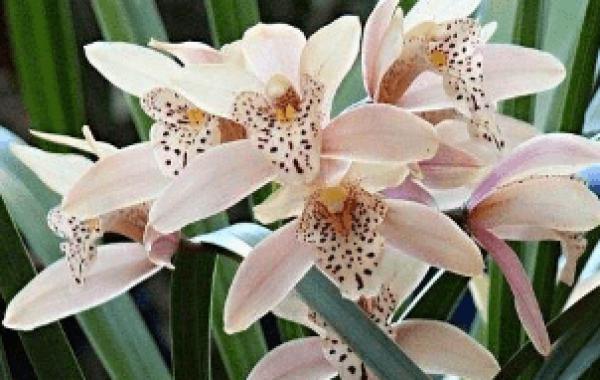
The orchid is a flower of unique style with very high ornamental value. Orchid flowers are delicately colored, mostly pale green and yellow-green, but those with pure, plain-colored centers are especially prized. The fragrance of orchids is clear without being heavy; with one pot in a room, its scent fills the air. "With my own hands I planted two or three orchid stems; as days grew warm and breezes mild, they bloomed one after another. Sitting long, I forgot the fragrance was in the room; opening the window, butterflies came flying in." This ancient poem brings out the subtle fragrance of the orchid to the fullest. If you want to grow orchids, you must understand the methods of foliar feeding. Foliar feeding of orchids has the characteristics of using little fertilizer, being absorbed quickly, and being highly targeted, and it plays a very important role in preventing and treating nutrient deficiency symptoms and in strengthening the growth vigor and the disease-resistant and cold-resistant ability of orchid plants.
Types of spray fertilizer. Like other plants, orchid growth must first satisfy the need for the three nutrient elements nitrogen, phosphorus, and potassium, but the trace elements calcium, iron, zinc, magnesium, copper, boron, and molybdenum are also indispensable. Fertilizers commonly used for orchid foliar spraying include: for nitrogen, urea, ammonium sulfate, and ammonium nitrate; for phosphorus, superphosphate, potassium phosphate, and monopotassium phosphate; for potassium, potassium nitrate and potassium chloride; for calcium, superphosphate; for iron, ferrous sulfate; for zinc, zinc sulfate; for magnesium, magnesium sulfate; for copper, copper sulfate; for boron, borax and boric acid; for molybdenum, molybdic acid.
Spray fertilizer concentration. For orchid foliar feeding, it must be carried out according to a certain ratio, so as to ensure both good fertilizer effect and no fertilizer burn. The spray concentration varies with different fertilizer types, and is generally as follows: urea 0.2%, monopotassium phosphate 0.3%, potassium sulfate and potassium nitrate compound fertilizer 0.1%, superphosphate 0.5%, magnesium sulfate 0.5%, ferrous sulfate 0.5%, zinc sulfate 0.1%, copper sulfate 0.2%, borax and boric acid 0.3%, molybdic acid 0.1%. In addition, fertilizers such as Yiduo, Yuanshuo, Shida, Lanjun Wang, and Penshibao must be prepared and applied according to the product instructions.
Spraying site. For orchid foliar feeding, the focus must be on the underside of the leaves. This is because the upper surface of the leaf is covered with a shiny cuticle layer, and the fertilizer solution does not easily enter. The underside has no cuticle layer and bears many stomata, so the fertilizer solution is easily absorbed. However, when spraying, the whole plant must be sprayed, that is, all parts other than the orchid roots: leaf surface, leaf stalk, leaf sheath, and the pseudobulbs above the soil surface. For orchid plants placed on the ground, when spraying fertilizer the pot must be laid on its side and rotated one full turn, so that the fertilizer solution can reach every side and promote balanced growth of the orchid plant.
Timing of spraying. For orchid foliar feeding, during the period of new shoot and new root growth, apply once every 7-10 days, for 2-3 consecutive applications. From flower bud formation to before flowering, apply once about every half month. In other growth periods, apply 1-2 times per month; during the vegetative growth period apply more nitrogen and potassium fertilizer, and during the reproductive growth period apply more phosphorus and potassium fertilizer. The time for foliar spraying must be determined by whether the weather is cloudy or clear, the temperature level, and the humidity level. When the temperature is between 18-25 degrees C, the stomata of orchid leaves are fully open, and at this time the spraying effect is optimal. When the temperature is below 15 degrees C, because the temperature is low the leaf stomata close or open very little, and the fertilizer solution is not easily absorbed. When the temperature is above 30 degrees C, because the temperature is high the leaves are scorched, and spraying fertilizer will also cause fertilizer burn. When the air humidity is high, the fertilizer solution remains on the leaves for a long time, and more nutrients are absorbed. The optimal time for spraying is on a windless sunny or cloudy day, and early morning or evening is even better. At the same time, note that it must not be applied in severe cold, not in extreme heat, not on rainy days, not at noon, and not during the flowering period.