How to Grow Orchids? A Detailed Guide to Fertilizing and Watering
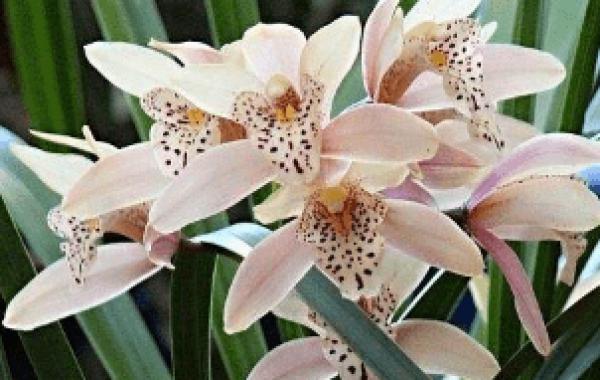
Since ancient times, orchids have given us a symbol of purity and elegance, and along with plum, bamboo and chrysanthemum they are known as the Four Gentlemen. Chinese orchids and tropical orchids are very different, however: they have no striking gaudy appearance and no huge flowers or leaves, yet they possess a plain, quiet, elegant and noble temperament, which fits the Oriental aesthetic standard very well. So then.
:
Orchid growth habits:
Orchids like a shady environment and are afraid of direct sunlight; by nature they like moisture and dislike dryness, and they also like fertile loam rich in a large amount of humus, and are suited to growing in an environment with air circulation.
How to fertilize orchids and how to water them:
Fertilizing: A newly potted orchid cannot survive if the potting soil is too rich in fertilizer, and even if it does survive, its flowering rate will be very low. If there is too much fertilizer, it will grow too vigorously in autumn, which will also lead to poor flowering the following spring; too little will also affect the formation of flower buds. In fact, the safe approach is that when you see its leaves turning yellow, this means it lacks fertilizer and you should give it a top dressing, while if its leaf tips scorch, this means too much fertilizer has been applied, and at this point you need to stop fertilizing it. The fertilizer you give it must be rotted and decomposed; undecomposed fertilizer must not be used, and using human feces and urine and the like is even more taboo.
Watering: Practice has proven that orchids need eight parts dry and two parts wet, and during its flowering period and the period when it sprouts leaf buds, you should water it a little less; during the plum rain season you should move it indoors or build a rain shelter to keep off the rain, while in summer you need to water it in the early morning and in the evening; you must not water it too much either. In autumn watering can be appropriately increased, and if it is a dry season you need to mist it every evening to make the ground moist and increase the air humidity. In winter watering can be appropriately reduced, but you must not stop watering altogether; be careful not to let the potting soil dry out completely. In short, water when dry and stop watering when moist, and take slight dryness as the principle.
Light: Light is an important factor in the formation of flower buds for many plants. Although orchids like cool conditions, if they are kept in a hidden place all year round they will also rarely bloom. Friends who love orchids have long noticed that orchid leaves in shady places grow long and the flowers are sparse, while orchid leaves in sunny places are short and the flowers are numerous. So when cultivating orchids you must pay attention to the light issue. In spring and summer, we use reed blinds to shade them, or place them at an indoor east- or south-facing ventilated window. Orchids under the blind should have their pots turned once every half a month, so that the orchid receives light on all sides, which is good for balanced plant growth. When the autumn cool arrives, the potted orchid should be moved out from the shady place and allowed to sun in the morning for half a day, but also be careful that autumn does not dry it out.
That is all for sharing with everyone today. I hope this article is helpful to you, and I wish you good luck.