What are the winter care methods for clivia? Pay attention to these points
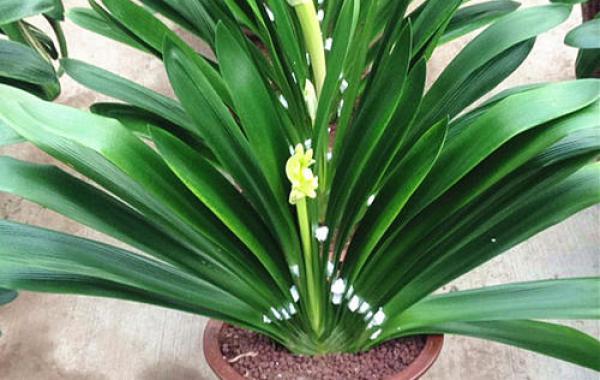
Many friends like to grow a few pots of clivia at home, but when winter comes they worry about what to do with clivia in winter. Today the editor will introduce the winter care methods and techniques for clivia.
1. Fertilizing Clivia has the fastest vegetative growth rate in winter and needs the most nutrients, so applying good winter fertilizer is very important. Before bringing the flower pots indoors, use bone meal, roasted sesame seeds, cooked soybeans, etc., or compound fertilizer, and apply once every 15 to 20 days diluted in water; you can also water the roots with a soaking liquid of animal and plant residues. Make sure the fertilizer is fully decomposed and applied thinly to prevent damage from concentrated fertilizer.
2. Watering Clivia has fleshy roots and likes air but fears waterlogging. In addition, clivia leaves have a waxy layer, and winter temperatures are low, so water transpiration and evaporation are low. Therefore, do not water too much; just water along with fertilizing and keep the potting soil moist. Never flood the pot with water, which can cause root rot and plant death.
3. Keeping warm The most suitable growth temperature for clivia is 15°C to 25°C; growth stops at 10°C, and frost damage occurs at 0°C. Therefore, in winter it must be kept warm and protected from freezing. After the flower stem emerges, maintaining around 18°C is suitable. If the temperature is too high, the leaves and flower scape will grow leggy, thin and spindly, the flowers will be small and poor in quality, and the flowering period will be short; if the temperature is too low, the flower stem will be short, and it is prone to "arrow clamping" and premature flowering (blooming), affecting quality and reducing ornamental value.
4. Adjusting light Clivia likes scattered light and avoids direct strong light. When cared for indoors in winter, the flower pot should be placed in a place with sufficient light. Especially before flowering, there should be good light, which helps the flower buds develop plump and strong. After flowering, appropriately lower the temperature, avoid strong light, and keep good ventilation, which helps extend the flowering period.
5. Protecting leaves When the leaves are thick and healthy, the flowers are strong; when the leaves are green, the flowers are colorful. Short, broad, thick, green, glossy and upright leaves are the characteristics of a healthy clivia and are the foundation for promoting flowering and improving ornamental value. To maintain strong leaf quality, in addition to providing reasonable fertilizer and water, the leaf surface must be kept clean to improve photosynthetic efficiency. Methods for protecting leaves: first, regularly wash the leaves, using clean water at the same temperature as the room to spray, rinse or wipe off dust on dirty leaves to keep the leaf surface clean; second, promptly spray fungicide to prevent leaf spot, leaf blight and stem rot, ensuring the leaves remain green and the flowers gorgeous.
1. Spring care and maintenance techniques for clivia
Suitable for placement on balconies facing east, south and west. Repot once a year; if clivia can grow normally in summer and winter, then it should be repotted 2 times a year. Choose tall clay pots with good drainage and breathability. Clivia also has high requirements for pot size, and the pot should be chosen according to the size of the clivia.
Spring and autumn have suitable temperatures and are the seasons when clivia grows abundantly. Appropriately increase the amount of water and fertilizer applied, and ensure 3 to 5 hours of morning and evening light each day. In spring, clivia should not be moved outdoors too early, because spring temperatures are not very stable and frost damage is likely to occur. The spring climate is dry, and after being moved out, the spring wind can easily cause clivia leaves to age and lose their gloss.
When watering clivia, the number of waterings should not be calculated by days; watering should follow the principle of "water thoroughly after the soil dries out." Watering thoroughly means that a little water flows out from the bottom of the pot (not too much, as too much causes nutrient loss). The best time to water is in the morning or evening. Rainwater, tap water that has been stored for 2 to 3 days, or water changed from an ornamental fish tank should be used.
Fertilizer for clivia should be specially formulated for its special use. Use sesame cake or roasted and crushed sesame seeds plus fish heads, fish scales, fish bones, soybean cake, etc., add water, seal them in a sealed container and let them ferment. After they turn black and smell foul, take the upper liquid (dilute with water 50 to 100 times and apply to the pot). To prevent odor, the container can be placed outdoors. When applying decomposed liquid fertilizer, do not pour the fertilizer liquid into the leaf rosette, otherwise the leaf base is prone to rot. If it gets on the leaves, it can easily burn them, so rinse it off promptly with clean water.