A Detailed Guide to Common Viral and Fungal Diseases of Clivia and Their Control Methods
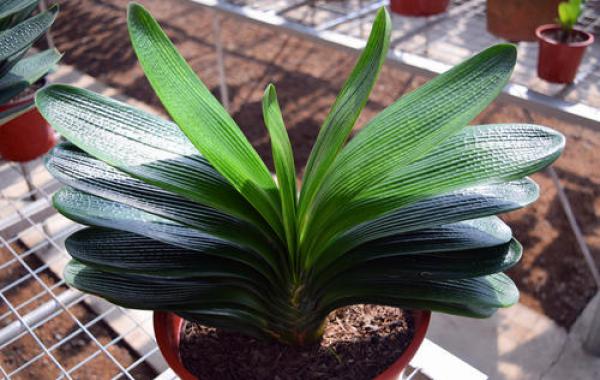
How many common diseases affect Clivia? How exactly should they be prevented and treated.
Clivia has now become the top choice for natural home decor, but due to poor management, Clivia can be harmed by diseases. There are several common ones, specifically southern blight, soft rot, anthracnose and so on. Below, the editor introduces the control methods for these diseases.
Common Disease of Clivia -- Anthracnose
This disease mostly occurs in rainy, damp and muggy seasons, and the affected parts are mostly the leaf tips and leaf edges. In the early stage, small moist brown spots appear on the leaves, then they expand into oval-shaped main lesions, with yellow around them, and in the later stage they gradually shrivel and dry up. Too-wet potting soil and excessive nitrogen fertilizer make this disease more likely.
Control methods:
① Give the flower pot an environment with good ventilation and light; the potting soil should only be kept moist, and it should not be watered too much or too often. Increase phosphorus and potassium fertilizer, and control nitrogen fertilizer.
② When signs of the disease are found, immediately use 50% wettable carbendazim powder mixed with 800 times water to make a solution, or spray a solution of 60% anthracnose thiram with 1000 times water, spraying about once every 6 days; 3-5 sprays will show results.
Common Disease of Clivia -- Soft Rot
The pathogen often invades through wounds. When the disease occurs, light yellow water-soaked spots appear on the leaves, then expand into irregular lesions, causing the leaves to become brown and soft-rotted, with bacterial fluid flowing out from the wounded lesions.
Control methods:
① Once this disease is found, immediately separate the diseased plant, dig away the growing medium around the plant to expose the affected parts, pry open the rotten diseased leaves, scrape off the rotten parts with a sterilized knife, give appropriate sunlight exposure, and keep it ventilated and dry;
② If many plants are rotting, all diseased tissue must be cut away, soaked in a 5% potassium permanganate aqueous solution for 1 hour, rinsed with clean water and air-dried, apply plant ash to the cut surfaces, repot in fresh soil, and place in a ventilated spot with not-high temperature;
③ For drug treatment, penicillin, streptomycin or oxytetracycline plus 4000-5000 times water solution can be sprayed or applied to the lesions, with a certain curative effect.
Common Disease of Clivia -- Southern Blight
When this disease occurs, water-soaked brown irregular lesions appear on the stem near the roots, the cortex soft-rots, then white silky mycelium grows and spreads over the soil surface around the roots, later forming small sclerotia, and finally becoming rapeseed-colored, expanding until the entire base rots and dies.
Control methods:
① Before potting, the growing medium should be disinfected. A relatively simple method is to place the growing medium at 60°C for 24 hours;
② Frequently observe the soil surface; when white fungal threads are found, pick them out and burn them, and sprinkle some lime powder around the diseased spots to disinfect;
③ In the early stage of the disease, pour 50% wettable carbendazim powder 500 times solution on the stem base of the plant and the soil around the base, once a week, and 2-3 times will be enough.
The above are the specific control methods for common diseases of Clivia. We hope they will be helpful to everyone.
Several common diseases of Clivia include southern blight, soft rot, anthracnose and so on.
(1) Southern blight. When this disease occurs, water-soaked brown irregular lesions appear on the stem near the roots, the cortex soft-rots, then white silky mycelium grows and spreads over the soil surface around the roots, later forming small sclerotia, and finally becoming rapeseed-colored, expanding until the entire base rots and dies.
Control methods: ① Before potting, the growing medium should be disinfected. A relatively simple method is to place the growing medium at 60°C for 24 hours; ② Frequently observe the soil surface; when white fungal threads are found, pick them out and burn them, and sprinkle some lime powder around the diseased spots to disinfect; ③ In the early stage of the disease, pour 50% wettable carbendazim powder 500 times solution on the stem base of the plant and the soil around the base, once a week, and 2-3 times will be enough.
(2) Soft rot. The pathogen often invades through wounds. When the disease occurs, light yellow water-soaked spots appear on the leaves, then expand into irregular lesions, causing the leaves to become brown and soft-rotted, with bacterial fluid flowing out from the wounded lesions.
Control methods: ① Once this disease is found, immediately separate the diseased plant, dig away the growing medium around the plant to expose the affected parts, pry open the rotten diseased leaves, scrape off the rotten parts with a sterilized knife, give appropriate sunlight exposure, and keep it ventilated and dry; ② If many plants are rotting, all diseased tissue must be cut away, soaked in a 5% potassium permanganate aqueous solution for 1 hour, rinsed with clean water and air-dried, apply plant ash to the cut surfaces, repot in fresh soil, and place in a ventilated spot with not-high temperature; ③ For drug treatment, penicillin, streptomycin or oxytetracycline plus 4000-5000 times water solution can be sprayed or applied to the lesions, with a certain curative effect.
(3) Anthracnose. This disease mostly occurs in rainy, damp and muggy seasons, and the affected parts are mostly the leaf tips and leaf edges. In the early stage, small moist brown spots appear on the leaves, then they expand into oval-shaped main lesions, with yellow around them, and in the later stage they gradually shrivel and dry up. Too-wet potting soil and excessive nitrogen fertilizer make this disease more likely.
Control methods: ① Give the flower pot an environment with good ventilation and light; the potting soil should only be kept moist, and it should not be watered too much or too often. Increase phosphorus and potassium fertilizer, and control nitrogen fertilizer. ② When signs of the disease are found, immediately use 50% wettable carbendazim powder mixed with 800 times water to make a solution, or spray a solution of 60% anthracnose thiram with 1000 times water, spraying about once every 6 days; 3-5 sprays will show results.