When Is the Best Time to Water Orchids? A Detailed Guide to the Best Watering Time
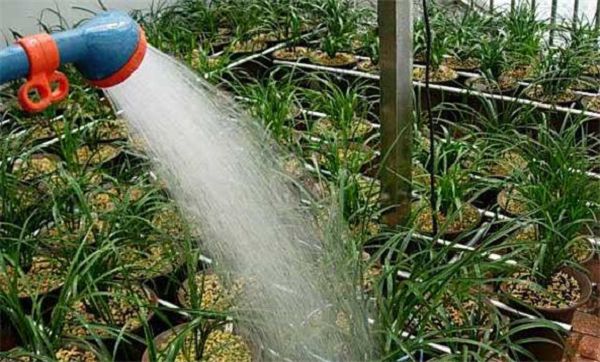
There is a certain science to the timing of watering orchids. Generally speaking, watering in the morning is best. In general, when orchids are outdoors in late spring and in summer and autumn, morning watering is preferable: first, after a night of cooling, the potting medium in the pot is at a lower temperature in the morning, so watering at this time will not harm the seedlings; second, watering thoroughly in the morning allows the medium to turn moist by evening, and at night the pot is empty of standing water, so air circulates in the pot, which is good for the orchid roots' respiration cycle and for orchid growth. Third, if you water in the evening, water evaporates slowly at night and easily causes waterlogging, while during the day when transpiration is fast the pot has already turned moist, creating a situation where the pot is waterlogged when it should be dry and lacking water when it should be moist; fourth, in the evening the orchid pot is still warm, and suddenly watering with cold water causes a sudden drop in temperature, which affects root water uptake and disrupts physiological balance; fifth, at night the temperature is low and the cellular activity of the orchid plant is weak, so excessive water will cause pathogens to multiply and will also breed snails and slugs. When orchids are indoors in winter and early spring, the watering time should be appropriately delayed, and it is best to water around nine o'clock in the morning after the temperature has risen, or at noon.
Regarding the timing of watering orchids, the principle to grasp overall is: watering orchids in the morning is best; when the temperature is high, water a little earlier, and when the temperature is low, water a little later.
Whether orchid planting succeeds depends first of all on whether the watering method is correct. Only very few plants die from drying out, while 90% of indoor plants die from overwatering.
Overwatering leads to a lack of oxygen in the root system; the roots suffocate, and the whole plant then dies of withering because it has lost its source of nutrients.
Only when there is sufficient water can orchids grow. But even with enough water, damaged roots or diseased roots cannot complete the task of absorbing and transporting water.
Therefore, in principle, orchids should be watered only when the potting soil is truly dry.