Detailed Explanation of Key Technical Points for Magnolia Cultivation and Management
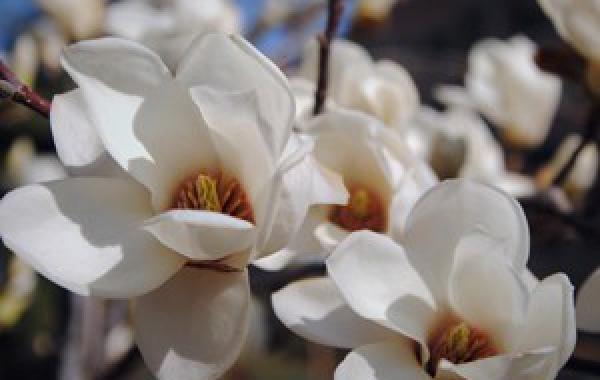
When the white magnolia is in full bloom, its petals spread out in all directions, making the courtyard a patchwork of green and white with dazzling white light, and it has high ornamental value; combined with waves of delicate fragrance that refresh the heart and mind. So it is deeply loved by people, and therefore many grow white magnolia as potted plants at home, so what is the feng shui meaning of the white magnolia? Below I will introduce the taboos of placing white magnolia indoors. 1. White magnolia...
Magnolia not only has large flowers and blooms abundantly, but also has bright colors and a fragrant scent; what is rare is that its flowering period is also long, and the petals are even edible, making it a very good choice for courtyard or indoor cultivation. Magnolia is mainly native to central and southwestern China, and people grow it all over the world. Below, the editor will introduce how to grow magnolia and the cultivation methods for magnolia. How to grow magnolia, cultivation methods for magnolia. 1. Soil: It requires fertile, loose, well-drained growing soil. It can be prepared with 5 parts pine needle leaf mold, 2 parts coarse chaff ash, 2 parts coarse sand, and 1 part decomposed manure. Avoid fine sandy soil or heavy clay soil with poor air permeability. For potting, use a breathable tile pot (unglazed pot); avoid glazed pots, porcelain pots, purple clay pots, etc. Use a relatively deep cylindrical flower pot, place an inverted empty flower pot under the pot, and prop it up with bricks to prevent poor drainage; line the bottom of the pot with about 5 cm of cinder and crushed stone. 2. Water: Water should be appropriate. Magnolia has fleshy roots. If the potting soil is too wet, the leaves will turn yellow and fall off, and the roots may even rot and cause death. If it is too dry, the tips will wither and the leaves will curl. It is a flower that fears both waterlogging and drought. During the flowering period, if the petals spread outward excessively, it indicates insufficient water; when the water is appropriate, the flowers remain in a bud-like state. When the surface of the potting soil looks dry and the soil is hard and cracked, water immediately. When watering, the water temperature and soil temperature must be consistent; do not suddenly water with cold or hot water. Watering must be thorough; frequently watering only half-way will cause shallow roots. In spring and autumn, magnolia should not be watered too much. In midsummer, water every day and must water in the evening. In late autumn, begin to reduce the amount of watering. In winter, water once every 10 days. During rainy seasons, it should be moved to a place sheltered from rain. 3. Fear of alkalinity: Magnolia prefers acidic soil, and its requirement for soil pH is 5.5-6.3. In northern regions, magnolia is difficult to grow precisely because most of the water and soil there are alkaline, which dissolves the protoplasm of magnolia cells, causing slow flower development and poor growth. Frequently watering with fermented rice washing water gives better results.
Magnolia is a flowering tree with both color and fragrance in early spring. When planting, the timing must be well controlled; it should not be too early or too late. It is suitable to plant 10 days before germination in early spring or after the flowers fade and before the leaves unfold. Today I will introduce this to everyone.
Magnolia relatively likes fertilizer, but avoid heavy fertilizer; during the growing period, applying fertilizer twice is generally enough to benefit flower bud differentiation and promote growth. One application is in early spring, and the other is from May to June. The fertilizer is mostly decomposed organic fertilizer. Newly planted saplings do not need fertilizer; wait until after leaf fall or the following spring before fertilizing. Magnolia's root system is fleshy roots and is not tolerant of water accumulation. During the flowering and growing period, the soil should be kept slightly moist. After entering autumn, watering should be reduced to delay magnolia rooting, promote branch maturity, and help it overwinter.
In winter, generally do not water; water only once when the soil is too dry. Magnolia branches and trunks have poor wound-healing ability, so pruning is generally not carried out. However, for the sake of a reasonable tree shape, overgrown branches, dead branches, diseased and pest-infested branches, and branches that hinder the beauty of the tree shape should still be cut off in the early leaf-unfolding stage.
When transplanting, regardless of the size of the seedling, the root fibers must be kept with a mud ball, and care should be taken to avoid damaging the root system as much as possible, so as to ensure survival. Before planting, sufficient decomposed organic fertilizer should be applied in the hole as base fertilizer. After planting, cover with soil and press firmly, and water thoroughly in time.
That is all for the introduction. After the flowers fade, if seeds are not to be kept, the residual flowers and what? the fruit spikes should also be cut off, so as to avoid consuming nutrients and affecting flowering the following year.