How to improve the survival rate when dividing and repotting orchids
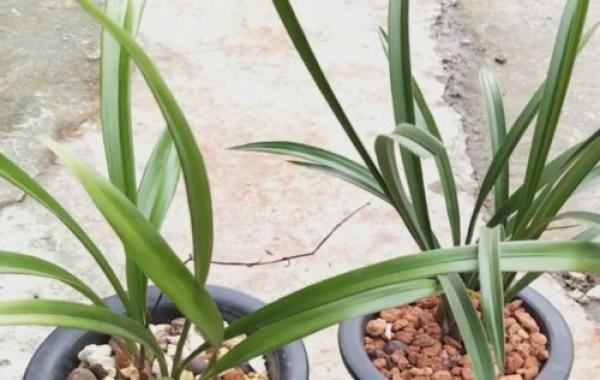
Autumn is here, and it is a good time for flower lovers to divide and repot their potted orchids at home, but you first need to know how to help the divided and repotted orchids survive quickly and smoothly. So, how can divided and repotted orchids quickly adapt to the pot and take root? Below, the editor will explain it to everyone.
In order to improve the ability of orchids to quickly adapt to the pot and survive after division and repotting, sun-drying the roots is the most important step in the process of dividing and repotting orchids. Because we all know that the water and nutrients stored by orchids are in the orchid pseudobulbs, and drying can stimulate the plant and promote root growth.
If we want orchids to quickly take root and adapt to the pot, we need to stimulate their pseudobulbs to urge them to accelerate the synthesis of chlorophyll and nutrients. This helps the growth of the orchid root system and the emergence of young shoots. In addition, drying orchid roots can not only make them take root and sprout faster, but also play a sterilizing role.
During the process of drying orchid roots, we also need to pay attention to the necessary treatment of the wounds at the base of the old orchids separated during division. The main method is to apply carbendazim to them, which can achieve a bactericidal and disinfecting effect and avoid affecting the survival of the orchid seedlings after they adapt to the pot due to wound infection.
Next, we need to place them in a cool place to continue drying slightly, then wrap the leaves of the orchid seedlings with a towel, and use another towel to wrap the crystal tips at the roots of the orchid seedlings as well, to avoid sunburn or drying out from sunlight, which would cause severe dehydration and then affect survival.
Generally, only the pseudobulbs and the orchid root system need to be left unwrapped, and then they can be used for drying. But at the same time, attention should also be paid to controlling the light intensity. Do not expose them to the sun in a high-temperature environment; instead, dry them under relatively soft light. Also, when drying roots, do not place the orchid seedlings on a cement surface, because cement ground easily absorbs heat under sunlight and can easily cause burns to the orchid seedlings.
During the root-drying process, the orchid seedlings should be placed on wooden boards or raised at the bottom, and generally about 10 minutes of drying is enough. After completing the root drying of the orchid seedlings, we can plant them in pots.
The soil is usually required to be fertile and loose, breathable and well-draining; after potting, just water it thoroughly once; afterward, watering can wait until the potting soil becomes dry, and the amount of water needs to be well controlled, just keeping the potting soil moist. Generally, it is necessary to wait until the orchid seedlings have taken root and sprouted new shoots before gradually applying additional fertilizer, and organic fertilizer is usually more suitable.