What are the solutions for yellowing leaves on a clivia?
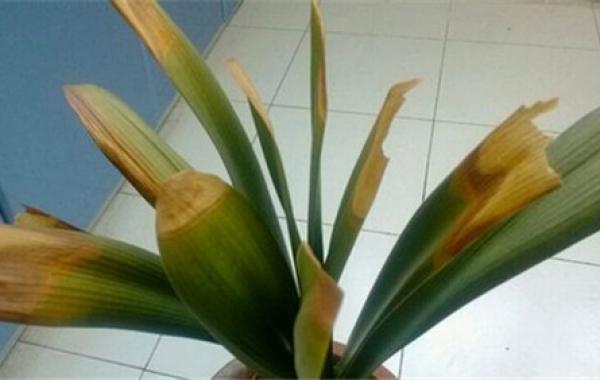
An entire leaf turns yellow: When this happens to a clivia, it is caused by scorching from strong light. You can cut off the fallen leaf and move the clivia to a semi-shaded, well-ventilated spot for care. Part of a leaf turns yellow: This is due to overwatering or fertilizer damage. Clear away standing water, prune the rotten roots, and in severe cases repot with fresh soil.
An entire leaf turns yellow
Symptoms and causes
Sometimes you will notice that a clivia has quietly begun to turn yellow. At first it is just a little, then it gradually progresses until the whole leaf is yellow, which looks very unsightly.
When a clivia develops this kind of whole-leaf yellowing, it may be caused by direct strong sunlight. Excessively intense sun will scorch the clivia's leaves, causing them to turn yellow.
How to handle it
When an entire clivia leaf has turned yellow, it not only ruins the plant's appearance but is also bad for its growth. At this point you should cut off the fallen leaf and shade the clivia, which can ease the yellowing.
Partial leaf yellowing
Symptoms and causes
A clivia's leaves can also develop yellow edges, or yellowed or scorched leaf tips.
Partial leaf yellowing in clivia is mostly caused by overwatering. This is because improper routine care, specifically overwatering, leads to insufficient oxygen around the roots and thus poor growth. It can also be caused by incorrect fertilizing, with fertilizer that is too concentrated, burning the roots and leading to partial yellowing of the leaves. Other causes include soil that is not aerated, roots that cannot breathe and poor drainage, or a care environment that is not ventilated and airy enough.
How to handle it
Partial leaf yellowing in clivia is actually mostly due to poor routine care, which in summary means you need to do a good job with everyday clivia care. Manage water and fertilizer well, water and fertilize sensibly, and prevent the potting soil from being too wet or concentrated fertilizer from burning the roots and yellowing the leaves. Also remember to ventilate the clivia often so it grows in a good airy environment, and pay attention to the choice of soil.
Yellow spots on clivia leaves
Symptoms and causes
Yellow spots on clivia leaves appear as yellow or brownish spots on the leaf blade that gradually expand and damage the leaf.
This condition is mostly caused by leaf spot disease or anthracnose in the clivia, or by an attack of pests and diseases. It makes brown lesions appear on the clivia's leaves, and can even damage the entire leaf.
How to handle it
When a clivia's leaves become diseased because of pests or disease, choose a suitable treatment based on the condition. You can select a suitable fertilizer or spray for treatment, and in routine care take preventive measures against the disease, so as to guard against trouble before it arises and combine prevention with treatment.
Other symptoms of yellowing clivia leaves
Symptoms and causes
Besides the situations described above, clivia leaves can sometimes turn yellow, grayish-yellow, or weak yellow, and normal metabolism can also cause yellowing when new roots grow from the leaf axils of the oldest lower leaves and continue to develop.
If the clivia has been in your care for a long time, then it is a normal metabolic condition. But if the new shoots and tender leaves show yellowing, grayish-yellow or weak yellow, it may be caused by improper watering, too much sunlight, or too much fertilizer.
How to handle it
Leaf yellowing caused by normal metabolism needs no excessive worry; just cut off the clivia's old leaves and keep it looking neat. But if the clivia shows symptoms of yellow, grayish-yellow or weak yellow leaves, you still need to do good routine care. Pay attention to watering and prevent standing water; shade appropriately; apply dilute fertilizer frequently, and you can improve the yellowing of the clivia's leaves.