The Benefits and Uses of Orchids and Points to Note When Growing Them
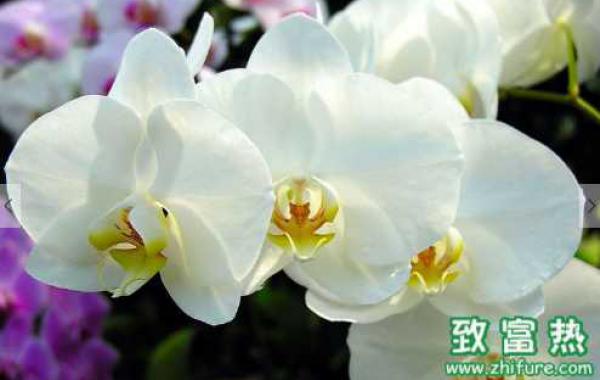
Orchids are epiphytic or terrestrial herbaceous plants, with several to many leaves, usually borne at the base of the pseudobulb or on the lower nodes, in two rows, strap-shaped or rarely oblanceolate to narrowly elliptic, generally with a broad sheath at the base that clasps the pseudobulb, and with a joint. The raceme bears several to many flowers, in colors of white, pure white, white-green, yellow-green, pale yellow, pale yellow-brown, yellow, red, blue-green, and purple. Among China's traditional famous flowers, "orchid" refers only to certain terrestrial orchid species distributed among the Cymbidium plants of China, such as Cymbidium goeringii (spring orchid), Cymbidium faberi (Huilan), Cymbidium ensifolium (Jianlan), Cymbidium sinense (Molan), and Cymbidium kanran (Hanlan), which is what is commonly meant by Chinese orchid.
The Benefits and Uses of Orchids
1. Nourishes yin fluids, promotes fluid production and moistens dryness, treating the aftereffects of dry mouth and excessive thirst caused by radiotherapy for malignant tumors.
2. Clears heat and cools the blood, nourishes yin and moistens the lungs, treating dry cough and prolonged coughing, and coughing of blood from the lungs.
3. Regulates qi and harmonizes the blood, promotes diuresis and reduces swelling, treating urinary tract infections and leukorrhea in women.
4. Soothes the liver and relieves depression, harmonizes qi and blood, treating dizziness and blurred vision, and neurasthenia.
5. The floral fragrance can be used to scent tea. The scent of orchid is clear and intense, mellow and pure; used to scent tea, it gives the highest quality.
6. The flowers can be eaten, and can be made into soup. Famous Sichuan dishes include shredded pork tripe with orchid, shredded pork with orchid, and others.
People Suited to Consuming Orchids
Damp-heat constitution, phlegm-damp constitution
What to Note When Growing Orchids
1. The most critical thing to note is watering. Orchids and Clivia are most afraid of waterlogging and root rot; few are killed by drought, but they are often killed by frequent watering that waterlogs and rots the roots, stems, and leaves until death. The amount of water should be moderate. Do not water when not dry; when watering, water thoroughly. Depending on the climate, generally water once every ten days to half a month. On rainy days, absolutely do not water orchids; orchids fear water but like humid air, so in hot and dry weather it is best to spray a small amount of mist on the orchid leaves at noon and in the evening.
2. Avoid direct sunlight; place them for cultivation in a spot with plenty of scattered light. Every half month, wipe the dust off the leaves with a clean cloth to keep the leaves attractive and to allow them to absorb light fully.
3. In a natural environment, orchids can withstand temperatures of -8°C. When the temperature drops to 5°C, promptly move them indoors to a well-lit spot to overwinter.
4. Fertilizing. Once every 1-2 months, water with fully fermented rice-washing water or light, well-rotted fertilizer water made from chicken, duck, and fish.