Clivia Seed Cultivation Methods and Precautions: It Prefers a Semi-Shaded, Cool Environment
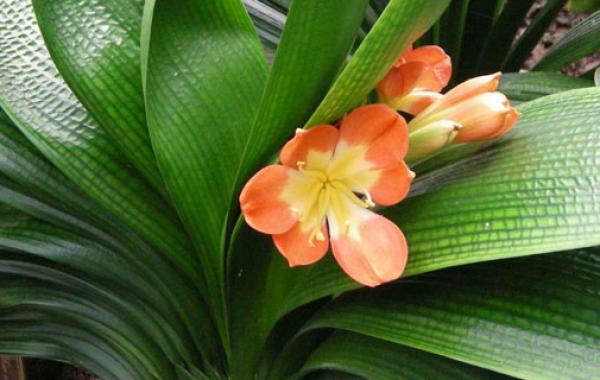
I. Soil
1. Clivia is a perennial herbaceous plant, very well suited to growing in fertile soil rich in humus; its soil's air permeability and water permeability are both quite suitable for the respiration of Clivia roots.
2. In the prepared potting soil, you can add another one-half part of fine sand to build up the Clivia's roots.
II. Light
1. Plant growth requires sunlight for photosynthesis, and light conditions are essential; Clivia is a mid-day-length plant, and although it cannot do without sunlight, too long a light period will also damage Clivia.
2. Semi-shade and semi-sun is most suitable for Clivia growth. If you have a large tree, a grape trellis or the like at home, placing the Clivia in the tree shade is best.
3. If conditions permit, you can also build Clivia a shade canopy that lets light through, which can meet the Clivia's growth needs in many ways.
III. Temperature
1. Clivia likes a semi-shaded, cool living environment; 15-25°C is relatively suitable for Clivia growth.
2. When summer temperatures are too high, give the Clivia relief from the heat promptly, to prevent the leaves from growing narrow and long and affecting its ornamental value.
3. In winter the temperature should be kept at around 15-20°C, and must not fall below 10°C at the lowest.
4. After the flower scape emerges, 18°C is suitable; keep the day-night temperature difference within 10°C to prevent the scape from being trapped.
IV. Water
1. An appropriate amount of water can, to a certain extent, assist the growth of Clivia's roots and stems.
2. Clivia has sturdy roots and stems that can store water themselves, and it is highly drought-tolerant. So watering Clivia should be kept at intervals; water once the potting soil is dry.
3. Generally, water about once every 4 days in winter, and once every 2 days in spring and autumn. Clivia needs little water at the seedling stage and more water at the flowering stage; note that in summer you should increase the watering frequency appropriately according to conditions.
4. The timing of watering Clivia is also very important; it is best to water before sunrise and after sunset.
5. To ensure Clivia gets through summer safely, spray water on the leaves twice a day. In winter, when it is below 10°C, water less, and under certain circumstances you can even skip watering.
6. A small pot of Clivia can be buried in the damp sand of a large pot, letting moisture seep into the small pot to supply water. A large pot of Clivia takes up a lot of water, so you can set it in a large shallow water tray, which can also provide water.
V. Fertilizer
1. The fertilizing principle is light fertilizer applied frequently; there are mainly three types of fertilizer: dry fertilizer, water fertilizer and solid fertilizer.
2. In spring and autumn, apply fermented solid fertilizer once a month. Liquid fertilizer, mainly nitrogen fertilizer, once a week; no additional fertilizing is needed in winter or summer. In winter you can apply solid fertilizer once, with less nitrogen fertilizer and more phosphorus and potassium fertilizer.
3. You can fertilize with dilute cake fertilizer water, or first stir-fry oil-bearing seeds such as castor beans and sesame, then crush them and bury them at the bottom of the pot.
4. For phosphorus fertilizer use eggshell powder or fully rotted fishy water; for potassium fertilizer use bran ash and tobacco ash; you can also apply a nitrogen-phosphorus-potassium compound fertilizer, which likewise promotes the sprouting of stems and leaves, but be careful never to apply concentrated fertilizer or untreated raw fertilizer.
5. Seasonal fertilizing should be differentiated: in winter and spring, phosphorus and potassium fertilizers are better; in autumn, nitrogen fertilizer is better. In summer use foliar top-dressing, spraying the leaves with 0.1% monopotassium phosphate or superphosphate, etc.; if the Clivia enters its dormant period in summer, fertilize cautiously.
VI. Precautions
1. In summer, pay attention to shading from light; 3-5 hours under direct sunlight is enough. In winter, when light is suitable, you can open the window, but at noon prevent direct sunlight; it is best to put up a shading top curtain, and pay special attention to shading on the south side as the sun goes down in the west.
2. Clivia's normal flowering time is from New Year's Day to the Spring Festival; flower scapes produced in summer cannot open good flowers, so be sure to cut off excess flower scapes. If they are not cut off in time, the nutrition Clivia needs cannot be met, affecting normal growth later.
3. In winter do not water the flowers directly with tap water or well water; water that is too cold can cause disease and, in severe cases, lead to the plant wilting. You can first let it warm up indoors; the harmful substances in the water will also settle and evaporate, thus solving both problems at once.