How to tell if an orchid is short of water? A few practical methods
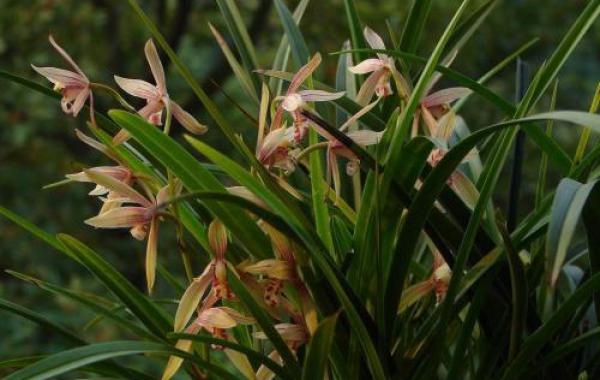
Today I will share information about this herbaceous plant, and next I will introduce it from the aspects of the symbolism of orchids and how to grow them.
Orchids are herbaceous plants with very high ornamental value. So, when caring for orchids, how do you tell whether an orchid is short of water? The details are as follows:
How to tell whether an orchid is short of water
Orchids are terrestrial plants that like moisture and dislike waterlogging. Many beginners, afraid that their orchids lack water, end up watering too much and simply rot the orchid's fleshy roots. The watering principle for soil-grown orchids is "better dry than wet": just keep the orchid soil slightly moist. For soil-less cultivated orchids, the opposite applies: "better wet than dry".
When growing orchids, you should not look at how often to water, but mainly at whether the potting soil is dry.
The moisture level for growing orchids is relatively hard to master, especially a bit harder for beginners. Nowadays most people use hard granular potting medium to grow orchids, which makes it even harder to judge: the surface of the pot looks dry but it is still wet below. How do you master this? There is a little observation method: use a small toothpick (preferably wooden), insert it along the edge of the pot, pull it out after 1-2 hours and observe. If the toothpick is wet, no watering is needed; if the toothpick is dry, water thoroughly. By observing the dryness and moisture of the toothpick, you can judge how much water is in the pot and decide whether to water. This roughly meets the orchid's water needs without becoming too wet or too dry.
For watering orchids, rainwater and spring water are best; tap water or rice-washing water needs to be left overnight before use. When watering, pour from the edge of the pot, and do not pour into the flower buds. The amount of water should be determined by the temperature, the dryness and moisture of the potting soil and the growth of the orchid plant. Water more when there are many leaves, less when the leaves are fine. In April-May, when new shoots have not yet emerged from the soil, the potting soil should be on the dry side, as too much moisture easily rots the new shoots; June-September is the growing period for orchid new shoots, so the amount of water should be increased, watering once every morning on sunny days, and never water under the blazing midday sun. In autumn, reduce the amount of water as appropriate; you can spray water on the leaves to keep the potting soil moist. In winter, control the amount of water even more, keeping it at "80 percent dry, 20 percent wet".
The correct way to water orchids
When watering orchids, be sure to water the soil thoroughly, but do not pour water into the center of the leaves, because if the water cannot evaporate, it will harm the plant's growth. You can use a watering can and other tools to water it, or use the immersion method: put the flower pot in a tray and take it out after half an hour. In addition, you should also use a spray bottle to sprinkle water on the plant more often, which can increase air humidity very well.
People have summed up several methods of watering orchids, such as pouring, sprinkling and soaking, and each of these methods has advantages and disadvantages. If you grow orchids at home, the pouring method is the best choice.
The pouring method is to pour water along the edge of the orchid pot until water overflows from the bottom of the pot, then pour a portion of water again, and the watering work is done.
Orchids are one of China's top ten famous flowers, loved by everyone, with a pleasant fragrance: "By the roadside among the grass there are orchids, showing neither heroic bearing nor splendor; only when the subtle fragrance reaches the heart does one realize a rare flower hides in the garden
." This kind of orchid that gives off a subtle fragrance has always been favored by people. The alluring and mysterious subtle fragrance of the orchid cannot be compared with the fragrance of any other flower in the world. Whether it is the light fragrance of cymbidium orchids, the strong fragrance of Chinese orchids, the osmanthus-like fragrance of some Jian orchids, or the sandalwood-like fragrance of some New Year orchids, they all share one common characteristic: clear and subtle.
Chinese name: orchid. Alias: mountain orchid, secluded orchid, zhilan. Latin scientific name: Cymbidium spp. Classification: orchid family flowers. Family and genus: Angiosperms, Monocotyledoneae, Asparagales, Orchidaceae, Cymbidium. Sunlight: orchids like shady, cool environments and avoid direct sunlight. Soil: airy, loose leaf mold, apply thin fertilizer, and never apply strong fertilizer. Water: orchids like moisture and need the potting soil kept moist for a long time.
Orchids symbolize beauty and noble purity, and imply patriotism, steadfastness and unswerving loyalty. You should know that the orchid is the gentleman among flowers, its qualities are very noble, poets often praise it, and the orchid is also a mascot of love.