Reasons Why Rain Lilies Do Not Bloom and How to Fix Them
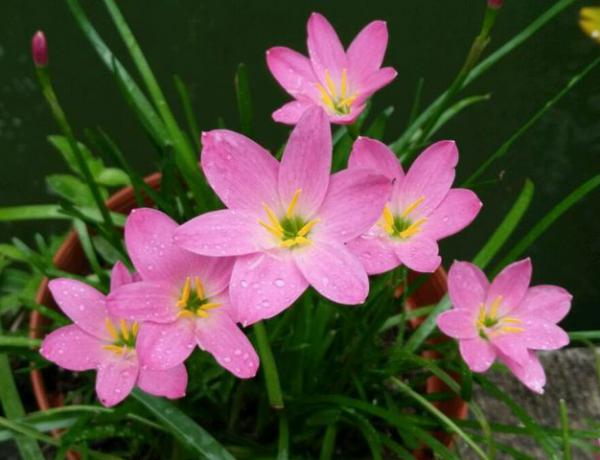
Rain lily, also called chive lily because its leaves look very much like chives, is a perennial bulbous flower that blooms mostly in pink. Its blooming ability is extremely strong, and it generally blooms continuously from late spring to late autumn, and it also easily grows into a full, overflowing pot. However, many gardeners who love growing rain lilies often say that this plant is just too hard to get to bloom. Today, the editor will share the reasons why rain lilies do not bloom and how to fix them.
There are several reasons why rain lilies do not bloom. The first reason is that the bulb is still small and has not yet reached blooming age. Generally, going from a small bulb to a blooming state takes at least 2 years. If this is the reason it is not blooming, we can only keep growing it. Once it has grown large, it will naturally bloom.
The second reason is usually too little light. Because the rain lily is a green plant that absolutely loves strong light, it needs at least 4 hours or more of direct sunlight every day. This plant is not afraid of sun at all; only when it is exposed to strong sun will it bloom smoothly. So everyone must move it to a spot with plenty of light for care.
The third reason is insufficient nutrients. Although the rhizome of the rain lily can store nutrients, because its blooming ability is relatively strong, each bloom consumes most of its nutrients. So after summer arrives, you should apply a flowering fertilizer at least once every half month, such as Huaduoduo. Only with sufficient nutrient supply can it keep blooming continuously.
The fourth reason is that the leaves are growing too luxuriantly. Because once the leaves grow luxuriantly, the nutrients in the bulb will be absorbed by the leaves, which in turn affects the growth of the flower scapes. So if you want it to bloom smoothly, you must painfully prune away part of the lush leaves, or cut them all off. In this way, the nutrients stored in the bulb will be concentrated and supplied to the flower scapes, and it will bloom very soon after.
The fifth reason is applying too much nitrogen fertilizer. Nitrogen fertilizer is a fertilizer that promotes the growth of roots, stems, and leaves. If too much nitrogen fertilizer is applied, the leaves will grow extremely luxuriantly, which in turn affects the growth of the flower scapes. So during care, aside from applying more nitrogen fertilizer in spring, you must apply less nitrogen fertilizer in the other seasons and apply more phosphorus and potassium fertilizer.
If the rain lily you are growing has already reached blooming age but still is not blooming, then here the editor will teach everyone a little method that can make it smoothly grow flower scapes in 3 days, and it can bloom several times in one month. The reason it is called rain lily is because this plant can bloom about 2-3 days after each rain. So if we want it to bloom, we should do this: in the evening, give it a heavy watering.
Then the next day, move it under strong sun for intense exposure. Basically, after about 2 days, you can see flower scapes growing out. After each bloom, promptly supplement once with a flowering fertilizer (Huaduoduo or potassium dihydrogen phosphate). Then wait until the soil is dry, give it a heavy watering again and place it under strong sun. By continuing this routine, you can keep it blooming continuously.