Why does the Chinese persimmon drop its fruit after setting fruit?
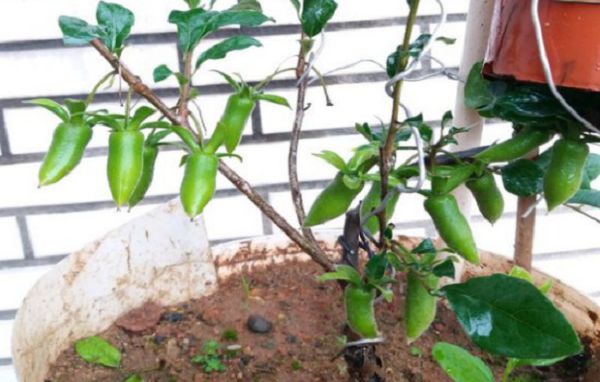
Anyone familiar with the Chinese persimmon (Diospyros cathayensis) knows that, like the Chinese winterberry (Diospyros armata), it is an excellent material for making fruit-viewing bonsai, a fact that is obvious to all. Moreover, as long as it is well cared for and managed, it can bear fruit every year, so in the hands of growers with rich experience or bonsai masters, the Chinese persimmon can maintain a beautiful ornamental appearance every year and can be presented as a fruit-viewing bonsai year after year.
Although the Chinese persimmon is very suitable for fruit viewing, the Chinese persimmon grown by some hobbyists at home is very prone to dropping fruit after setting fruit. And for a fruit-viewing bonsai, fruit drop will undoubtedly greatly reduce its ornamental value. Of course, this is something that the vast community of Chinese persimmon enthusiasts does not want to see. Everyone hopes to see the Chinese persimmon bonsai successfully bear beautiful, abundant fruit year after year as expected.
Fruit drop in the Chinese persimmon is quite common and also quite easy to occur. The reasons are mainly the following aspects, which deserve our full attention and consideration. Today, the editor will discuss with you the reasons for fruit drop in the Chinese persimmon, hoping it will be of some help to you in growing Chinese persimmons well.
1. No pollination
The Chinese persimmon is usually dioecious, with the phenomenon of being monoecious rarely occurring. But this tree has a very prominent characteristic, namely that it has a unisexual nature. That is to say, if planted as a single plant, whether male or female, it holds the promise of flowering and fruiting. The only thing is that without pollination of the flowers, fruiting is relatively difficult, and even if it does fruit, the fruit is prone to dropping completely before it matures. Moreover, fruit produced from unpollinated flowers cannot produce seeds, so mature seeds cannot be harvested for sowing and propagation.
2. Improper watering
Although the Chinese persimmon also needs to continuously consume water during the flowering and fruiting period, and this plant relatively prefers a humid growing environment, if it is watered too frequently and with too much water during the flowering and fruiting period, it is also very prone to causing flower and fruit drop. So frequent fruit drop during the flowering and fruiting period of the Chinese persimmon may be caused by our failure to master the watering method. Generally, during the flowering and fruiting period, watering should be appropriately controlled, and heavy watering and flooding must be avoided, so as to keep the potting soil slightly moist.
3. Improper fertilizing
During the flowering and fruiting period, the Chinese persimmon should be given little or no nitrogen fertilizer, which can prevent it from constantly growing branches and leaves while bearing little fruit. To promote flowering and fruiting in the Chinese persimmon, some phosphorus and potassium fertilizer can be supplemented during the flowering and fruiting period, and it is advisable to spray the plant with a dilute potassium dihydrogen phosphate solution. But if fertilizing is improper, especially if a large amount of fertilizer other than phosphorus and potassium fertilizer is applied, or if the concentration of phosphorus and potassium fertilizer is too high, it may cause fruit drop in the Chinese persimmon.
4. Too many flowers and fruits
Although the Chinese persimmon is very suitable for making into a fruiting bonsai, it is not that the more flowers and fruits the better; we also need to consider the plant's carrying capacity and the nutrient reserves in the pot. If there are too many flowers and fruits, it is often relatively easy to cause greater nutrient competition, causing nutrients to be spread too thinly, so that what reaches each individual flower or fruit is relatively little. This easily leads to a phenomenon of insufficient nutrients, thereby causing flower and fruit drop. Therefore, if the Chinese persimmon has too many flowers and fruits, we must promptly thin the flowers and fruits, so as to improve the quality of the retained fruit and avoid abnormal fruit drop.
Of course, in addition to the four main reasons above, fruit drop after the Chinese persimmon sets fruit may also be caused by a sudden change in the environment that makes it unsuitable for the plant's growth, or by the plant being infected with pests or diseases, or by the plant developing root rot or root damage, or again it may be natural fruit drop occurring in autumn and winter under the action of metabolism, and so on. These are all factors that cause fruit drop after the Chinese persimmon sets fruit. After ruling out the four main reasons above, we should consider these factors and then provide timely remedies.