How to fertilize Magnolia liliiflora? A detailed guide to the correct fertilization method
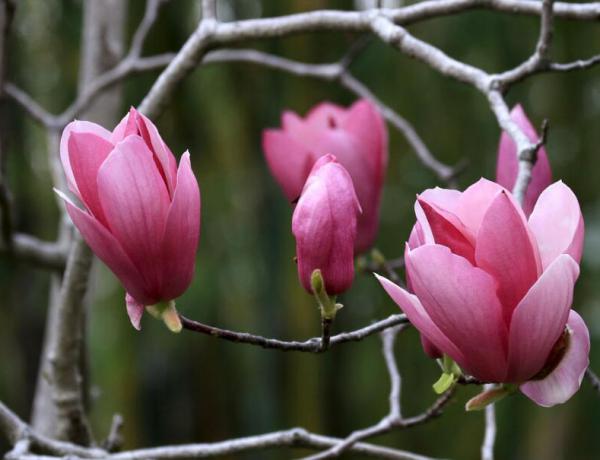
How to correctly fertilize magnolia? Magnolia is a deciduous tree or small tree of the Magnoliaceae family. In some places it is also called white magnolia, purple magnolia, or magnolia flower. It is a tree species unique to the provinces along the Yangtze River basin in China, and is now widely planted as a landscaping tree in regions such as North China. Because its flowering period is in spring, it blooms especially early. When other tree species have not yet sprouted, it is already covered in flowers. It looks all the more graceful and elegant.
Because the magnolia tree is relatively tall, it is often used as a tree species for road landscaping and courtyard planting, and its management is relatively extensive. When planting for courtyard landscaping, in order to enable it to produce more brightly colored flowers, a complete fertilizer containing nitrogen, phosphorus and potassium should be applied at least twice a year.
1. The correct fertilization time, fertilizer types and methods of use. The best time for the first fertilization should be at the end of flowering, when the leaf buds have just emerged green. It should not be before the plant blooms. Because the plant has produced a large number of flowers and will next enter the growth period of leaf buds and branches, the plant will consume a large amount of nutrients. Therefore, applying fertilizer after the flowers fade and before the branches sprout is the most suitable time.
The type of fertilizer used is naturally mainly a complete fertilizer containing nitrogen, phosphorus and potassium. Ordinary compound fertilizer can be used, and various fermented and decomposed oilseed cake fertilizers and various poultry and livestock manures can also be used. However, before use, they should be piled up and fermented to decompose as much as possible, or when fertilizing, stay more than 80cm away from the plant to ensure the plant's safety.
2. Fertilization amount and method: when using compound chemical fertilizer, 0.5 to 0.8 kg can be used per plant, and three to four holes can be dug around the plant, with a depth of 30-40cm. If fermented and decomposed cake fertilizer is used, the amount can be about 2-3 kg, also divided into three to four holes. If poultry and livestock manure is used, the amount can be appropriately increased to 5-6 kg, and a small amount of compound fertilizer can also be scattered in at the same time.
3. The second fertilization: after fertilizing in spring when the flowers fade, basically no further fertilization is needed in the first half of the year, until September and October, when some flower buds appear on the side branches and tips of the plant. At this time the plant gradually stops growing, and as the temperature drops day by day, the plant's leaves turn yellow and fall off. At this point the plant can be given a second fertilization, and the fertilization method and amount are the same as in spring.
After this fertilization, it can fully satisfy the nutrients needed for the plant's spring flowering. In addition, after the flowers fade in spring, the plant can be pruned once. Cut out thin, weak and overly dense branches, and shorten leggy branches. After new branches sprout, pinching and topping should be combined to control the tree's vigor, prompting the plant to sprout more side branches and differentiate more flower buds.