A Detailed Guide to Common Diseases of Gloxinia and Their Control Methods
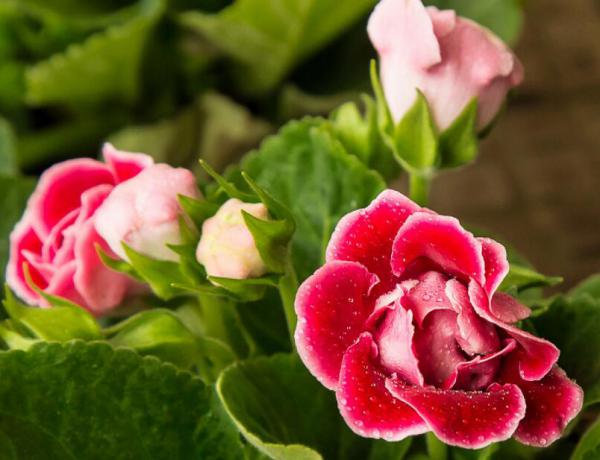
During cultivation, gloxinia is very easily threatened by diseases, which affects its beautiful appearance. So how can gloxinia diseases be avoided during care? This is what we need to pay attention to.
1. Gloxinia disease: wilt nematode disease
Disease symptoms: Wilt nematode disease is a common disease of gloxinia, caused by nematode infection. It harms the tender stems, young plants, above-ground stems and the bases of branches and leaves of gloxinia, causing the plant to become water-soaked, soften and then rot, and then gradually spread to the leaves, which shrivel and die.
Control methods: Before cultivation, the potting soil should be disinfected with steam or chloropicrin, and the tubers of gloxinia should be soaked in warm water at 60°C for 5 minutes, or disinfected with Uspulum. If gloxinia is found to have been infected with this disease, the affected plants should be pulled out and burned.
2. Gloxinia disease: rot disease
Disease symptoms: It mainly harms the leaves, stems and young plants of gloxinia, producing water-soaked dark brown necrotic spots on the leaves, with concentric rings appearing in the spots. In severe cases, the upper stems become distorted and dwarfed. Mature plants produce large numbers of black sunken lesions on the above-ground stems, which crack open; the small black dots on the lesions are arranged in concentric rings, with white mycelium at the edges.
Control methods: Before cultivating gloxinia, spray the ground with 3 parts formaldehyde mixed with 1 part water and cover with plastic film, or mix 7 parts 70% Dexon powder with 3 parts fine soil and spread it on the ground for disinfection. In daily care, pay attention to promptly removing diseased plants and burning them in time.
3. Gloxinia disease: gray mold
Disease symptoms: A major disease of gloxinia, it appears on the flower stalks as brown soft rot, starting from the edges, with brown lesions growing out, the surface having concentric rings and shriveling, and it will spread to the entire leaf. When humid, gray mold layers form, later turning yellow. In severe cases, the entire leaf, entire flower and entire branch turn brown and die.
Control methods: During the onset of the disease, use 80% zineb 500-fold solution, or 1% Bordeaux mixture, or 75% chlorothalonil 500-fold solution, spraying once every 10 days, for 2-3 consecutive sprays.
4. Gloxinia disease: phytophthora blight
Disease symptoms: After the leaves are infected, dark brown water-soaked softening appears, and after spreading to the petioles, the leaves rot and have narrow water-soaked sunken spots, which often expand into large patches or elongated patches. When the stems are affected, it also spreads to the petioles, causing the leaves to bend.
Control methods: In the early stage of the disease, spray 72.2% Previcur AS 600-fold solution or 72% Kelu wettable powder 600-fold solution, 60% Mieke (flumorph. mancozeb) wettable powder 1000-fold solution, 25% metalaxyl wettable powder 500-fold solution.