How to fertilize Kalanchoe? Master the techniques for vigorous growth and abundant blooms
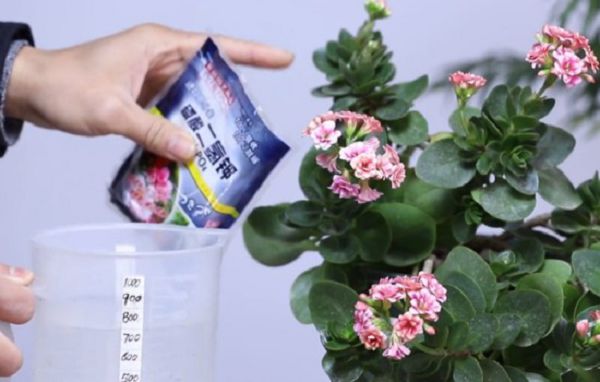
Kalanchoe is a plant that loves fertilizer very much, because it produces a large number of flowers and has a long flowering period, consuming a great deal of nutrients. But at the same time, it is not tolerant of concentrated fertilizer, especially raw fertilizer, otherwise it is prone to fertilizer burn. This is because its fleshy fibrous roots are very fragile and easily rot from fertilizer damage. Especially when fertilizing during the flowering period, we should master certain techniques so that it grows more vigorously and blooms more.
Fertilizing Kalanchoe is not just about doing a good job with later topdressing management; when potting we also need to apply sufficient base fertilizer. For the base fertilizer, we should generally choose a fertilizer with long-lasting effects and mild strength, so it can continuously supply nutrients to the plant. This kind of base fertilizer is also safer to use and less likely to harm the root system of Kalanchoe.
But whether it is base fertilizer or topdressing, we must control the concentration and amount of fertilizer well, otherwise it is easy to cause fertilizer burn to Kalanchoe, leading to root rot, and later there will be no flowers to enjoy. The base fertilizer is best made of decomposed farmyard organic fertilizer, such as fully fermented and decomposed sheep manure, chicken manure and similar animal manures. Generally, when potting, mix it evenly with the soil and bury it at the bottom of the pot, or after potting, simply scatter it on the surface of the pot.
If we correctly apply enough base fertilizer, it is very beneficial to the later growth and management of Kalanchoe. Moreover, farmyard manure has a particularly long fertilizer effect, even lasting up to 1 year. So, as long as we can correctly apply base fertilizer to Kalanchoe, later care and management will become twice as effective with half the effort, and much easier.
But during the flowering period, in order to promote bud formation, we need to switch to phosphorus and potassium fertilizer to promote flowering, mainly monopotassium phosphate or Huaduoduo No. 2. However, if during the flowering period the plant is not growing vigorously and looks rather thin and weak, it will inevitably affect its subsequent flowering. So before switching to phosphorus and potassium fertilizer, we suggest applying some nitrogen-phosphorus-potassium compound fertilizer, and then switch to phosphorus and potassium fertilizer.
Throughout its life, Kalanchoe does nothing but bloom and grow. Since blooming is also a manifestation of growth, we need to fertilize it on time to replenish nutrients. But we must be sure to keep the frequency low and the concentration low, so that fertilizer burn does not occur while still better promoting plant growth. It can be seen that fertilizing Kalanchoe focuses on two stages: one is fertilizing during the growth period, and the other is fertilizing during the flowering period, and correct methods must be mastered for both.