How to handle and divide Clivia miniata after it finishes blooming
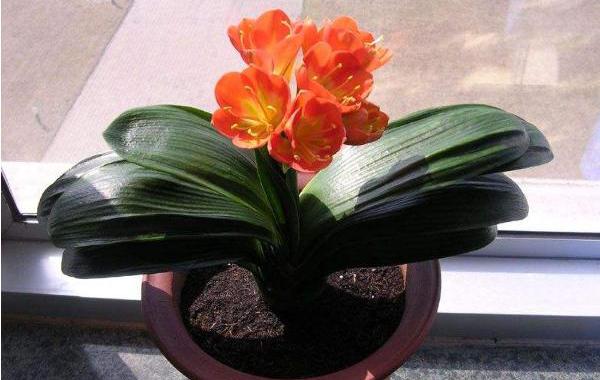
Clivia miniata has a beautiful, elegant plant shape with delicate emerald-green leaves, and it also produces very beautiful flowers, making it deeply loved by flower enthusiasts. However, Clivia miniata generally blooms only once a year; with good care, it may bloom two or three times. So how should you manage and care for Clivia miniata after it finishes blooming? And how should you divide it? Below, the editor will explain in detail.
What to do after Clivia miniata finishes blooming
Blooming consumes too many nutrients from the Clivia miniata itself. At this point, the soil in the pot is already severely lacking in nutrients, especially phosphorus. So after Clivia miniata blooms, it is best to repot and change the soil to prevent it from failing to bloom again the following year. Do not water for a period before changing the soil, to make it easier to separate the pot from the plant. After successfully separating it, cut off any rotten or shriveled dead roots, shake off the old soil, and transplant it into a larger pot. In addition to soil, add bone meal or fermented biscuit crumbs to supplement its nutrients, and be sure to mix them evenly.
How to divide Clivia miniata
First, take the mother Clivia miniata plant out of the pot, remove the soil around the roots, and carefully observe to find the divisions in the root system.
If the offset is growing on the outer edge of the mother plant and is relatively small, you can directly twist it off by hand; if the offset is thick and strong, you can cut it off with a sharp knife. Do not force it off, to avoid damaging the young plant.
Next, plant the offset in a pot. The planting depth should not be too deep; it is best to just bury the base pseudobulb of the offset, then cover with a little disinfected fine sand.
Water immediately after planting. After 2 weeks, once the root wounds have healed, cover with a layer of potting soil. After 1 to 2 months, the offset will grow new roots.
What to do if Clivia miniata has too many roots
1. If it has not bloomed
Because the plant has not yet bloomed, if we cut off its roots, it can easily cause problems with absorption, since roots are the most important thing for absorbing nutrients. So it is better to wait until it finishes blooming before dealing with the plant. Being able to have so many roots before blooming is mostly because we usually apply too much fertilizer.
2. If it has bloomed
If a plant that has already bloomed has especially many roots, it should be handled appropriately. There are two specific methods.
1. Root pruning
The plant is no longer satisfied with the size of the pot. Too many roots make its space crowded, and the absorption of some nutrients becomes difficult. At this time, cut off the rotten roots, long roots, and old roots from the base, then air-dry it. Be careful not to let it be exposed to the sun. If you want to speed it up, you can use a cigarette butt to cauterize the cut areas dry. Natural air-drying takes about half a day. The purpose of drying it is to prevent bacterial invasion. After that, plant it back into the soil and water it with rooting water, and it will be fine. If there are diseased roots or dead roots, these need to be cut off, as do roots that are still stuck together, otherwise future root growth will also be affected.
2. Division
If the plant has too many roots, you can consider dividing its roots so that it can become several small pots. In this way, it can go from an overgrown pot back to normal, and it can also become several new plants. When dividing, you still need to cut off diseased, dead roots, and the good roots need to be cared for well and not allowed to be damaged.
Collecting Clivia miniata seeds
To ensure Clivia miniata, you first need to collect seeds. Clivia miniata generally must be pollinated to obtain fruit. When pollinating Clivia miniata, it is usually when the flower has opened and the perianth has split; after about 2——3 days the flower bud can mature. At this time there is mucus on the stigma, so pollination can be carried out.
When pollinating, dip a brush in pollen and dab it on the stigma of the pistil.
When pollinating, generally carry it out once in the morning and once in the afternoon. After about 8/9 months, the seeds can mature. When the fruit of Clivia miniata turns black-purple, you can cut it off. After 10 days, the seeds can be taken out.
As mentioned above, after enjoying the beautiful flowers of Clivia miniata, you should also pay attention to handling it! Improper handling will affect the future growth of Clivia miniata, so you must never be careless. Although the blooming period of Clivia miniata is short, even without gorgeous flowers, its plant shape and green leaves are also very beautiful.