What to Do When Clivia Leaves Turn Yellow? A Detailed Guide to the Solutions
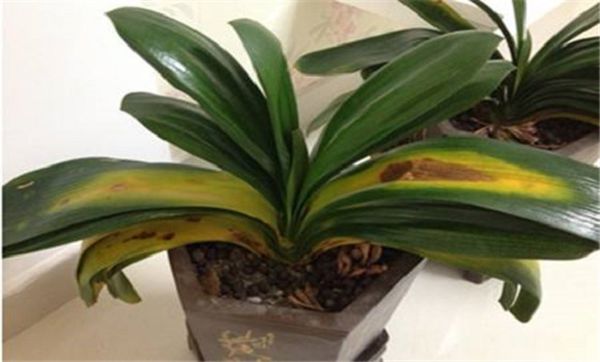
During the growth of Clivia, yellowing leaves often occur. There are 4 main causes of yellow leaves: first, sunscald. Second, excessive water and fertilizer. Third, soil that is too alkaline or too acidic. Fourth, nitrogen deficiency.
Solutions for yellowing Clivia leaves
1. Place the Clivia indoors or in a shaded shed with diffused light, avoid direct sunlight, and keep the temperature at 15-25°C.
2. Replace the growing medium, cut off rotten roots, and control water and fertilizer use.
3. Change the pH of the growing medium to make it neutral or slightly acidic; pH 6.7-7 is suitable, so do not water Clivia with ferrous sulfate fertilizer solution.
4. Apply more fermented cake fertilizer water. With proper care, the yellowing of leaves will disappear.
As the plant grows, the root system gradually increases, and at this point repotting is needed. When repotting, trim away old roots and rotten roots and add fresh growing medium, as this promotes growth. Generally, repotting is needed once every 2-3 years, and it can be done in spring or autumn. After repotting, do not water immediately, to avoid infection and rotting of root wounds.
Appendix: Pest and disease control for Clivia
1. Rot disease: mainly occurs on the leaf sheath or roots. Control method: cut off the affected parts, expose the wounds to sunlight, improve ventilation, and prevent the wounds from becoming damp.
2. Leaf spot disease: the initial symptom is small brown spots, and later the lesions dry up and black granular matter appears in the center. Control methods: ① Spray a 5% carbendazim 1000-fold solution. ② Spray a 70% thiophanate-methyl 1500-fold solution.
3. Soft rot: at first it looks like oil spots, pale yellow, translucent, and later gradually turns brown and soft-rotted or dry. Control methods: ① Strengthen ventilation and disinfect the soil. ② Spray the leaf surface or apply to the lesions a 5000-fold diluted solution of penicillin, streptomycin, or oxytetracycline.
4. Scale insects: they are the main pest of Clivia, mostly occurring in summer, and mainly damaging the leaves. Control method: spray with an 800-1000 fold phosmet solution.