Identification of Orchid Anthracnose Symptoms and Control Methods
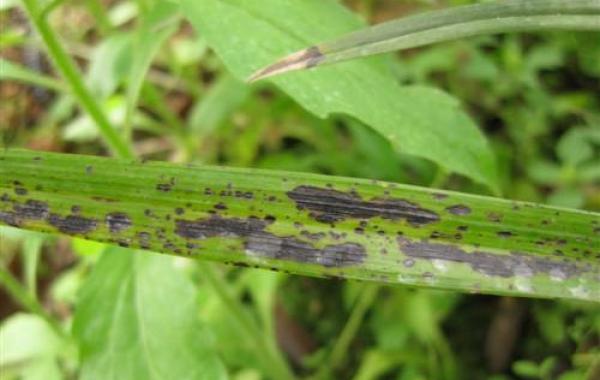
Since ancient times, orchids have been regarded as a symbol of purity and elegance, and have won the praise of a great many poets and writers. They have a cultivation history of one thousand years in China, and to this day many people still grow them. However, when growing orchids, various pest and disease problems are often encountered. Below, let us learn about the symptoms and control measures of orchid anthracnose:
Symptoms of Orchid Anthracnose
The symptoms of orchid anthracnose are relatively complex, and can be broadly divided into 3 types: round spots, round patches, and leaves drying up and dying. When attacking orchid plants, depending on the size of the orchid seedlings, it is mainly divided into two categories: one category infects young seedlings and tender leaves, mostly starting from the leaf base to form small brown round dots, which after expanding form concentric-ring spots, and in severe cases the central leaf rots; the other category infects the leaves of old seedlings, forming round or oval lesions on the leaf surface, and when the disease occurs at the leaf edge, semi-circular lesions form in the early stage. In the early stage of the disease, the lesions form reddish-brown patches, and in the late stage they turn brown to grayish-white, with dark brown edges and a chlorotic halo around them; most lesions are 0.1-0.5 cm in diameter, and in severe cases the lesions connect with each other to form a strip-shaped patch. If the disease is not effectively controlled, the leaves eventually gradually die from top to bottom. In the late stage of the disease, the diseased area produces black dot-like acervuli arranged in rings, and when air humidity is high, the diseased area produces pink gelatinous matter from the ring-arranged black dots, which is the source of re-infection and spread of the pathogen - the conidial mass.
Occurrence Characteristics of Orchid Anthracnose
1. The occurrence of this disease is related to cultivation management. This disease can occur all year round in Dali City, among which it is more severe in spring and autumn, while the severity of occurrence in summer is mainly related to cultivation management. Summer in Dali City (June-August) is the rainy season, when air humidity is relatively high; if water is continuously sprayed onto orchid leaves in the orchid garden, then the disease tends to become more severe in summer; on the contrary, under natural air humidity conditions, if ventilation is strengthened and the amount of water sprayed is reduced, then the occurrence of the disease is not very severe. In addition, surveys show that the disease is more severe in orchid gardens with poor cultivation management, such as soil that is too fine, compacted soil, excessive watering, poor orchid root systems, excessive application of nitrogen fertilizer, and poor ventilation conditions.
2. It is related to changes in the cultivation site. Orchid seedlings grown in greenhouses, without hardening treatment, sold directly to natural growers on balconies with moisture-retention conditions, are not only prone to leaf dehydration and drying, but also prone to orchid anthracnose, with the typical symptom being orchid leaves slowly dying from top to bottom.
3. It is related to the strength or weakness of the orchid plant. In general, orchids with robust growth, good root systems, and sufficient and balanced nutrition are not prone to the disease; poor orchid seedlings, because of weak disease resistance, are prone to the disease. Conversely, orchid seedlings with poor root systems and poor growth, because of weak disease resistance, are prone to the disease.
4. It is related to the length of time for introduction and domestication. The orchids grown in Dali City are mainly Cymbidium tortisepalum. After wild Cymbidium tortisepalum is cultivated at home, in the first few years the seedling production rate is high, the growth is strong, and disease resistance is strong, but after many years of cultivation, the wild nature degenerates, disease resistance weakens, and the disease tends to become more severe. The most typical example is the famous Yunnan orchid variety Xiaoxuesu, which has been cultivated at home for several hundred years and is most prone to orchid anthracnose.
5. It is related to the species of orchid. In general, species with thick, hard leaves and species with relatively upright leaves have strong disease resistance, such as Cymbidium hookerianum and Tiegusu among Cymbidium ensifolium, which have relatively mild occurrence; while Cymbidium tortisepalum, which is mainly grown in Dali City, and Duoxiang and Lulan among Cymbidium goeringii, are all relatively susceptible to the disease; among Cymbidium tortisepalum, famous varieties, and orchids that are relatively weak in growth due to excessive division of seedlings, are even more susceptible to this disease.
Pathogen and Occurrence Pattern of Orchid Anthracnose
The pathogen Colletotrichum gloeosporioides (Penz.) Sacc is Gloeosporium cingulata of the Deuteromycotina. The pathogen overwinters as mycelium and acervuli on diseased leaves or diseased residues left in the soil. The following year it produces conidia, which are spread by rain and insects and invade through stomata and wounds. The optimum temperature for conidial germination is 20 to 25°C, with relative humidity above 80%. Infection can occur when temperature and humidity are suitable in early spring, especially during the high-temperature, rainy season from May to June and during continuous rainy weather, or the disease is prevalent in years with much autumn rain or many typhoons from September to October. In particular, high humidity and stuffy heat, alternating clear and rainy weather (or showers), poor fertilizer and water management, pots placed too densely, leaves crossing and scratching each other, and plant frost damage can all worsen the disease. It also occurs year-round on potted orchids in northern greenhouses or homes; plants that are too dense, overhead watering, frost damage, soil that is too sticky, and poor drainage make the disease more likely.
Control of Orchid Anthracnose
1. Sticky, heavy, wet, and compacted potting soil with poor drainage is unfavorable for root ventilation and will worsen the disease; when watering, never pour water over the top of the plant cluster, but slowly pour it in from the edge of the pot, and avoid spraying water on the leaf surface, so as to avoid worsening the disease and expanding its spread.
2. In the moldy rainy season, the disease is relatively severe. Note that the orchid room must be ventilated and let in light, and orchid pots must not be placed too densely. When placed in the open, there must be a shade shed to prevent scorching sun, and also to prevent sudden storms between July and September, so as to avoid orchid leaves being injured and infected; during this period, increase the application of phosphorus and potassium fertilizer, and it is not advisable to apply nitrogen fertilizer. Pay attention to strengthening management so that orchid plants grow robustly and their disease resistance is enhanced.
3. Be careful not to let orchid leaves suffer frost damage or frost injury, and avoid bruising, so as to avoid increasing the chance of infection due to new wounds.
4. Overlapping orchid leaves are prone to infection. Diseased leaves found should be burned at any time, and fallen leaves in the pot should also be cleared away completely to prevent spread.
5. Select excellent varieties. For example, "Tiegengsu" among Cymbidium ensifolium has relatively strong disease resistance, while "Datousu" among Cymbidium ensifolium and "Dafugui" among Cymbidium goeringii are prone to the disease and relatively severe.
6. Damage by scale insects will promote the occurrence of the disease, so attention should be paid to timely pest removal.
7. The optimum temperature for pathogen growth is 22 to 28°C, air relative humidity above 95%, and soil pH between pH 5.5 and 6 are all favorable for pathogen germination. Spores can also spread over long distances by airflow and rainfall, all of which should draw our attention to prevention.
8. During the peak period of the disease, spray 75% chlorothalonil 500 times dilution once every 3 days, for 3 to 4 consecutive sprays, or 50% carbendazim wettable powder 500 times dilution, for control.