Orchid care methods and precautions in early spring
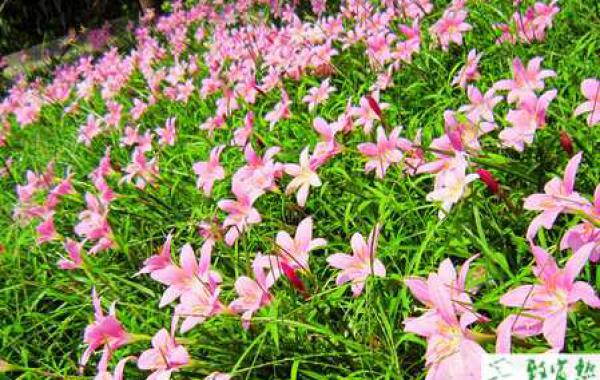
Orchid (scientific name: Cymbidium spp.): epiphytic or terrestrial herb, with several to many leaves, usually borne at the base of the pseudobulb or on the lower nodes, two-ranked, strap-shaped or rarely oblanceolate to narrowly elliptic, the base generally with a broad sheath clasping the pseudobulb, with a joint. Raceme with several to many flowers, in colors of white, pure white, white-green, yellow-green, pale yellow, pale yellow-brown, yellow, red, blue-green, purple. Among China's traditional famous flowers, orchid refers only to certain terrestrial orchids distributed among the Cymbidium species in China, such as Cymbidium goeringii, Cymbidium faberi, Cymbidium ensifolium, Cymbidium sinense and Cymbidium kanran, commonly known as "Chinese orchids". This type of orchid is very different from the large-flowered, brightly colored tropical orchids: it has no showy flamboyance and no huge flowers or leaves, yet it possesses a plain, quiet, elegant and noble temperament, which fits well with the aesthetic standards of Eastern people. It has a cultivation history of more than a thousand years in China.
Early spring is the full-bloom period of Cymbidium sinense and Cymbidium goeringii, and also the budding period of Cymbidium ensifolium, Cymbidium kanran and others. Early spring has many overcast and rainy days, with relatively large temperature fluctuations and recurring cold waves, which is extremely unfavorable to orchid growth. If poorly managed at this time, it will cause orchid root rot and bud rot, and may even cause the flowers of Cymbidium sinense and Cymbidium goeringii, which are in full bloom, to rot. Therefore, orchid management in early spring is very important.
In view of the fickle, cold and rainy weather of early spring, Cymbidium sinense and Cymbidium goeringii in full bloom must be kept indoors to protect the flower scapes and flowers, because rainy and cold, changeable weather will shorten the full-bloom period, and watering orchids with cold rain will cause the flowers to rot. For orchid types such as Cymbidium ensifolium and Cymbidium kanran, they can be placed outdoors, but attention must be paid to draining the orchid pots to prevent waterlogging; it is best to set up plastic film above the orchid pots to shelter them from rain.
In early spring, all fertilizer should be avoided for orchids. At this time the potting soil should be kept slightly moist, otherwise the new buds of Cymbidium ensifolium and Cymbidium kanran will rot to death, commonly known as black death, in which the orchid bud tips rot and turn dark brown, extending until the whole bud withers and dies. If spring buds rot to death, it will seriously affect the growth, propagation and flowering of the entire pot of orchid plants that year. As the saying goes: spring buds strong, summer buds weak, autumn buds do not count. If spring buds rot to death, vigorous new seedlings will not be obtained that year.
Overcast and rainy weather in spring is a period when various pests and diseases occur frequently. Snails, aphids, scale insects, and pests such as cutworms and mole crickets begin to harm orchid plants and new buds; rainy and humid weather will aggravate the occurrence of brown spot disease. Therefore, regularly spray 65% thiophanate or 50% carbendazim 1000-fold solution, keep the area around the orchid pots clean, spread quicklime to prevent pests from entering the pots through the pot walls and drainage holes at the bottom to cause damage, and frequently check the orchid pots for the occurrence of pests and diseases. For Cymbidium sinense and Cymbidium goeringii whose flowering period has passed, fertilizer should be supplemented in time, but concentrated fertilizer should be avoided.