How to Grow Clivia in Water? A Complete Guide to Methods and Tips
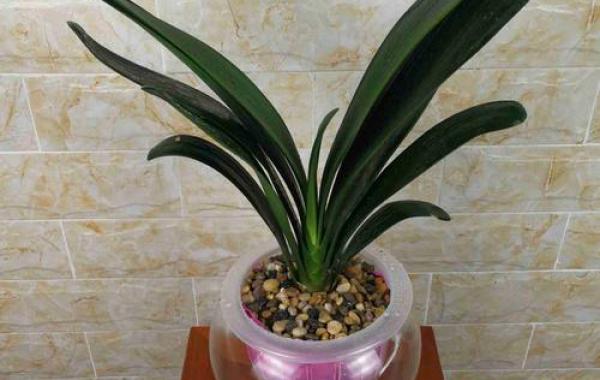
Many households grow Clivia, because Clivia is native to the area beneath trees in southern Africa, so it likes a semi-shaded, moist environment. Therefore, Clivia can be grown not only in soil but also in water. Today I will introduce it to everyone.
Choosing a Container for Water-Grown Clivia
To grow Clivia in water, you must first choose a good container. Generally speaking, a transparent glass container is best. If you are growing a single seedling, a glass jar is enough. If you want to grow a large number in water, you can use thin wire to make a metal mesh with holes one cm in diameter, and make a glass water-culture box slightly smaller than the metal mesh; or you can use a goldfish tank instead. Then place the metal mesh over the water-culture box, and insert the Clivia seedlings through the mesh holes into the nutrient solution. The depth of the flower roots in the culture solution should not exceed the pseudobulb at the base of the roots.
Preparing the Nutrient Solution for Water-Grown Clivia
Nutrient solutions are divided into inorganic and organic types. The inorganic nutrient solution can be prepared in the following proportions: calcium 1.5 grams, ferrous sulfate 0.01 grams, urea grams, monopotassium phosphate 1 gram, magnesium sulfate 0.5 grams. After these 5 inorganic salts are all gathered, dissolve them in 1000 grams of water and it is ready to use. The organic nutrient solution is prepared as follows: 100 grams of roasted hemp seed meal, 100 grams of bone meal (made from unsalted fresh bones), 150 grams of soybean cake meal, 50 grams of roasted sesame powder, then dissolve in 1000 grams of water. Comparing the two nutrient solutions above, the organic fertilizer has richer ingredients, but its nutrient content is not high; the inorganic fertilizer has relatively simple ingredients, but has strong fertilizer effect and quick results. To make up for each other's shortcomings, the two can be used in combination. If used alone, apply the inorganic fertilizer once a week, and apply the organic fertilizer once every 5 days.
Water for Water-Grown Clivia
For water-grown Clivia, you cannot directly use tap water; you must use water that has been "aged." So-called "aged" water means putting tap water in a container and sunning it in the sun for 3-5 days, so that chlorides such as bleaching powder, which are harmful to Clivia roots, settle out. For "aged" water, from its appearance, the sediment changes from strip-shaped to clump-shaped, and the water color is best when green. After the water is well "aged," when it covers the root area it must definitely not cover the pseudobulb. If the water level is too shallow, Clivia cannot get a sufficient water supply; if the water level is too deep (covering the pseudobulb), it will cause the roots to rot. During the growing process, pay attention to observing changes in water quality. If you find that the roots have turned somewhat yellow or black, it means the water is both short of oxygen and low in fertilizer, and you must change the water immediately.
Air, Sunlight, and Temperature for Water-Grown Clivia
Whether the aeration of the roots of water-grown Clivia can be handled well is the key to success or failure in water culture. After a period of growing, the roots of water-grown Clivia produce a layer of moss. When the moss is too thick, it will seriously affect root respiration and corrode the culture solution. At this time, you need to use a soft, clean bristle brush to gently brush away the moss layer on the roots (there is no need to brush it very clean, because a small amount of moss on the roots has little effect). In addition, you should often check whether the oxygen in the water is sufficient. The checking method is: put two or three small fish into the water-culture box. If the small fish swim freely in the water, it means the water is not short of oxygen. If the small fish always float to the surface, with their mouths and gills exposed to breathe, it means the water is short of oxygen.
After discovering that the water is short of oxygen, you must add oxygen. There are two methods: one is to change the water, and the other is to use a small oxygen pump to supply oxygen to the water. In terms of sunlight handling, Clivia is a semi-shade and semi-sun plant, so pay attention to light. Especially in summer, avoid direct strong sunlight and let it receive scattered light. In addition, according to the light-facing characteristic of Clivia leaves, pay attention to making the leaves receive light evenly; otherwise the leaves will differ in length, and the growth direction will also be staggered front and back. Generally, adjust the light angle once every two or three days. In terms of temperature handling, the environmental temperature for adult Clivia is best at 11°C-25°C, while small seedlings can be slightly higher, 20°C-35°C is fine. When growing Clivia in water, you must grasp the day-night temperature difference. In winter, keep it around 20°C during the day, and not lower than 15°C at night.
Precautions for Water-Grown Clivia:
(1) Keep the environment stable, that is, after placing Clivia in the water bottle, do not move it around repeatedly; keep the environment relatively fixed;
(2) Pay attention to nutrition; add nutrient solution once every half month;
(3) Pay attention to combining root fertilization and foliar fertilization; not only add nutrient solution to the water, but also spray the leaves with nutrient solution;
(4) Stop foliar fertilization during the flowering period to prevent the flowers from withering early;
(5) To promote flowering, you can inject flower nutrient solution at the head, once a month. Each time half a milliliter.
Water Cultivation Methods for Clivia
1. Take a 2-3 year old robustly growing Clivia and wash its roots, soak them in potassium permanganate solution for 10 minutes, then rinse clean with clear water, and grow them in tap water that covers one fifth of the root system, changing the water about once every three days.
2. Pay attention to pruning rotten roots and old roots. In 10-15 days, new roots can sprout from the base of the pseudobulb. Add water until it covers one half to one third of the root system. When the new roots grow to about 5 cm, switch to nutrient solution for cultivation.
3. After flowering, cut off the residual flowers and spray with monopotassium phosphate solution, which can make the plant develop fully and promote flower bud differentiation.