What temperature difference is suitable for Clivia to bloom
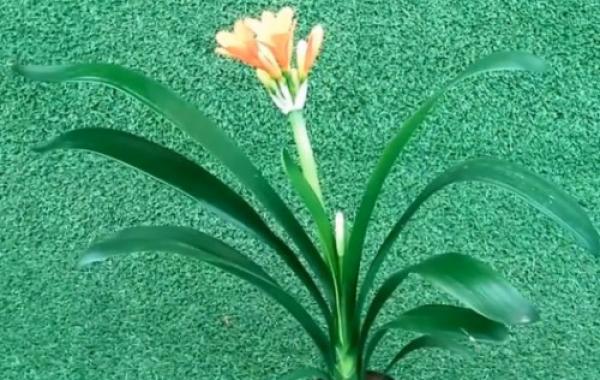
Clivia not only has long, wide, large and glossy green leaves, but its flowers are also both huge and gorgeous, making it a very popular ornamental flowering plant. But as a potted plant, by comparison it is often more suitable for flower viewing. Therefore, flower lovers mostly grow and keep it as a flowering potted plant.
But friends who have grown Clivia know that this plant is difficult to bloom under constant temperature conditions, and even if there are signs of blooming, it often tends to develop stuck flower arrows. To avoid Clivia developing stuck flower arrows and let it successfully open its buds, a certain temperature difference should be maintained during the flowering period. So, what is it.
To promote Clivia blooming, the temperature difference conditions should be created between day and night. During the day, it is recommended to keep the ambient temperature at around 27°C-28°C; at night, it is recommended to keep the ambient temperature between 10°C-15°C. Adjusting the temperature difference in this way is often quite reasonable.
When a relatively large temperature difference is formed between day and night, it plays an important role in helping Clivia smoothly push out flower arrows and avoid causing stuck flower arrows. But after all, Clivia is a plant that can bloom all year round. Now that autumn has arrived, if you want it to bloom in winter as well, you still need to provide sufficient light.
Perhaps some friends previously noticed that their Clivia always developed stuck flower arrows and failed to bloom when the flowering period came, and never found the reason from beginning to end. Little did they know that this problem can be well solved by adjusting the day-night temperature difference. So this can also perfectly explain the question of what role temperature difference plays for Clivia.