Why Tillandsia Flowers Turn Green and How to Fix It, Plus Post-Bloom Care Tips
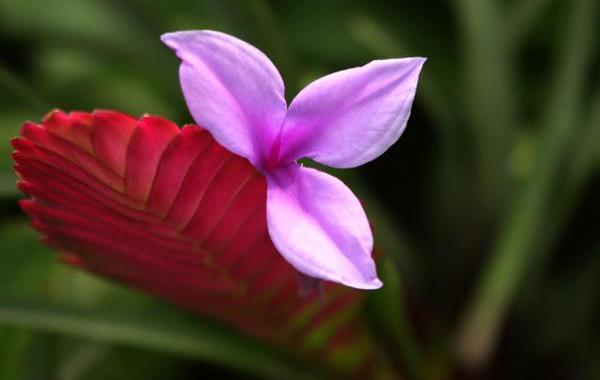
Tillandsia is a very popular flowering plant, but this affection is definitely not just about appearances. Although Tillandsia is beautiful, it is not so beautiful that everyone would be captivated by it. Rather, it is certain characteristics and the temperament of Tillandsia that are the real reason people love it. If you do not believe it, take a look and you will understand.
Why Tillandsia Flowers Turn Green and How to Fix It
When the flower color turns green, it means the blooming period is almost over, and afterward the flower will naturally and gradually wither and fade.
1. Tillandsia also belongs to the Bromeliaceae family. Plants in the Bromeliaceae family have one characteristic: the flowers of the mother plant will slowly turn green and eventually wither. Gradually, the edges dry up.
2. When the flower spike reaches its later stage, it will turn green. When it first opens, it is pink. The owner can simply cut it off when the flower spike turns green. Care for the mother plant and the surrounding offshoots of Tillandsia. If the mother plant finishes blooming this year, it will be very difficult for it to bloom again the next year. As long as the offshoots are carefully cared for, they will bloom in about a year.
How to Care for Tillandsia After Blooming
The flower stalk of Tillandsia that has already bloomed will, in fact, not bloom again in this climate, so it is best to cut off the spent flowers and flower stems. Cutting off these flower stems is mainly to prevent these spent flowers and stems from consuming too many nutrients, which would lead to poor growth, as well as to prevent some pests and diseases that withered flowers and stems may cause. Therefore, pruning should be done in a timely manner.
If small plantlets grow again on the plant, once the plantlets are slightly larger they can be cut off and planted separately, so that they become new plants.
After cutting off the spent flowers, the old plant can be repotted with fresh soil and a new pot. When repotting, it is necessary to cut off Tillandsia's diseased leaves, dead leaves, diseased roots and rotten roots. After cleaning it up, replace it with new potting soil, water thoroughly, and place it in a cool, ventilated place for care for a period of time, then move it to a sunny spot. Be careful not to water too much, to avoid root rot.
If repotting is not carried out, loosen the soil around the dead leaves. Insert a soil-loosening tool into the soil, then gently shake the flower pot to create gaps in the soil. One month after loosening the soil, add some fertilizer to the soil to supplement nutrients.
Can Tillandsia Bloom in Winter?
This flower has a relatively long blooming period. Even if you only look at the bracts, you can enjoy them for several months! This flower is also fairly shade-tolerant and is a great material for beautifying the home environment. However, some friends have kept their little Tillandsia for two years and it still has not bloomed, so they are very curious about whether this flower can actually bloom in winter. The answer is yes. If handled properly, this flower can absolutely bloom in winter.
Under normal circumstances, if this flower already has enough leaves and the plant age is suitable, it will bloom when it encounters low temperatures. However, if we keep it indoors, it may not be able to bloom on schedule, so we must find the right method. Therefore, if you want to do this well, you must plan ahead in advance. In this way, by preparing in advance, they themselves can also be ready.
Tillandsia Flower Meaning: Strength, Perfection
Tillandsia is also called purple-flowered bromeliad, purple-flowered wood-stem bromeliad, blue tillandsia, and so on. From sprouting to growing, from budding to flowers blooming fully, it remains single-mindedly focused and unaffected by external factors. Even in a very narrow and small place, it still makes itself take deep root. This strong belief exists only to bloom those perfect flowers. Whether it is rock, swamp, desert, or rainforest, nothing can stop it from taking root and sprouting. Even in harsh environments, it cannot be made to stop living. Therefore, strength and perfection are very suitable for the flower meaning of Tillandsia.
The flowers of Tillandsia turn green after they finish blooming, which is one of the very peculiar aspects of Tillandsia. However, the most attractive part is still the ideas and symbolic meaning that Tillandsia brings to us. Tillandsia is a very strong and persistent flowering plant, so many people use Tillandsia as a kind of motivation to drive themselves forward.