Doing these few things well in summer orchid care is the only way to get through summer safely
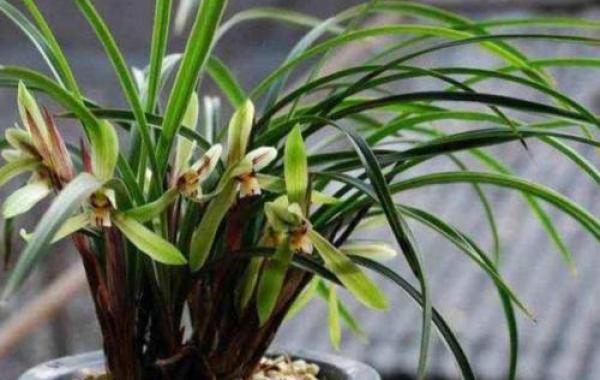
How to care for orchids in summer.
In the hot and rainy summer, friends who love orchids should pay attention to the following:
Shading. Orchids are semi-shade-loving flowers, so in midsummer they need proper shading and must be kept away from strong light. It is best to use shade netting for shading, and to place the orchids near water or in a place with fresh air and good ventilation.
Fertilizing should follow the principle of light fertilizer applied frequently. It should be determined according to the orchid variety, whether the weather is cloudy or clear, the temperature, and the strength of the plant's growth. Generally, in summer, Cymbidium goeringii is given nitrogen and potassium fertilizer; Cymbidium ensifolium is given phosphorus and potassium fertilizer; and Cymbidium kanran may be given no fertilizer at all. In addition, weak plants should not be fertilized on cloudy days or when the temperature is too high.
Watering. Although orchids have fleshy roots, in summer with strong light and high temperatures their water requirements increase relatively, and sufficient water must be guaranteed. In addition to normal watering, at noon the leaves can be sprayed to increase humidity.
Spraying. Orchids are prone to anthracnose during the plum rain and high-temperature seasons. In addition to improving ventilation and light conditions, timely control must be carried out when disease occurs. Spray Bordeaux mixture or thiophanate-methyl once every 10 days to control leaf anthracnose; spray 40% omethoate and dicofol once every half month to kill scale insects and mite pests.
Rain protection. Summer is windy and rainy, and especially heavy rain can not only break orchid leaves but also splash bacteria-laden soil from the pot surface onto the orchid's growing point or leaves, causing brown spot disease in orchid plants. Therefore, when heavy rain comes, proper rain protection is needed.
Pruning. Orchid leaves damaged by pests should be cut off promptly to avoid spreading to other orchid plants. At the same time, orchids that bloom in summer should also have their faded flowers and withered leaves cut off to avoid consuming too many nutrients.
Light for orchids in summer
"All things grow relying on the sun," and light is the source of nutrients for orchid flower bud differentiation and growth. With long light exposure, photosynthesis produces more nutrients, and under a reasonable temperature difference more nutrients accumulate, so the current year's new shoots grow and develop well and there is more flower bud differentiation and growth. But overly strong light will damage orchid leaves. Orchids are semi-sun-loving plants; they fear strong light and prefer weak light. Generally speaking, relatively strong light is suitable for the reproductive growth of orchids, giving more flower buds, deeper flower colors, and an earlier flowering period. Relatively weak light is beneficial to the vegetative growth of orchids, giving more leaf buds, greener leaf color, lighter flower colors, and a later flowering period. Therefore, the light for orchids must be well controlled, neither too shady nor too sunny, but half shade and half sun, that is, the balance of yin and yang should be moderate. Specifically, in summer, on clear days from 11 a.m. to 5 p.m., the orchid shed must certainly be shaded (preferably with double-layer netting); at other times shading may be omitted, fully allowing the orchids to carry out photosynthesis in the sunlight, which helps the orchids grow quickly and enhances disease resistance.
Temperature for orchids in summer
The best temperature for orchid growth is 20 degrees to 30 degrees, and orchids grow well within this temperature range. When the temperature is relatively high, orchids grow quickly, the flowering period is earlier, and the fragrance is strong; when the temperature is relatively low, orchids grow slowly, the flowering period is delayed, and the fragrance is light. We should regulate the temperature of the orchid room according to the growth characteristics of orchids. The daytime temperature can be within the range of 24 degrees to 30 degrees, and the nighttime temperature can be regulated within the range of 16 degrees to 24 degrees. Such temperatures are suitable for the rapid growth of orchids and for accumulating nutrients for the sprouting of summer and autumn shoots, helping orchids produce more summer and autumn shoots and increasing the seedling survival rate of orchids in the current year.
Humidity for orchids in summer
Orchids are not dry-growing or warm-growing plants, but mesophytic fleshy-rooted plants. The absolute moisture of the potting soil for orchid growth is more suitable at around 50%. If the potting soil is dry for a long time, the roots will become thin and fine; if the potting soil is wet for a long time, the roots will turn black and rot. To protect orchid roots, the potting soil moisture in summer must not be too dry or too wet for long periods. Orchids like moist, fresh air. The best air temperature for orchid growth is around 80%. Therefore, the daytime air humidity should be controlled at 65%--80%, and at night it should be controlled at 756%---959%, because the high temperatures in the summer afternoon make the air too humid and muggy, which is not conducive to orchid growth. At night, slightly higher air humidity helps orchid leaves absorb water and replenish the water consumed during the day, thus benefiting orchid growth. Therefore, it is more appropriate for the nighttime temperature to be greater than the daytime temperature. If the daytime air humidity cannot meet the requirement, spraying should be used. In summer, the orchid shed must be ventilated and aired. Orchids like fresh air. If a person entering the orchid shed smells an unpleasant odor, the orchids will not grow well.
Watering orchids in summer
The water used for watering orchids is best rainwater (weakly acidic) or river water (neutral); tap water (after being stored for a day to let the chlorine dissipate) may be used, but deep well water must not be used. The principle of watering in summer is "water when the pot surface is dry, and when watering, water thoroughly." The temperature of the water should preferably be close to or lower than the air temperature; do not water orchids with water warmer than the air temperature. The best method is to place a vat in the orchid shed or near the orchid-growing site, or build a water pool, and keep it filled with reserve water at ordinary times. The watering time is generally best from 7 to 9 in the afternoon. During this period, the temperature is relatively low, and the water lost through evaporation is replenished in time, which is beneficial for the orchid roots to rest and absorb water at night and is beneficial for orchid growth in summer. When the orchid pot is relatively dry, the correct approach is to take rainwater and water the orchid pot thoroughly, so that the small world inside the pot and the external natural world have consistent temperature and humidity; practice has proved that only then will the orchids grow well. On the contrary, if watering is done when it is muggy outside the shed on a clear day, although the open-mouthed orchid shoots are carefully avoided, the orchid shoots still rot at the core and are destroyed. This is caused by too great a temperature difference between inside and outside the pot.
Fertilizing orchids in summer
Orchids are plants, and plant growth cannot be separated from fertilizer. Summer is also the peak growing season for orchids, so more dilute liquid fertilizers such as nitrogen, phosphorus, and potassium, trace elements, and amino acids should be applied. Usually, applying twice a month is sufficient. If there are many seedlings in the pot and the seedlings are strong, apply more; for weak seedlings, damaged seedlings, and new seedlings, apply less or not at all. Orchid fertilizer should be light, and concentrated fertilizer should be avoided. This is because the period of sprouting and leaf unfolding is also the time when the orchid plant's new root system is stirring and extending. If concentrated fertilizer is applied, it is easy to burn the new root system; in mild cases it affects normal plant growth, and in severe cases it can cause plant death.
Control of orchid pests and diseases in summer
Summer is a high-incidence period for insect pests and diseases. For pests and diseases, the principles of orchid pest and disease control are prevention first, integrated control, grasping the patterns of disease occurrence, seizing the most effective period for control, and applying the right remedy. Commonly used sterilizing agents should be sprayed once a month. The dilution ratio for each drug must be precise: too dilute is ineffective, too concentrated causes phytotoxicity. When spraying, be sure to spray the front and back of orchid leaves and the entire orchid-growing site. To avoid phytotoxicity, spraying should be done in the evening.