How to grow Cymbidium goeringii in pots? Detailed guide to cultivation methods and precautions
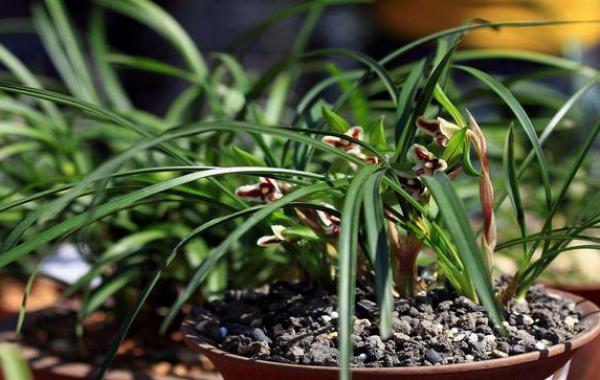
Cymbidium goeringii is a relatively common flower variety in China, and it can now be seen in many places across the country. Cymbidium goeringii has high ornamental value, with its main ornamental features being its flowers and leaves. Many people grow it now, but before growing it, what everyone is probably most concerned about is its cultivation methods.
How to grow Cymbidium goeringii in pots
1. Soil. Use acidic soil to grow it, not alkaline soil. If using a special potting mix, it is best to use orchid soil, or mix and stir rotten leaves and garden soil evenly.
2. Temperature. It needs a range of 15 to 25 degrees. From March to October, it should have 18 to 25 degrees. From October to March of the following year, it should have 10-18 degrees. In severe winter, it can tolerate low temperatures of minus 5-8 degrees, but it is best to have 3-8 degrees. It can be placed by a south-facing window, and the soil in the pot will not freeze.
Cultivation methods and precautions for Cymbidium goeringii
I. Cultivation methods:
1. Watering should be determined according to different stages, different growth stages, and different environments. During severe winter, it stops growing, so watering should be controlled, generally once every 5-7 days, and the soil just needs to be slightly moist. If the soil has already dried out, wait until a sunny day and spray with water close to the indoor temperature, but do not pour water in. 2. Fertilizing should not use a large dose of fertilizer; it must first be decomposed. Organic fertilizer or special fertilizer can be used. When it grows flower buds, only keep the healthiest and best-looking bud and cut off the others. You can also spray some fertilizer specially for flowers, which can help it become more beautiful and extend the flowering time. After the flowers fade, remove the flowers and do not wait for them to fall naturally. This can reduce the loss of nutrients and make flowering easier the next year.
II. Precautions:
In severe winter, indoors in the north has heating, which is not very good for the growth of its flower buds. It is best to move it to a balcony outside the house. If it is grown in the south, with high temperature and high humidity, it does not need much nutrients, has a very high sprouting rate, and can sprout three or four times a year.
What to do if the leaf tips of Cymbidium goeringii dry up
1. Frost damage. Orchids are not cold-resistant. Be careful in late autumn when the temperature drops not to let it be hit by the evening glow. Place it in a windproof and warmer location, otherwise the leaf tips will easily dry up or the leaf color will fade and turn yellow. After entering winter, the temperature drops sharply. When the temperature approaches 0°C, the flower pot should be moved indoors to a position with good ventilation and sunlight for care. When spring comes and the climate warms slightly, other flowers have already begun to be moved outdoors, but Cymbidium goeringii should not be moved outdoors too hastily. Because the climate is changeable and can easily cool down, and there may even be spring frost or strong winds. Do not let it suffer sudden cold damage.
2. Improper watering. In autumn, keep the potting soil moist to prevent excessive dryness, which can cause leaf tip withering. In winter, do not water too much to prevent the plant from freezing and root rot. For plants whose leaf tips have already dried but are not yet serious, promptly use sharp scissors (disinfected with alcohol) and cut them off 1 cm from the withered tip. Do not keep any dead leaves on the pot surface, then spray with a fungicide.
Pests and diseases of Cymbidium goeringii and their control
1. Southern blight: mostly occurs during the plum rain season. Attention should be paid to ventilation and light transmission, and good drainage of the potting soil for prevention. After infection, remove the infected potting soil and sprinkle on pentachloronitrobenzene powder or lime.
2. Anthracnose: present year-round, and more rampant in hot and rainy seasons. In addition to improving environmental conditions, during the onset period you can first spray with 50% thiophanate-methyl wettable powder at 800-1500 times dilution, once every 7-10 days, and then supplement with 1% Bordeaux mixture of equal parts, once every half month.
The methods for growing Cymbidium goeringii are actually not difficult. When growing it, be sure to pay attention to the soil ratio, and in the later stages of cultivation, it is also necessary to strengthen fertilizer and water care. If Cymbidium goeringii develops dry leaf tips during cultivation, find the cause from the root and then solve it thoroughly.