Analysis and Solutions for Common Abnormal Phenomena in Clivia
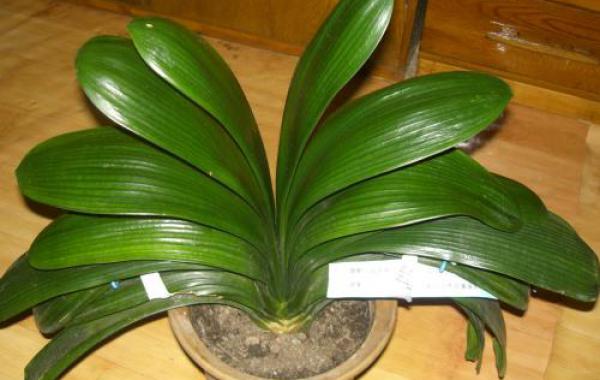
Many friends who grow and love flowers take care of their plants down to the smallest detail. Today, the editor will introduce the analysis and solutions for several common abnormal phenomena in Clivia, so that friends growing Clivia have some solutions to turn to when they encounter such situations.
1. Abnormal phenomena such as uneven leaf arrangement in Clivia
Uneven leaf arrangement: Some Clivia leaves tend to grow crooked and twisted. This is because the sunny side of the leaf has less auxin and grows slowly, while the shaded side has more auxin and grows faster, and stems and leaves always bend toward the slower-growing side, making the "crooked leaf" phenomenon likely to occur. Therefore, during care the flower pot should be rotated regularly: about once every 7 days during the vigorous growth season, and about once every 10 days during the slow growth season. If some leaves are not in a straight line, you can bend two bamboo strips into semicircles and insert them into the soil to clamp the leaves, and after a period of time they will gradually be adjusted; you can also shape them through light, that is, cut an opaque thick piece of paper into strips whose length and width basically match the leaf, then fold it lengthwise in half from the middle, wrap it around half of the leaf that has been pulled askew by sunlight, and use clear tape to stick the thick paper to both the front and back of the leaf. After 10 to 15 days, the crooked leaf will be corrected.
2. Abnormal phenomena of dry tips and yellow edges in Clivia
Dry tips and yellow edges: Potted Clivia should be kept in sufficient light, but it does not tolerate strong light. If the light is too strong, the air is dry, and ventilation is poor, dry tips and yellow edges will appear. Therefore, in management, special attention should be paid to increasing environmental humidity.
3. Clivia "stuck arrow" (flower scape trapped)
Stuck arrow: There are many causes of a stuck arrow, including unsuitable temperature and improper watering. For mature Clivia, when the plant transitions from vegetative growth to reproductive growth, pay attention to observing changes in the pseudobulb. If the pseudobulb protrudes and one side becomes enlarged, it indicates that the flower scape is forming; at this time, fertilization should be stopped for two weeks, otherwise the leaf sheath and pseudobulb will become harder and the pressure greater, causing a stuck arrow. If a stuck arrow is caused by excessive pressure from the bulb, you can use a sterilized sharp knife to cut open the leaf sheath clamping the scape by 1.5 cm, reducing the pressure of the sheath base on the scape and encouraging the scape to push out.
4. Clivia root rot
Root rot: There are many causes of Clivia root rot, such as wounds not being disinfected during potting, allowing root rot fungi to invade through the wounds; roots being damaged during transplanting or repotting; improper fertilization during the growth period, causing reverse osmosis, which leads to dehydration, drying, and death of the root system; too much water accumulating in the pot, causing root rot; soil alkalization, compacted potting soil, and poor water and air permeability. To prevent root rot, in addition to disinfecting and sterilizing the growing medium when potting, fertilizer and water should also be applied reasonably. Once root rot occurs, the plant can be taken out of the flower pot, the soil removed, rinsed clean with clear water, the rotten and dead roots cut off, soaked in 0.1% potassium permanganate for 5 minutes to disinfect, and then plant ash or sulfur powder applied to the wounds for disinfection. After handling, plant it shallowly in new growing medium, just covering the root system, then water once thoroughly, and place it in a shaded environment at 20°C for care. Once new leaves grow, normal management can resume.
Clivia has strong vitality and is easy to cultivate, but growing it well is not easy. Especially in daily management, abnormal phenomena such as uneven leaf arrangement often occur, affecting its ornamental value.
Uneven leaf arrangement: Some Clivia leaves tend to grow crooked and twisted. This is because the sunny side of the leaf has less auxin and grows slowly, while the shaded side has more auxin and grows faster, and stems and leaves always bend toward the slower-growing side, making the "crooked leaf" phenomenon likely to occur. Therefore, during care the flower pot should be rotated regularly: about once every 7 days during the vigorous growth season, and about once every 10 days during the slow growth season. If some leaves are not in a straight line, you can bend two bamboo strips into semicircles and insert them into the soil to clamp the leaves, and after a period of time they will gradually be adjusted; you can also shape them through light, that is, cut an opaque thick piece of paper into strips whose length and width basically match the leaf, then fold it lengthwise in half from the middle, wrap it around half of the leaf that has been pulled askew by sunlight, and use clear tape to stick the thick paper to both the front and back of the leaf. After 10 to 15 days, the crooked leaf will be corrected. Analysis of Several Common Abnormal Phenomena in Clivia Analysis of Several Common Abnormal Phenomena in Clivia.
Root rot: There are many causes of Clivia root rot, such as wounds not being disinfected during potting, allowing root rot fungi to invade through the wounds; roots being damaged during transplanting or repotting; improper fertilization during the growth period, causing reverse osmosis, which leads to dehydration, drying, and death of the root system; too much water accumulating in the pot, causing root rot; soil alkalization, compacted potting soil, and poor water and air permeability. To prevent root rot, in addition to disinfecting and sterilizing the growing medium when potting, fertilizer and water should also be applied reasonably. Once root rot occurs, the plant can be taken out of the flower pot, the soil removed, rinsed clean with clear water, the rotten and dead roots cut off, soaked in 0.1% potassium permanganate for 5 minutes to disinfect, and then plant ash or sulfur powder applied to the wounds for disinfection. After handling, plant it shallowly in new growing medium, just covering the root system, then water once thoroughly, and place it in a shaded environment at 20°C for care. Once new leaves grow, normal management can resume.
Taobao Featured Products
Dry tips and yellow edges: Potted Clivia should be kept in sufficient light, but it does not tolerate strong light. If the light is too strong, the air is dry, and ventilation is poor, dry tips and yellow edges will appear. Therefore, in management, special attention should be paid to increasing environmental humidity. Analysis of Several Common Abnormal Phenomena in Clivia Flower Encyclopedia.
Stuck arrow: There are many causes of a stuck arrow, including unsuitable temperature and improper watering. For mature Clivia, when the plant transitions from vegetative growth to reproductive growth, pay attention to observing changes in the pseudobulb. If the pseudobulb protrudes and one side becomes enlarged, it indicates that the flower scape is forming; at this time, fertilization should be stopped for two weeks, otherwise the leaf sheath and pseudobulb will become harder and the pressure greater, causing a stuck arrow. If a stuck arrow is caused by excessive pressure from the bulb, you can use a sterilized sharp knife to cut open the leaf sheath clamping the scape by 1.5 cm, reducing the pressure of the sheath base on the scape and encouraging the scape to push out.