Can Clivia be kept in the bedroom? Understand these things before placing it
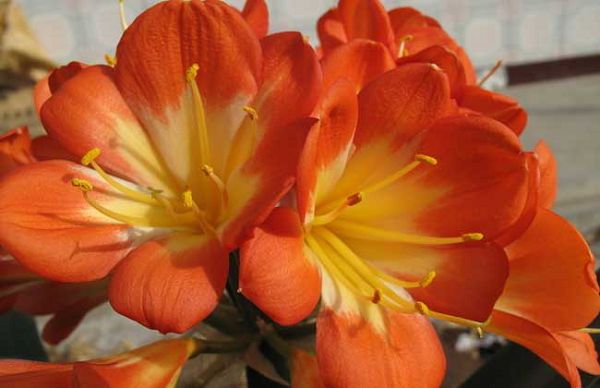
Clivia, also known as sword-leaf lycoris and large-leaf lycoris, is an ornamental flower of the genus Clivia in the amaryllis family. Clivia has very high ornamental value, and in China it is often grown in pots in greenhouses for viewing. The lifespan of Clivia reaches several decades or longer. Below, let us take a look together at questions such as whether it is good to put Clivia in the bedroom.
Clivia is very suitable for placing in the bedroom. Clivia has a graceful posture, elegant and dignified, with leaves as if carved from jasper and bright, delicate flowers. Placing it in the bedroom adds a touch of warmth. There is no need at all to worry about claims with no practical basis, such as plants placed indoors at night releasing carbon dioxide, competing with people for oxygen, and being harmful to health. According to scientific experiments, a potted flower at night consumes only 0.1 grams of carbon through respiration, so the total carbon dioxide released by ten potted flowers is no more than the carbon dioxide produced by smoking one cigarette. It can be seen that phenomena such as poor ventilation and stale air in the bedroom are completely unrelated to keeping flowers.
Benefits of putting Clivia in the bedroom
1. High ornamental value: Clivia has a dignified and beautiful plant shape, verdant and upright leaves, large and brightly colored flowers, and bright red fruit. Its leaves, flowers, and fruit are all beautiful, and it is known as viewing flowers in one season, fruit in three seasons, and leaves in all four seasons. Its flowering period lasts as long as forty to fifty days, and it can bloom in early spring, making it an important holiday flower. Clivia is a perennial evergreen herbaceous plant, excellent in leaves, flowers, and fruit, and its foliage is even better than its flowers.
2. Absorbing carbon dioxide: Many plants can absorb carbon dioxide, and Clivia is no exception. During its growth and development, although Clivia can absorb water and mineral nutrients from the soil to synthesize organic matter, this is still not enough for its entire physiological activity. It must use sunlight, temperature, carbon dioxide, and water for photosynthesis. This is of extremely important significance to the growth and development of Clivia, beautifying the room, purifying indoor air, and improving people's health.