What to Do When Clivia Leaves Turn Yellow and Black? Learn How to Pollinate
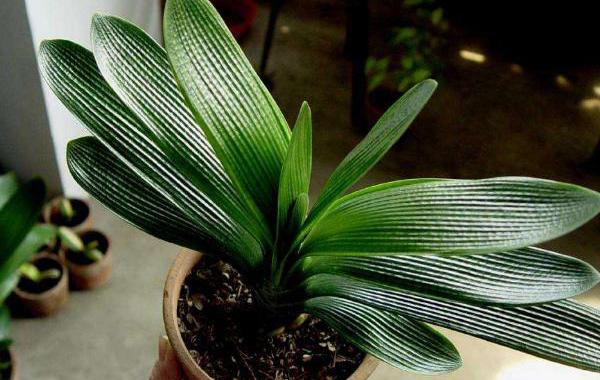
Clivia is a very noble and elegant plant. Its flowers are very beautiful and have high ornamental value, making it absolutely a plant worth the effort of gardening friends. However, many people do not grow it, probably because they worry about care problems during cultivation, since improper care not only affects the plant's appearance but, more seriously, affects its growth and development.
What to do when Clivia leaves turn yellow and black
1. The entire leaf turns yellow
Cause: When Clivia develops this condition of the entire leaf turning yellow, it may be caused by strong light exposure. Excessively strong sunlight can scorch Clivia leaves, causing them to turn yellow.
Measures: Cut off the yellow leaves and shade the Clivia, which can ease the yellowing of the leaves.
2. Localized yellowing of leaves
Cause: Localized leaf yellowing is mostly caused by overwatering. It may also be caused by improper fertilizing, with fertilizer that is too concentrated, burning the roots and causing localized yellowing of Clivia leaves. It can also be caused by soil that is not aerated, poor root respiration and poor drainage, or a care environment that is not ventilated enough, among other reasons.
Measures: Manage water and fertilizer well, water and fertilize reasonably, and avoid overly wet potting soil or concentrated fertilizer burning the roots and causing Clivia leaves to turn yellow. Also be sure to ventilate Clivia regularly so it grows in a well-ventilated environment, and pay attention to soil selection.
3. Leaves develop yellow spots
Cause: This is mostly because Clivia has developed leaf spot disease or anthracnose, or has been disturbed by pests. This causes yellow-brown diseased spots on Clivia leaves, and can even harm the entire leaf.
Measures: Choose a suitable treatment method according to the condition of the disease. You can choose a suitable pesticide for spraying treatment, and in daily care, do a good job of disease prevention measures, focusing on prevention and combining prevention with treatment.
4. Other situations
Cause: If Clivia has been grown for a long time, then it is a normal metabolic phenomenon. But if new leaves or tender leaves appear withered yellow, grayish yellow, or weak yellow, it may be caused by improper watering, excessive light, or overfertilizing.
Measures: For leaf yellowing caused by normal metabolism, there is no need to worry too much. Just cut off the old leaves of the Clivia to keep it looking neat.
How to make Clivia leaves green and glossy
I. Variety
We believe the plant's uprightness should be good, so short-leaf genetics are needed, and round-head and technician genetics are also indispensable. But we know that pure short-leaf technician and round-head varieties are not many now, so we still need short-branch, short-round, and similar types as foundation plants. Only in this way can it grow very well.
II. Care
1. Watering
Watering is relatively easy. No matter when, as long as the surface of its potting soil has dried for one centimeter, we need to water it. Do not use water casually; settled tap water is better.
2. Fertilizing
Fertilizing is necessary, and the elements in it must be balanced. In many cases, when we see a plant that is too wide and not green enough, a big reason is improper fertilizing. If we use charcoal as potassium fertilizer, we can use degreased bone meal as phosphorus fertilizer. In this way it will not burn the roots, and it will also be more balanced, making the plant grow lush and green.
3. Disease prevention
The main diseases of this plant include pests and fungi. It is best to use prevention as the main method. Each time, just add some reagent to the fertilizer water for prevention, or use a brush to treat it. This can keep its leaves from being harmed and make them grow green and glossy.
When does Clivia bloom
Its growth cycle is especially long, so most need to be grown for four or five years before they bloom. That is, when it has grown twenty to twenty-five leaves, it will bloom. If we cultivate it well, it can bloom once every two or three years, and the time can also be shortened, blooming in less than two years. Of course, the plant can basically bloom only once a year; if grown very well, it may produce one or two more scapes. Some people may find during cultivation that it blooms only after six or seven years, or blooms once and then never again.
Its flowering period is in the range from February to April. There are also ways to extend the flowering period: lowering the temperature, giving it ventilation, and reducing light are the best methods.
How to pollinate Clivia
1. Time
This flower's blooming time runs from winter to spring. If it blooms relatively early, pollination can begin in December, while if it blooms relatively late, it can begin in April or May.
2. Hand pollination
This flower can rely on insects for pollination, but if it is placed indoors in winter or spring, no insects will come, so we can pollinate by hand.
3. Parent selection
If self-pollinated, it will set relatively few seeds, and even if seeds are set, it is hard for them to sprout and they will not develop very well. We can choose different plants of the same variety, but it is best to choose different plants of different varieties. In this way it will set more seeds, and the offspring will also grow well.
4. Pollination steps
The three-pronged part in the flower is the pistil, and the others with anthers are the stamens. Just dab the pollen from the stamens onto the three-pronged stigma. If the pollen is very precious, you can use a sewing needle to pick up the pollen. The best time to dab pollen is when the stamens are bursting with pollen and the three-pronged stigma has mucus. Carrying out this operation at noon will have a higher success rate, and blooming in the first year is not very good and easily damages the plant. If you want to store pollen, it can be refrigerated if the time is short, but for a long time it needs to be frozen, with the temperature below five degrees.
Actually, it is not hard to care well for a pot of Clivia. Most problems with many plants are also caused by watering. For a plant like Clivia, watering is relatively easy. Its roots have a water-storage function, so watering should not be too frequent, to avoid root rot.