How to grow Chloranthus spicatus? A detailed guide to cultivation methods
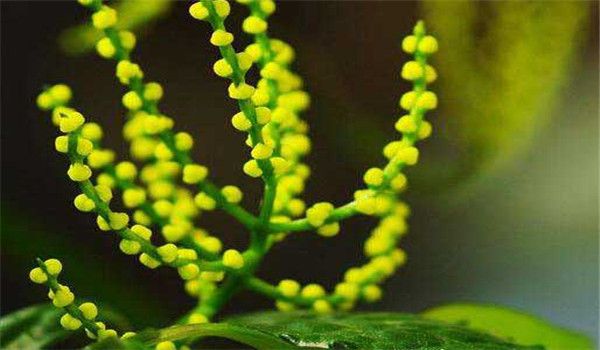
Chloranthus spicatus is also known as Jinsulan, Zhenzhulan, Chalan and so on. Its flowers are very small and yellow, looking much like millet, and grow densely on the small branches. Chloranthus spicatus is an important raw material for scenting flower tea. Below we take a look at the cultivation methods for Chloranthus spicatus.
Chloranthus spicatus originates from the tropical and subtropical regions of South China and likes a warm, humid, shaded environment and fertile sandy loam. It fears high temperatures and severe cold. It can be propagated in flower pots. The methods include cuttings, division and layering.
1. Cuttings method. Generally at the end of August, after the autumn flowers have been harvested, cut healthy old branches or one- to two-year-old new branches, about seven or eight cun long, and remove the leaves from the lower part of the branch, leaving only the top two or three pairs of leaves as the cutting. Before inserting the cuttings, make a growing medium from sand and fertile soil at a ratio of four parts sand to six parts soil. When inserting the cuttings, first spread about half a cun of sand at the bottom of the pot, then bundle four or five cuttings into a group, distribute them evenly in the pot, insert the lower part of the cutting's rhizome down to the bottom of the pot, and then fill in the growing medium. Do not fill the soil too full; leaving it one and a half cun below the pot rim is fine. Finally water once thoroughly. When inserting cuttings, do not fill the pot soil first and then insert them, because the rhizome of Chloranthus spicatus is very fragile and tender, and the stem nodes are easily damaged, causing root rot.
2. Division method. Chloranthus spicatus has fleshy roots and relatively few fibrous roots. This method is mostly used for old plants that have grown too densely. Generally, 10-15 days after the spring-flowering pots are moved outdoors, division is carried out. When dividing, tip the old plant out of the pot, cut the old plant into three or four pieces with a knife, and plant them separately in new pots. Pay attention to watering and shading, and new plants can quickly be formed.
3. Layering method. This method is mostly used for cultivating Chloranthus spicatus in large vats. If growth is uneven in density, or if some seedlings are missing due to pests and diseases, press the dense branches into the sparse areas, burying them in the soil about two cun deep, and let the tips of the layered branches protrude above the soil surface; new roots will soon grow. The branches can also be buried in another flower pot, and after two or three months they can be cut away from the mother plant to form new plants.
The management of Chloranthus spicatus mainly involves watering, fertilizing, shading from the sun, and protecting it from the cold through the winter.
Water Chloranthus spicatus lightly at first, then more heavily later. After Grain Rain, when Chloranthus spicatus is moved outdoors, because early spring temperatures are low, it can be watered once a day, and the water should soak through. As the temperature rises, in summer when the flowering branches grow vigorously, water twice a day to keep the pot soil moist. If the small leaves at the top turn yellow and the old leaves at the bottom fall off, this means overwatering; stop watering, let the soil dry out, and encourage the root system to return to normal growth. Chloranthus spicatus likes moisture, but water should not accumulate in the pot, otherwise the roots rot easily. After the autumn cools and the temperature gradually drops, the frequency of watering should be gradually reduced.
Fertilize Chloranthus spicatus lightly at first, then more heavily. In early spring, water once with fully decomposed dilute human manure water. As the temperature rises and flower buds sprout, the concentration of fertilizer can be gradually increased. After fertilizing, the plant must be exposed to dew, to avoid leaf drop and root rot. Fertilizer water is generally applied below 28°C; if the temperature is too high, do not apply manure. After mid-August, do not apply manure fertilizer water any more, otherwise it will cause excessive vegetative growth and sprout new tender branches, which is not good for cold resistance in winter.
After Chloranthus spicatus is moved outdoors, a shade shed should be set up to block the sun, so that Chloranthus spicatus is cool and ventilated while still receiving sparse sunlight. After the late frost period has passed, let Chloranthus spicatus fully receive dew at night.
Chloranthus spicatus has weak cold tolerance and generally suffers cold damage at 0°C. The flower pots should be moved indoors for the winter before Frost's Descent.
Before the flower pots are brought indoors, the plant should be trimmed once, with dead branches and old leaves removed. Because the branches of Chloranthus spicatus are weak, a cylindrical support should also be set up at the edge of the pot, and the branches of Chloranthus spicatus should be evenly tied to the support to form a hollow shape. This is good for ventilation and light penetration and for sprouting new branches.
The flowering period of Chloranthus spicatus is relatively long, lasting 80-90 days from when it begins blooming in May. After growing for one or two years, Chloranthus spicatus can yield a small amount of orchids. Chloranthus spicatus flowers are generally divided into spring flowers, summer flowers and autumn flowers. The fragrance of the flowers is easily lost when exposed to high temperatures or blazing sun, so they should be picked in the morning. Because the flowers of Chloranthus spicatus are very small, they should be picked together with the flower stalk, leaving about half a cun of the flower stalk.