Detailed Guide to Making a Hibiscus mutabilis Bonsai
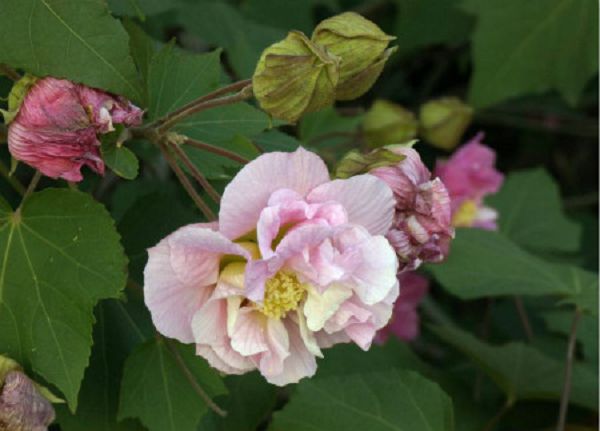
How to Make a Hibiscus mutabilis Bonsai
First plant the young hibiscus tree in a large clay pot or grow it in the ground. It grows very fast. For seedlings from layering or division, in the same year, and for seedlings from sowing, in the second year, you can already wire and bend the branches and trunk. At the same time, pay attention to pinching the tips and removing the growing points to control the plant's height and promote thicker branches and trunk.
In addition, you can also choose an old hibiscus stump that has grown for many years, is short in stature and unusual in form to make a bonsai. It can be transplanted in spring. First "raise the stock" in the ground or in a slightly larger clay pot to ensure its survival. Wait until the buds begin to grow and the plant is confirmed to have survived before shaping it.
Since its young tree and the large branches on the trunk generally grow straight, with few forks, you can let it grow freely, and when the branches and trunk reach the required thickness, cut them off to encourage side branches. During the "raising the stock" period, give it plenty of sunlight and apply frequent light fertilizer to promote its growth. Remove useless buds in time so they do not grow into branches that consume too many nutrients and affect the growth of other branches.
Shaping and Pruning of Hibiscus mutabilis Bonsai
The hibiscus tree can be made into many different forms of bonsai, such as straight-trunk style, double-trunk style, waterside style, slanting-trunk style, curved-trunk style, exposed-root style, and rock-clinging style.
The hibiscus tree is not suitable for excessive pruning, but its branches are rather long, so when shaping it, wire it carefully and leave more branches appropriately. After it grows larger, cut off the surplus branches and shorten the overly long branches so that it forms a full and compact crown. The wiring of a hibiscus bonsai can be done at any time, usually after flowering and in combination with pruning.
The branches and trunk of the hibiscus tree are smooth. When making a bonsai, it should appear in its natural form, highlighting the characteristics of the species, while also showing its robust and sturdy posture, without the need to deliberately pursue
"antique simplicity" by carving the trunk full of holes.